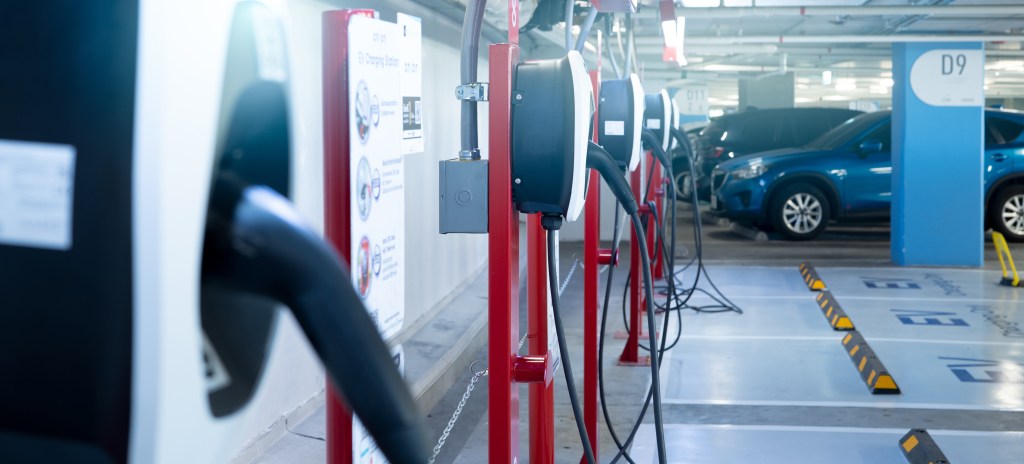
From cut cables to broken chargers and multiple app downloads, charging one of the fastest charging EVs in EV heavy Southern California was a pain in the ass.
Despite reports to the country, EV charging is still largely an annoying ordeal. I learned this first hand recently during my time with Hyundai’s high performance Ioniq 5 N EV.
Charging an EV is easy when it works. Aside from that, EV ownership can be complicated. From things like battery preconditioning to connector types, it can all be pretty complicated and it takes a certain kind of person to want to deal with and understand it all. I’m of the belief that EV owners are one of two types of people: you’re either tech savvy enough to understand and navigate the world of EV ownership or you’re open minded enough to where you’re willing to learn and experience that world. Luckily I’m of the former mindset, but even I have my limits. And recently living with an EV and trying to charge tested that.
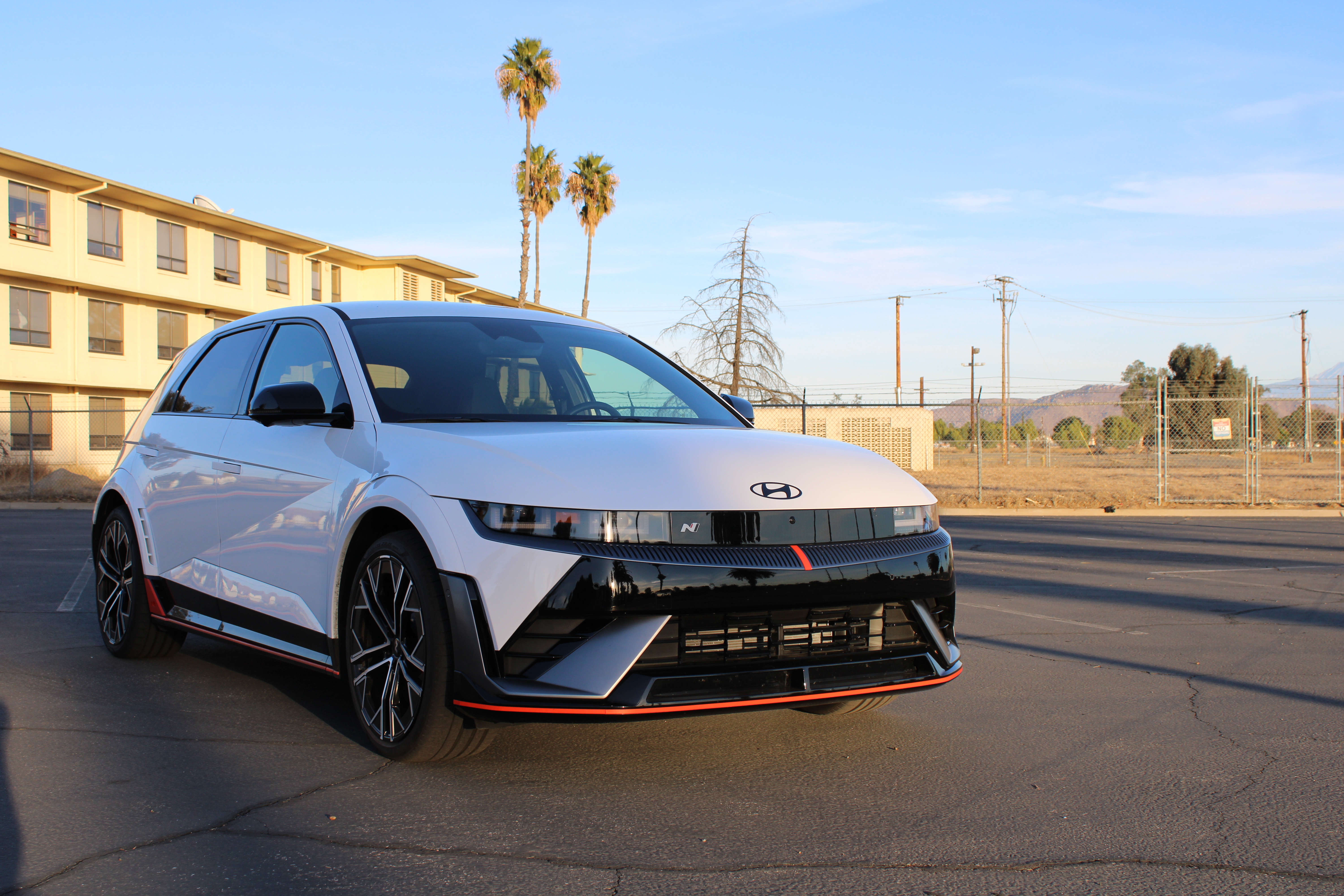
Hyundai was kind enough to lend me it’s 601 horsepower electric hot hatch, the Ioniq 5 N. Aside from its blistering performance, the EV is one of the fastest charging on the market. With its 84 kWh battery pack, Hyundai says it can handle charging speeds of up to 238 kW. This means that with the right charger, you can get from 10 to 80 percent in as little as 18 mins; I personally saw the deed done once in just over 12 minutes. The Ioniq 5 N is all good on that front. The problem came with actually trying to charge it.
I have the added benefit of living in the largest EV market in the country in California. In Q1 of 2024, 102,507 EVs were sold in the state and earlier this year, 24-percent of all new cars sold in the state were EVs. State estimates also say there’s over half a million chargers installed at homes across the state with another 100,000 public chargers. That number is expected to grow with the state investing $1.9 billion to build an even bigger and better charging network. While state officials love touting these facts to show that EV ownership is growing, the reality of charging is much different.
My ordeal started the day I got the Ioniq 5 N. A bit of spirited driving had seen the battery drop down to about 52 percent. While this was plenty of charge to get me back home and then some, I was excited to experience the Ioniq 5 N’s charging speeds. Luckily the Hyundai’s native nav system has a built in charging station list with speeds and their current status, though it’s hit or miss. You can filter the list by charging speed as well. Wanting to use a fast charger, I filtered the list to show me available fast chargers nearby. One pair of fast chargers at a local grocery store were out of order. So I found some Electrify America stations at a nearby Walmart and made my way there. Surprisingly I found the charger to be empty so I quickly pulled in. I soon found out why it was empty: the CCS connector was out of order, rendering the charger useless. There were a couple other fast chargers on the other side of the parking lot, but those were all in use. Frustrated, I dove back into the nav system to find another charger. This time I found some EVgo chargers in the parking lot of the local mall.
Upon arriving I found a hectic looking scene: a Mercedes eSprinter parked across two spots charging, a Ford Mustang Mach-E and its owners looking as if they were attempting or trying to figure out how to charge, and yet another broken charger whose status read that they were working on getting it back up and running. Reeling with annoyance, it dawned on me that the charging station list in the nav system wasn’t picking up all chargers in the area. I knew there were chargers in front of the local department of water and power, I just wasn’t sure if they were fast chargers or not. Making my way there I discovered that sure enough, there were chargers there and thankfully, they were not only working, but they were also fast chargers. I plugged in and in 15 minutes I was back up to 80 percent.
The second day with the Ioniq 5 N was pure chaos. My family and I set off on a 30 mile trek to a local upscale shopping mall, where my son and I dropped my girlfriend off for a work party. Rather than go back home, my son and I decided we’d chill, shop and eat at the mall and just wait for my girlfriend to finish up. Knowing the area, I dropped her off at the restaurant and proceeded to find charging in the area. Given its high end nature, there were more than a few chargers around. A nearby parking garage had an EVgo charger in it. This worked out perfect as it was situated right behind a Shake Shack; the kid and I could eat while the car charged. Once we got to the charger, the headache started: there was a non-electric Mercedes parked in the charging spot. A sign on the wall had a phone number for the local police, which said call if any unauthorized vehicles were parked in the spot; it’s automatic tow away. Of course I called and got no answer.
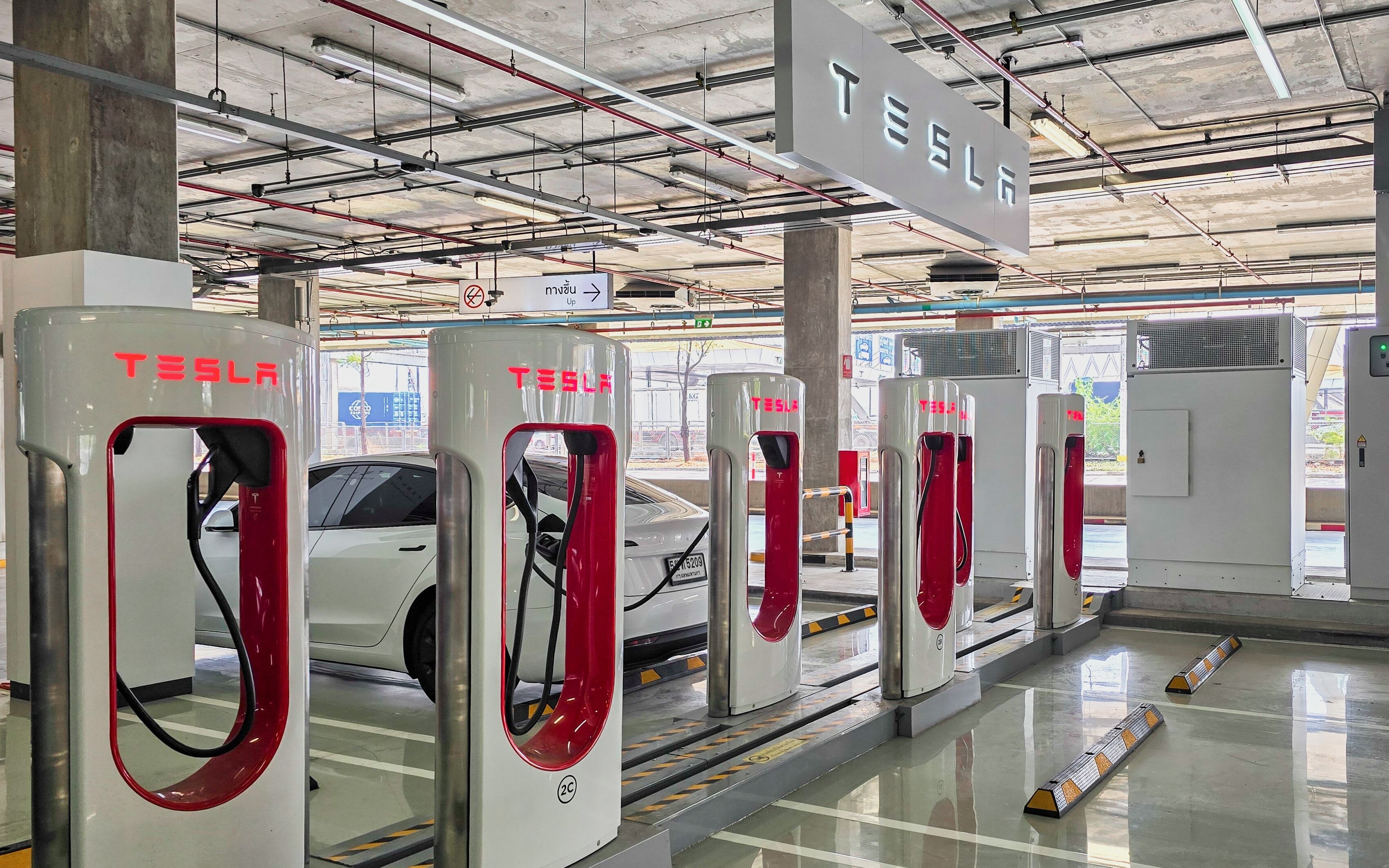 Making our way out of the parking garage, I spotted a parking lot full of Tesla Superchargers. Being a 2025, the Ioniq 5 N is one of the first EVs to come to market with the ability to charge using the Supercharger. Of course most of the Superchargers were full. Cars were either filled with people waiting while their cars charged or empty, their owners presumably shopping or eating nearby. Attempting to use the Superchargers highlighted another, two-tiered issue. One is the location of the Ioniq’s charging port, which is on the right rear of the car, like a normal gas tank. This highlighted the other, glaring problem: Supercharger cables are way too short. And they don’t stretch. These two problems and the position of most of the Supercharges meant I couldn’t use any of them.
Luckily, situated right next to the Supercharger were a pair of chargers from a company I had never heard of before called Blink. Both chargers were empty and I thought I had found our saving grace. I was wrong of course. Getting out and making my way to the charger to plug in, I discovered that three of the four total charging cables had been cut. The one charging cable that was left intact wasn’t even working, despite the station appearing as if it was ready to charge. Annoyed, I dove into the nav system to find any charger that was working nearby. The system brought up a pair of ChargePoint chargers nearly a mile away. We made our way there and discovered that the chargers were in the parking lot of a senior community. And they were slow. Plugging in for 32 minutes with charging speeds never going above 6 kW meant we added just 5 miles of range in a little over half an hour, a waste of time. Once we picked up my girlfriend, I dove into the nav system again to find another set of fast chargers, this time at another local outlet mall just a few miles away. When we got there, the area was chaotic. In addition to the multitude of shoppers in the area, the chargers were packed. There were eight chargers with 16 connectors and each one was in use. Aside from that, there was a line of about 15 EVs waiting to use them. Not wanting to wait, we made our way back home and eventually to the same department of water and power fast charger that we used the day before.
Another major issue with EV charging is all of the different apps that are required to use the chargers. My time with the Ioniq 5 N saw me download eight different charging apps. Each one requires personal info and a payment method. And each app didn’t always work when I needed it too. The Blink app wouldn’t even load for me when I went to use it; Shell’s Recharge app kept prompting me to update the app despite it not needing an update. ChargePoint worked well once it got up and running, but it often wouldn’t load what chargers were in the area.
Charging at a dealership wasn’t any better either. My local Hyundai dealership is right next to a shopping center with a Target. Needing to do some shopping one day, I thought I’d park the Ioniq 5 N at the dealership to charge and walk over to Target and shop. That idea was quickly shut down as both ChargePoint chargers at the dealership were out of order. Later in the day I was able to charge at the Hyundai dealership where I purchased my Sonata. Aside from the sales guys gawking at the Ioniq 5 N, it was an easy experience.
Charging prices also vary widely and seem to depend on the location. A charging location in a busier area will charge way more than a charger that sits in a more quiet area. For instance, the Electrify America charger I used in the parking lot of Walmart one day charged me over $29 to go from 10-80 percent; the less busy ChargePoint fast charger at the water and power building only charged me $11.94 to charge to the same percentage.
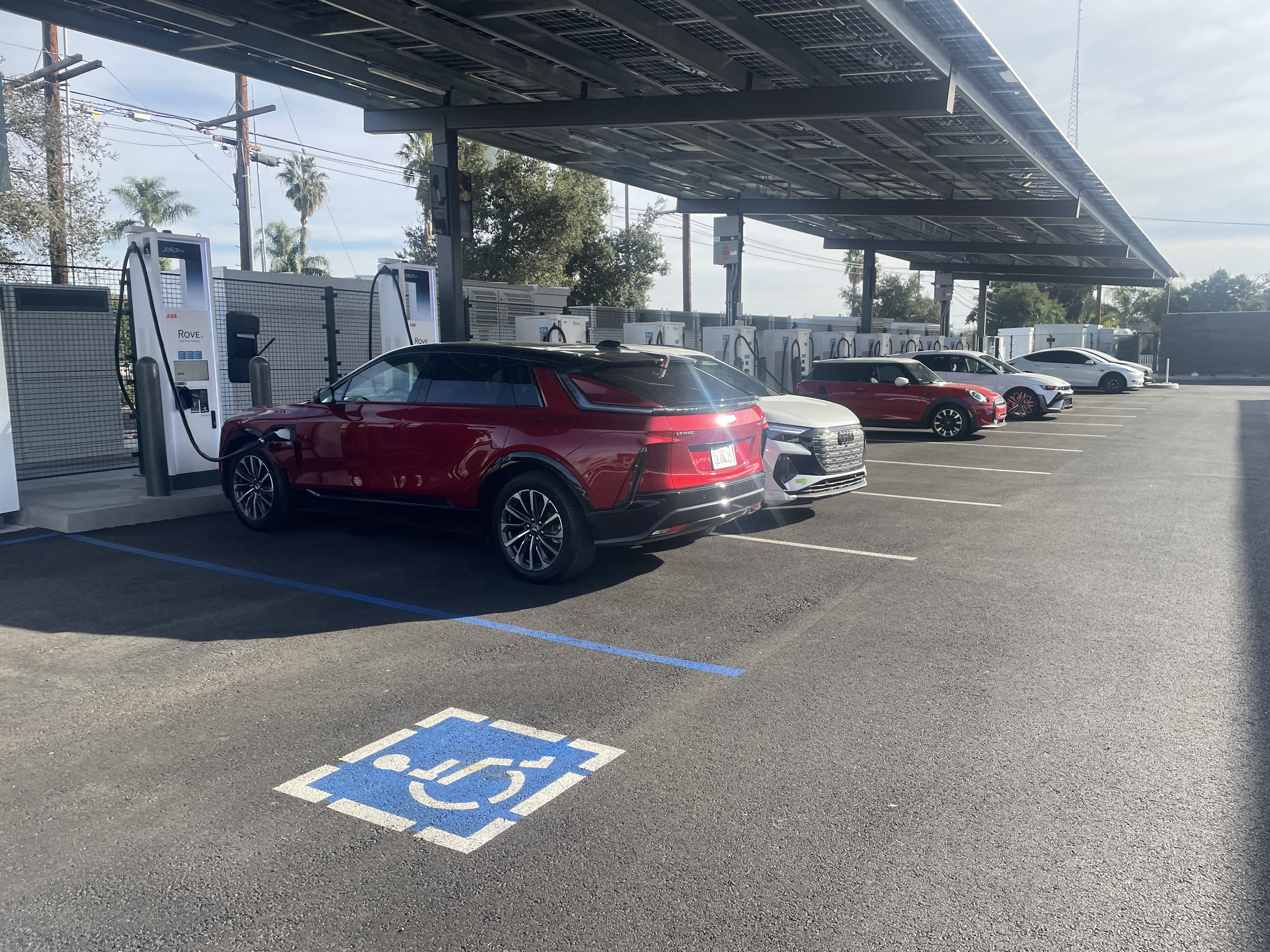 The only headache free charging experience I had was with a new charging location called Rove. A full-service EV charging location, Rove is set up like a gas station. There’s over 40 chargers that include Tesla Superchargers and Level 3 charges, a carwash, a lounge area with TVs and a sitting area, free wifi and a full convenience store. Called ReCharge by Gelson’s, the store is full of food, snacks, sodas’ coffee, anything you’d want to munch on while charging. If you need help, there’s even attendants who can show you how to charge or even point you to the right connector type for your EV if you’re unsure. The downside? Rove requires you to download an app, like all the others. Once you do download the app, the process to charge is straightforward and easy. You scan a QR next to the connector and simply plug in. The rest of the process is automated and like other chargers you’re billed as it’s charging and you can stop charging from the app if needed. You can even add on services to your charging session like a carwash with the price included in the final cost. If EVs are to become mainstream, we’re going to need charging locations like this across the country.
So what’s the lesson in all this? Charge at home if you can even though that comes with its own set of problems: charging installation costs can be high. And that’s even if you can just simply have one installed. Depending on the age and wiring setup of your home, you may have to have some electric work done. That’s if you even live in a home at all. If you’re an apartment or condo dweller you might be stuck with public charging. Even with those realities, charging at home is still the best option right now. Public charging has a long way to go before it can comfortably be relied upon to support mass EV adoption.
 Daily Revs
Leave a comment