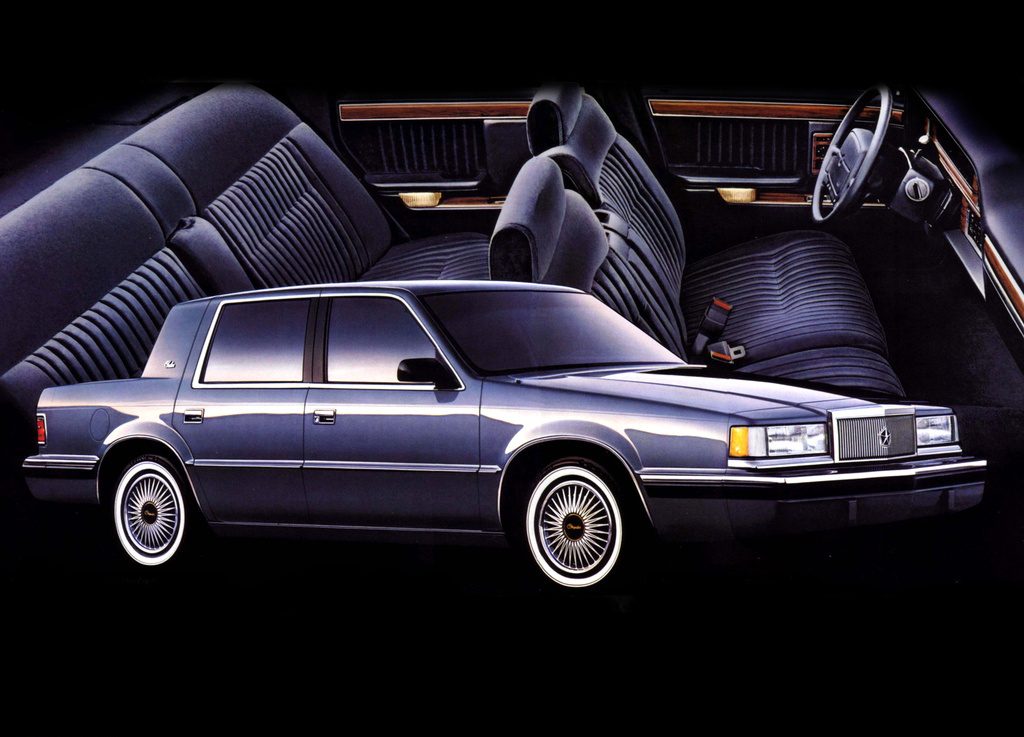
A double rebadge of a sedan for luxury car bargain shoppers was some interesting thinking by product planners.
Chrysler’s K platform was a godsend for the corporation. The platform and its variants literally brought Chrysler back from the brink of collapse. While that was all well and good, the platform was also the poster child of badge engineering; save for a few trim differences, many of Chrysler’s brands basically sold the same car. One of the most absurd was one I didn’t even know existed: the Chrysler New Yorker Salon.
Chrysler’s New Yorker was once a staple in the automakers lineup. By the time the model was discontinued in the mid 1990s, it was the longest running American nameplate. Originally introduced in 1940, by the late 1980s and early 1990s, the model was one of the most luxurious cars you could buy from Chrysler. It was also a K-car riding on a variant of the platform known as the C-Body (though full size, V8 powered C-Bodies also existed for Chrysler between 1965 and 1978).
From 1988 to 1990, if you wanted a luxobarge from Chrysler, this platform was the only way to get it. You could have your luxury car in four flavors:
New Yorker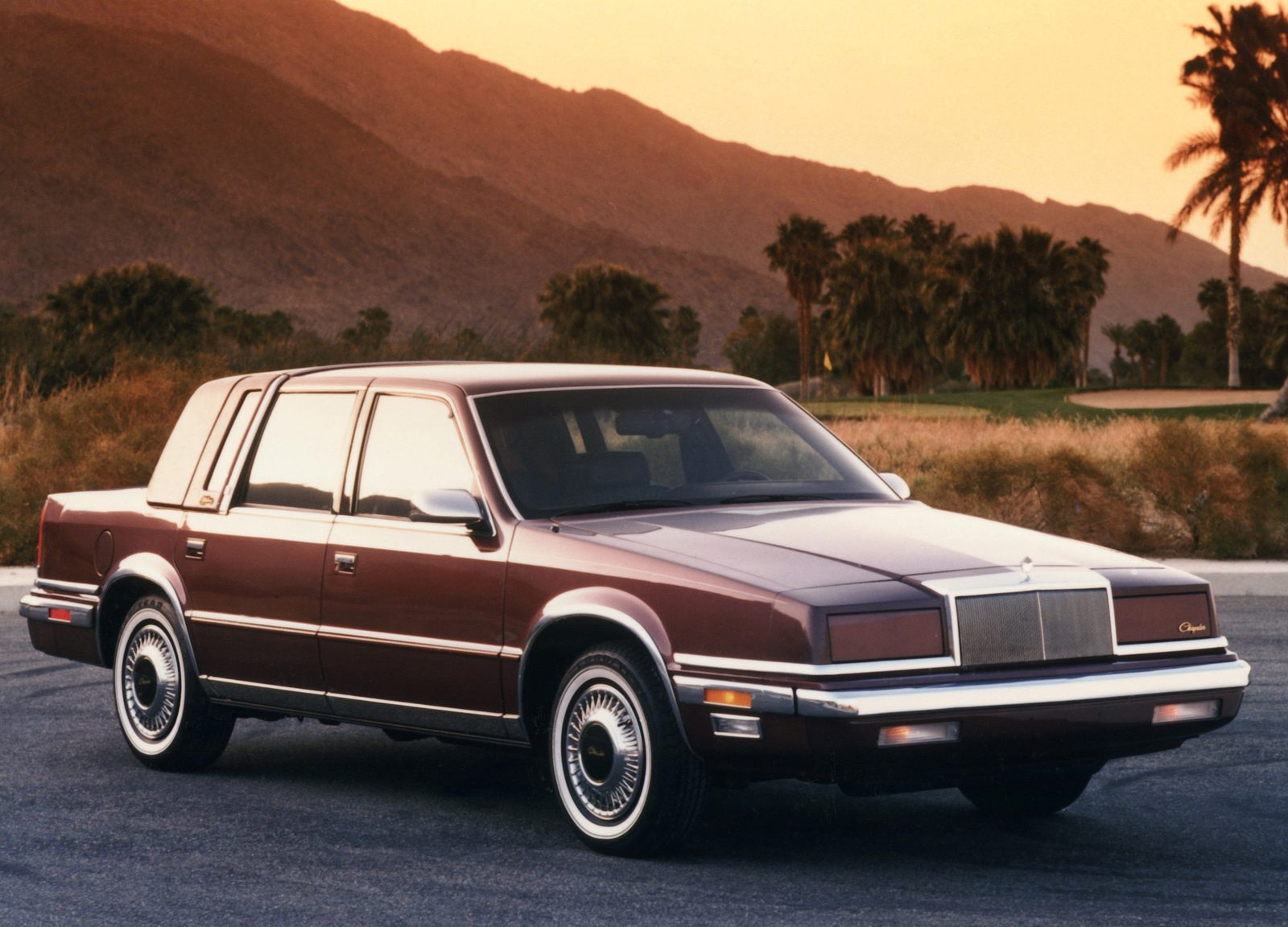
New Yorker Fifth Avenue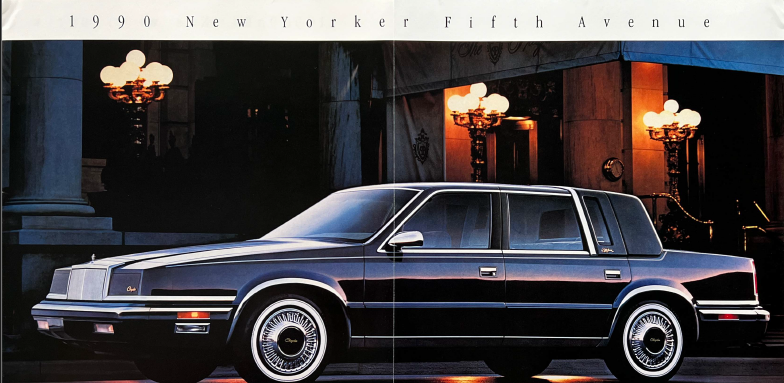
The Crème de la crème Imperial
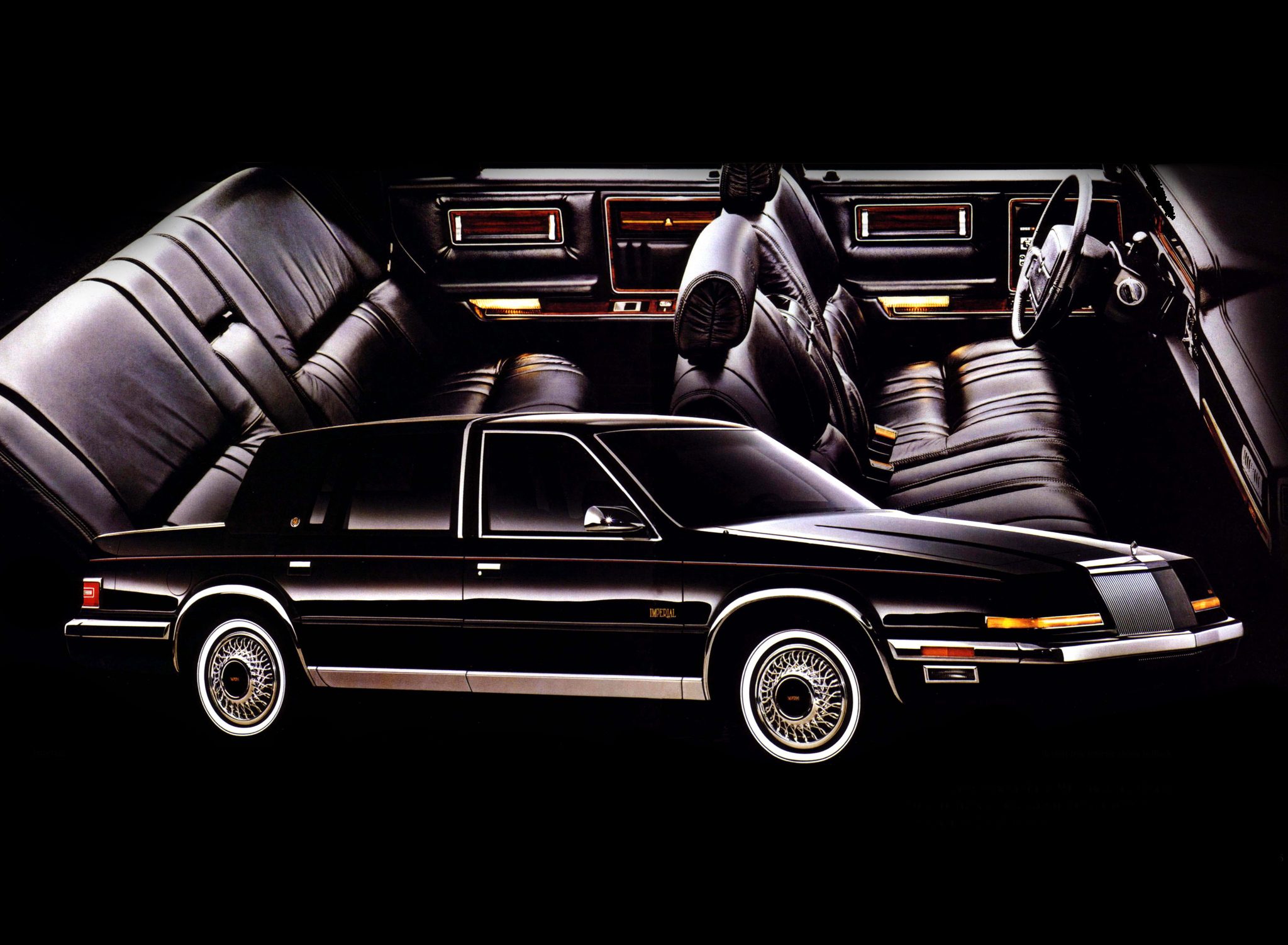
Or if you wanted all the size but not as much luxury, you could head to Dodge and get the Dynasty.
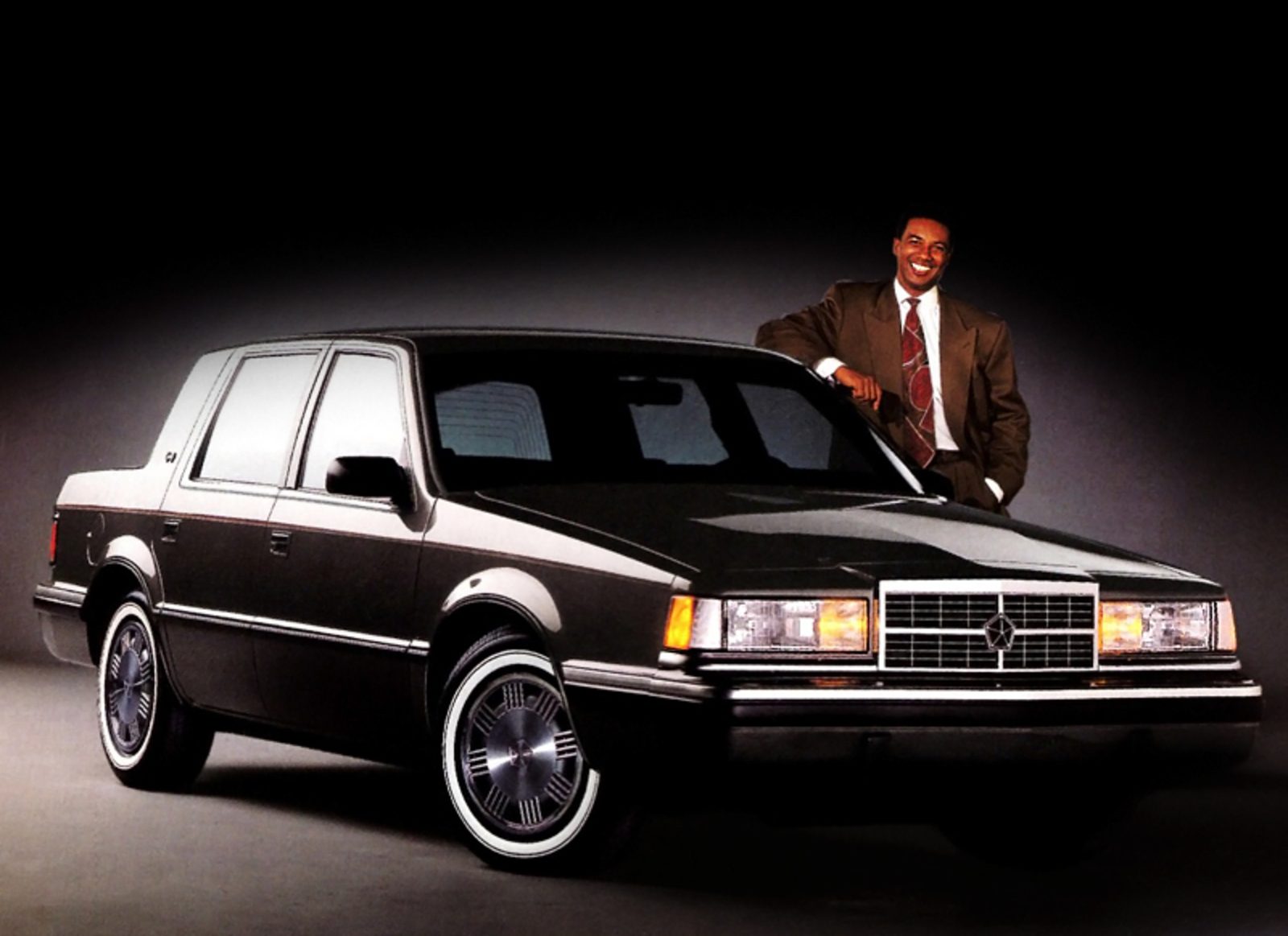
There were various differences between the cars. The New Yorker and Fifth Avenue were virtually identical save for some trim differences. The Imperial was distinct and actually rode on a slightly longer wheelbase. But aside from some trim differences, a flashier front facia, grille and wrap-around rear tail lights, it was identical to the other New Yorkers as well. The Dynasty was mechanically identical but got different styling. It had a grill with Chrysler’s Pentastar in the middle of it, no hidden headlights and an analog instrument cluster. To a buyer in the market for one of these things, it could all be a bit confusing. But something changed in 1990 and Chrysler went and created more confusion.
Somehow, Chrysler executives thought there was a need for a New Yorker variant that wasn’t as luxurious; something for the buyer that wanted a full-size sedan but couldn’t quite spring for all the niceties. Not content with just letting these buyers go over to Dodge and buy a Dynasty, product planners thought of the brilliant idea of a double rebadge and the Chrysler New Yorker Salon was born.
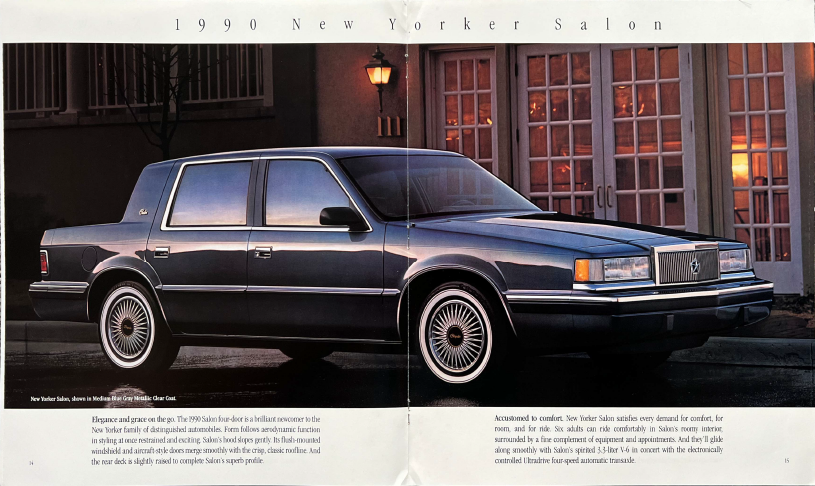
Now, the Salon trim wasn’t new. Back in 1963-’64, the name was used as a more luxurious trim on the four-door hardtop New Yorker. This time around, it was a base trim. You’re probably thinking “Wait. That’s a Dodge Dynasty. Not a Chrysler New Yorker right?” And you’d be both right and wrong, hence the confusion. Chrysler took the Dynasty, threw on a waterfall grill, some “Salon” badges on the c-pillars…and that’s it. It’s literally just a Dodge Dynasty with a different name. The biggest difference – and it’s not even that big of a difference – between the New Yorker Salon and the Dynasty was that the latter was available with cornering lamps; Chrysler reserved cornering lamps for the more luxurious trims of the New Yorker and Imperial.
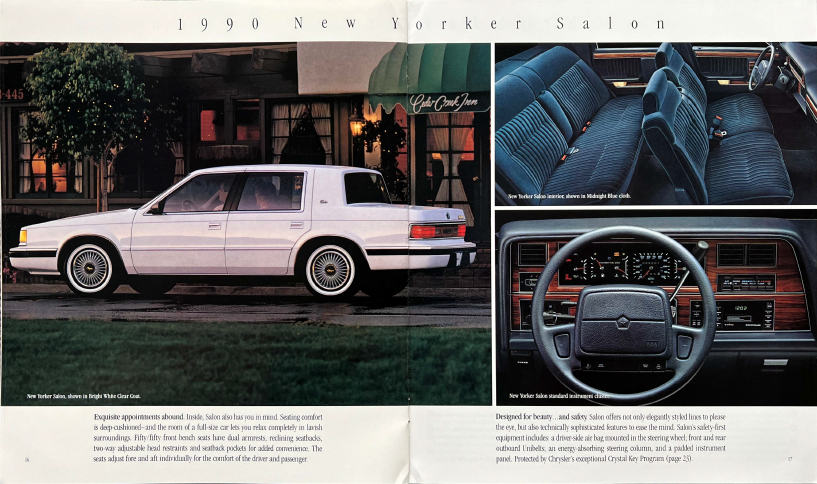
Even the interiors were identical to the Dynasty though the Salon came with more cushier looking cloth seats. This confusion even extended into Canada, where the Salon was sold as the Chrysler Dynasty. The New Yorker wasn’t alone in this confusion either. Chrysler basically did the same thing with models like the Dodge Shadow/Plymouth Sundance and the Dodge Spirit/Plymouth Acclaim/Chrysler Le Baron.
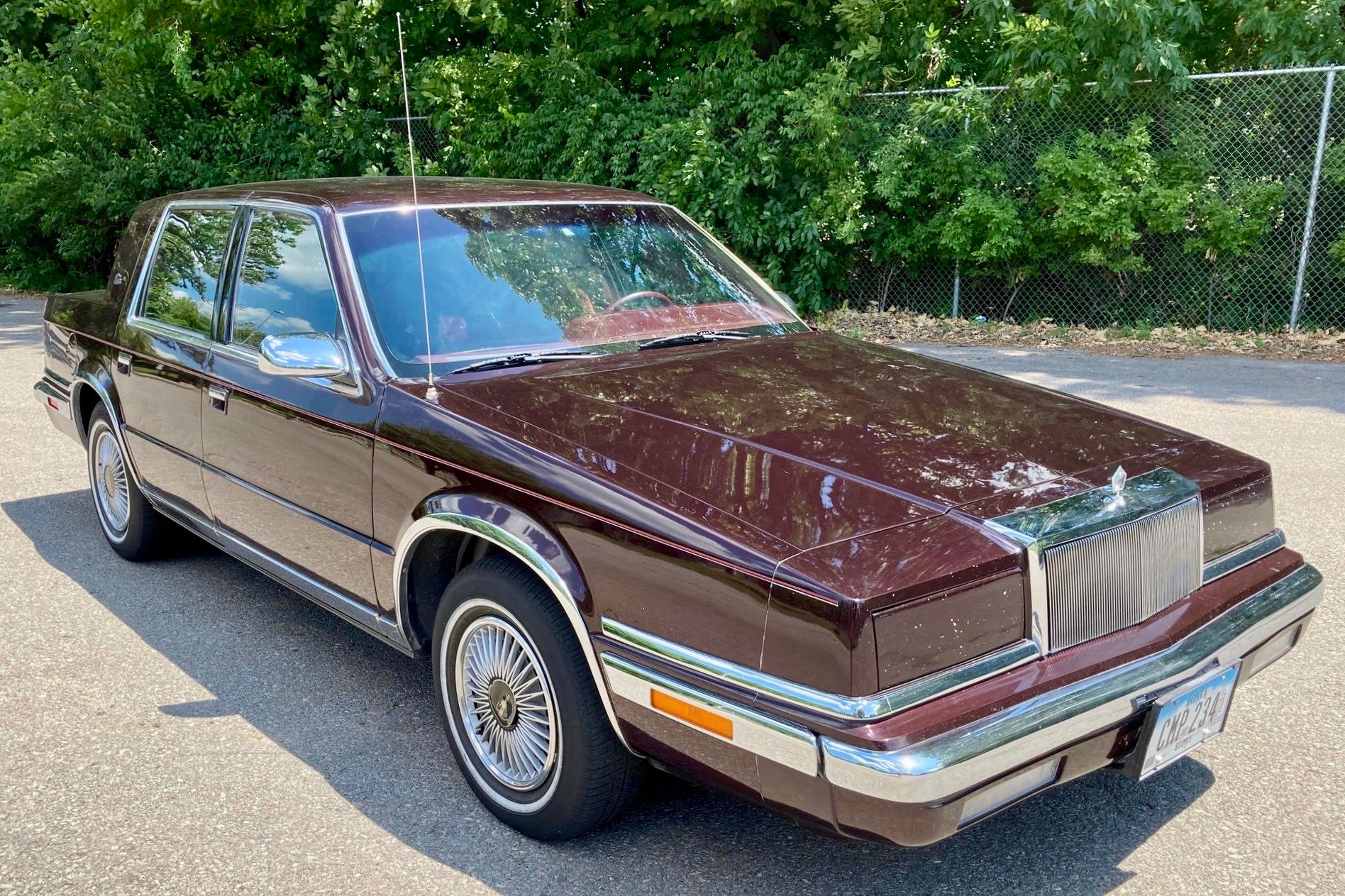
Things changed for the Salon the next model year. By then Chrysler did what it should have done in the first place: it made a base model out of the regular New Yorker sedan. So now, the 1991 New Yorker Salon looked exactly like the other New Yorkers, right now down to its concealed headlights. It was just decontented a bit and had “Salon” badges on the c-pillars and no cornering lamps. Just a few years later, this confusion would go away when Chrysler introduced the LH platformed New Yorker. Sadly the New Yorker name wasn’t long for this world as it was phased out in 1996 and replaced by the LHS.
Today, badge engineering is almost a thing of the past. Almost. While it still happens, it’s nowhere near as bad as it used to be. Sure the Chrysler Pacifica and Voyager are the same van and sure the Dodge Hornet and the Alfa Romeo Tonnale are the same crossover, but…you know what. It’s still bad. It’s just not widespread. And they’ve gotten better at it. But one can still hope that maybe, someday, badge engineering will fall out of practice. But with the ever ending chase for profit by automakers, I won’t hold my breath.



Leave a comment