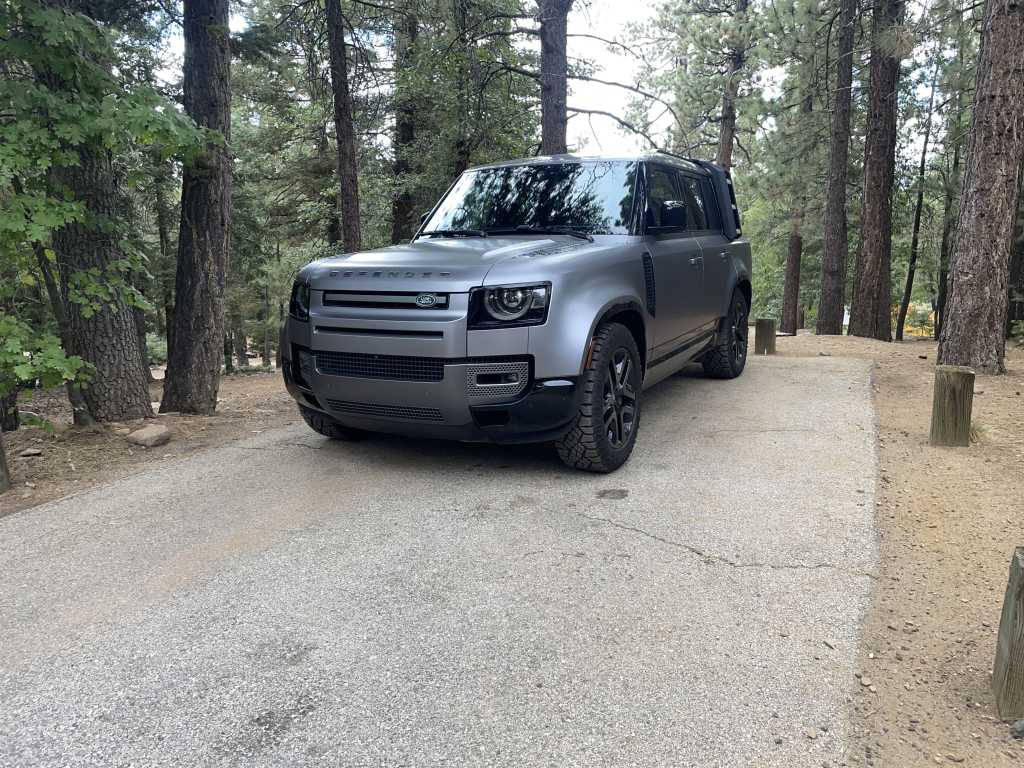
The massive British SUV was a game changer in helping to get to the great outdoors.
I have to admit: I don’t go camping. This isn’t to say I haven’t been camping, but I haven’t done it since I was a kid, and even then, I only did it about two times. So when my family decided that we were going to go camping in the mountains for nearly a week, I immediately thought of the Land Rover Defender, and thank God I did. Its huge interior, potent engine, and off-road capability made it perfect for camping.
All new for 2020, this generation of Defender is the first time the nameplate has been in North America since the late 1990s. Land Rover offers the Defender in four flavors: the two-door Defender 90, the “standard” Defender 110, the longer Defender 130 – which I tested – and the performance oriented Defender OCTA. The 130 was all new for 2023 and with its available eight-passenger seating, it’s the largest Defender you can buy.
A dedicated luxury/off-road vehicle like this doesn’t come cheap. Including destination charges, pricing starts at $71,325 for the base Defender 130 S. My tester was the top-of-the-line Defender 130 Outbound which starts at $87,125. Choosing the Outbound trim replaces the rear side windows with panels, which Land Rover describes as a “robust signature panel concealing the cargo space,” deletes the third row, and adds exterior side-mounted accessories in the form of a cargo box and a foldable ladder for roof access. With over $13,000 in options including $5,500 satin protective film for the matte Eiger Grey exterior paint, $1,250 off-road package and a $1,400 premium package, my Defender 130 Outbound stickered at $100,493.
While the Defender gets more than a few engine choices depending on its trim, the 130 Outbound only gets one engine: a 3.0-liter mild hybrid I6 with 395 horsepower. That gets paired with an eight-speed automatic transmission and standard four-wheel drive.
Getting the Defender ready for camping was way easier than I initially thought it would be. I needed to haul enough to support nearly 20 people – it was a big family camping outing – plus the things my girlfriend, our son and I would need. The Defender handled it with ease. Its huge size helped. Excluding the standard rear-mounted spare tire, the Defender 130’s 200.8 inch length makes it about the same length as a Chevy Tahoe (211.7 with the spare tire). It’s also nearly 15 inches (14.8) longer than the Defender 110. The Outbound trim’s lack of a third row meant I had 44 cubic feet of space to play Tetris with. That swelled to 89 cubic feet with one side of the second row folded, over 10 cubic feet more cargo room than the Defender 110. All this cargo space was in addition to the exterior side-mounted cargo box that’s able to hold another 6.3 gallons or 37.5 pounds of gear.
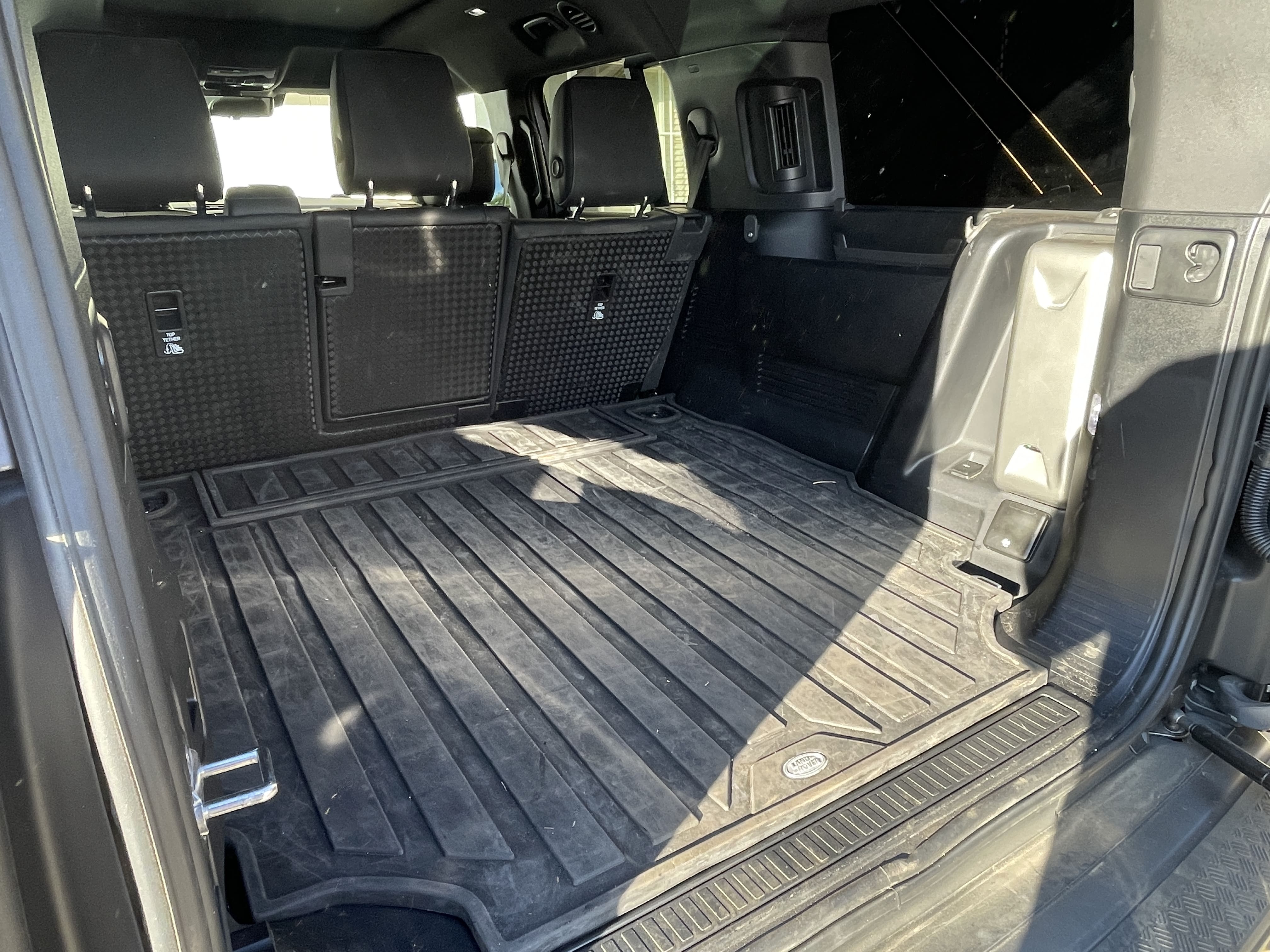
This all meant that the Defender 130 was able to swallow a literal truck load of items. I managed to fit a 38-inch Blackstone flat top grill, a box holding a 20×20 foot tarp, three foldable chairs, a seven person tent, cooking accessories for the grill, a box holding an air mattress. a cooler, luggage, a collapsible trash can and various clothes, shoes, blankets and foodstuffs. The 130’s side opening rear hatch along with cargo area controls that can raise and lower the air suspension made loading it up a breeze.
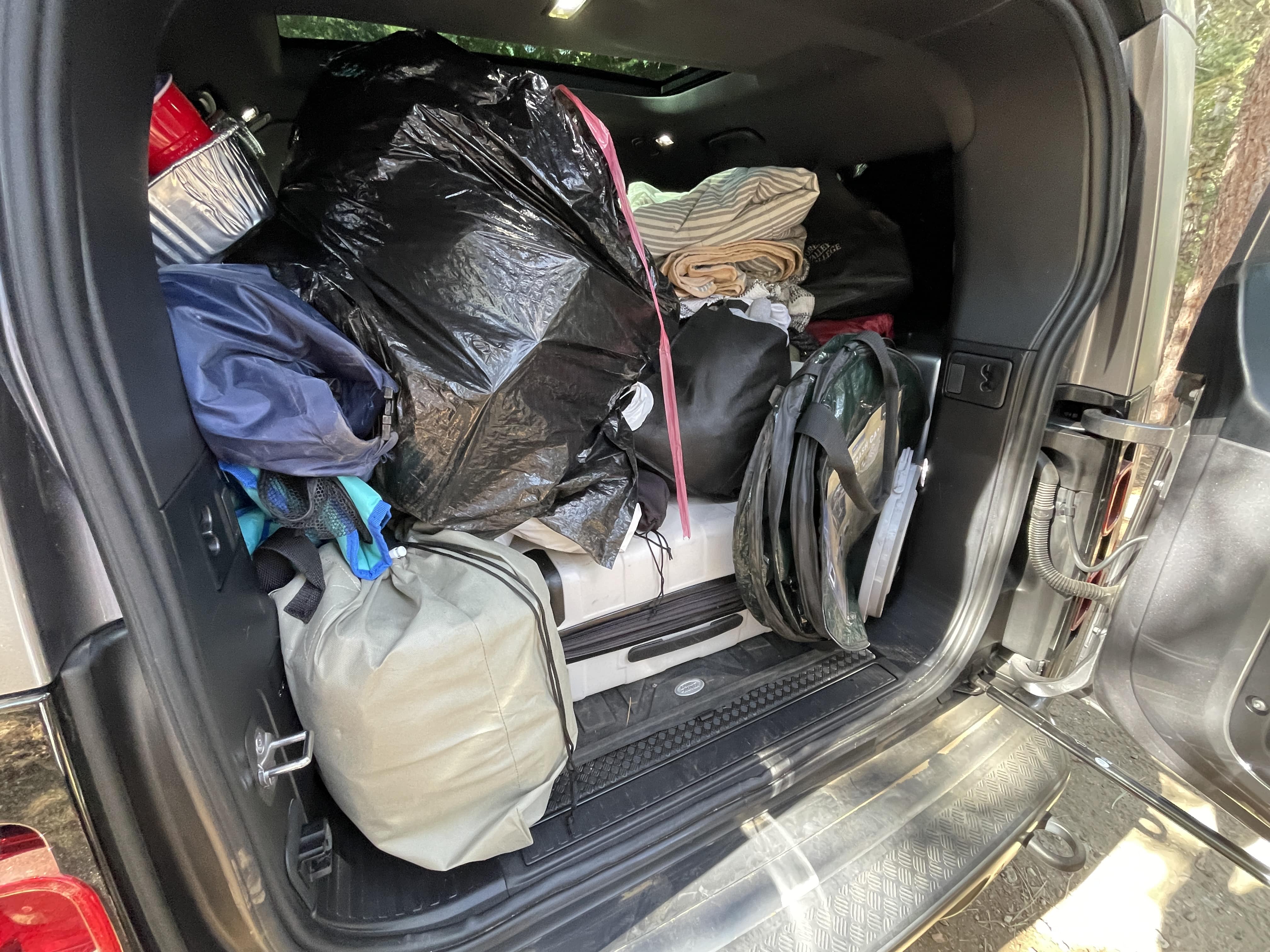
Loaded down with people and cargo, we set out for our Big Bear campground. I was worried that the Defender’s turbocharged I6 might get a bit taxed making the 7,000+ foot trek through the mountains, but the engine handled it just fine. There were a couple of times I had to really get into the throttle to pass a slow moving car, but it was no big deal. Power comes on strong, and with the turbocharger and mild hybrid setup, the power is always available when you need it.
Handling isn’t the 130’s strong suit, because of course it isn’t. This is a nearly 6,000-pound SUV that’s over 17 feet long. A high center of gravity combined with big 20” off-road tires meant mountain curves had to be taken easily. You feel its heft and length from behind the wheel. At no point did I feel the need to hustle this thing like it was some kind of performance wagon. I shudder to think how scary things can get in the 493 horsepower Defender 130 V8.
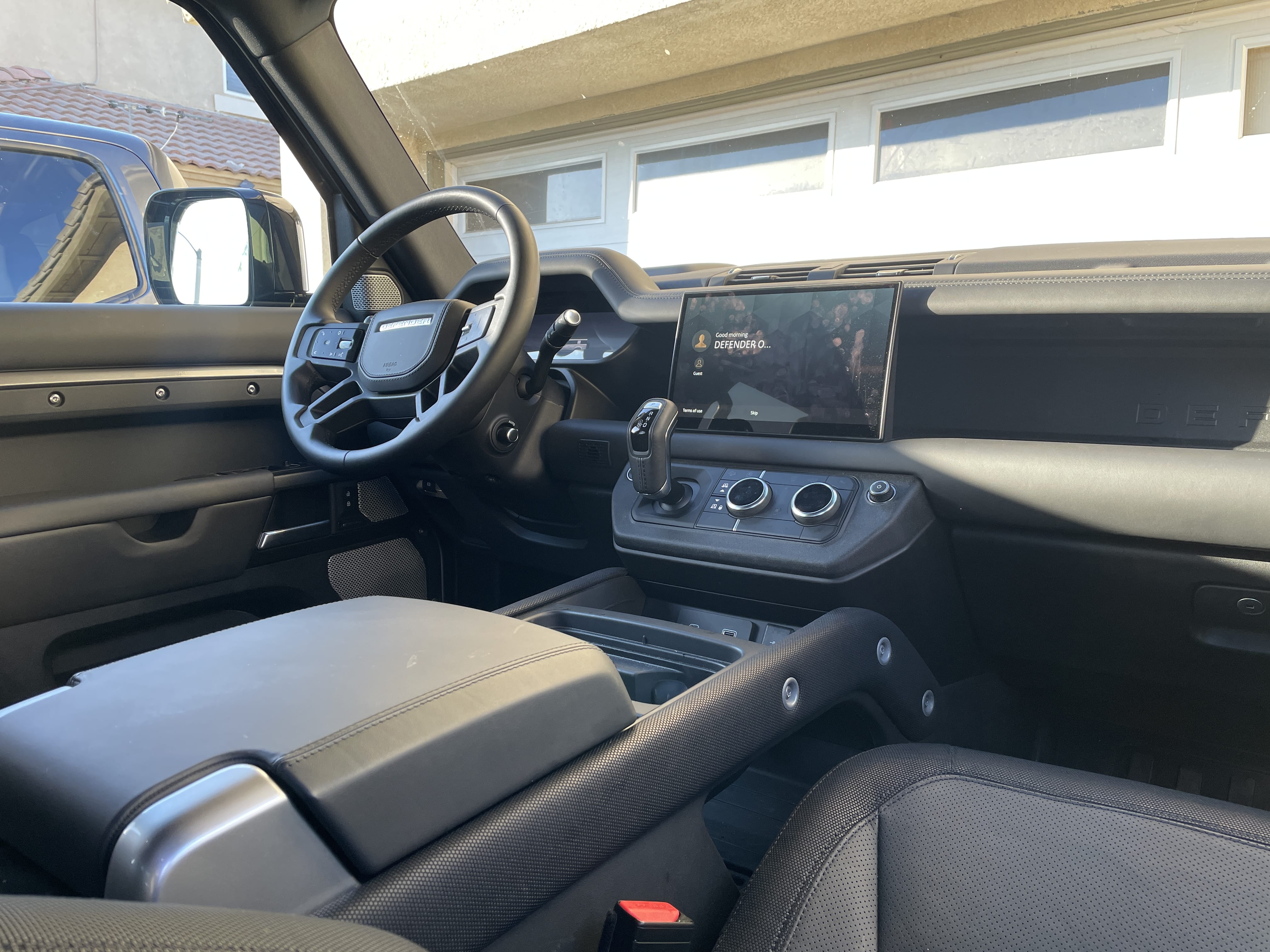
The interior of the 130 wasn’t a bad place to spend time in on the way there. Being the Outbound trim, the interior can come across as utilitarian at first. Land Rover’s Robustec – the brand’s durable material – covers everything from the seats to the dash. Exposed bolts on the doors and center console add to the rough and ready look. This is a place you wouldn’t mind getting dirty. Despite the looks, the interior is roomy and comfortable with lots of thoughtful features.
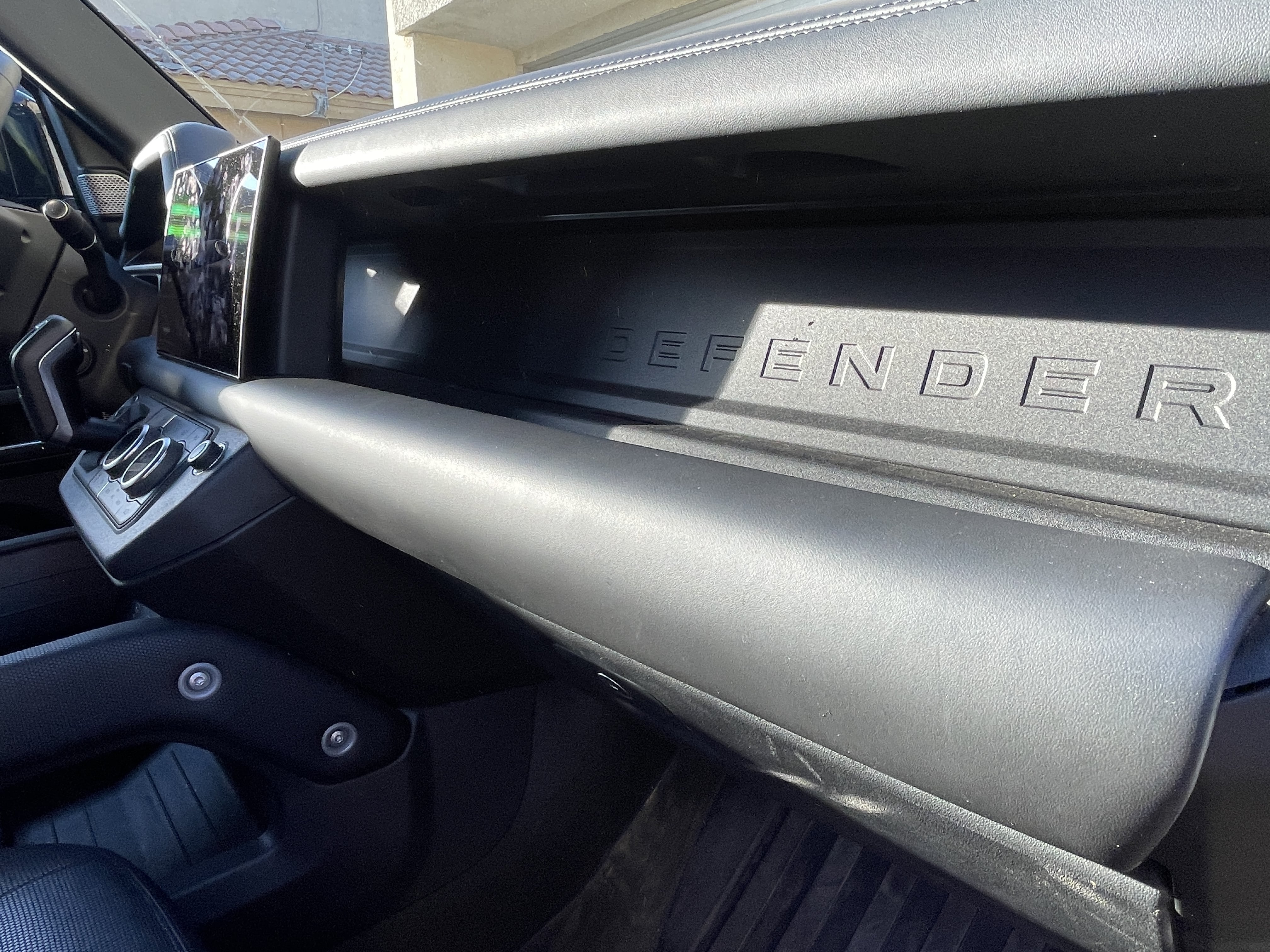
Take the passenger side of the dash. It’s recessed, has ambient lighting and can hold things like tools or a phone. The center console is brilliantly designed too. Aside from two deep cup holders, it houses a big and deep refrigerated compartment (both part of an $810 Comfort and Convenience package) and a lower level that’s big enough to house a laptop or even a small backpack. This is in addition to other, usual comfort features like tri-zone climate control, heated and cooled front seats, and a panoramic roof with a skylight over the cargo area.
When we finally arrived at the campground, we discovered that there was a light off-road area that needed to be crossed before we could get to the site. This proved to be a cakewalk for the Defender 130. Four-wheel drive with a two-speed transfer case, an adaptive air suspension, and Land Rover’s excellent Terrain Response System meant all I had to do was drive and the Defender handled the rest. There were more than a few nice sized rocks, but with an adjustable air suspension that has a max setting of 11.5 inches, it was more than enough to clear those rocks and other obstacles.
There were a few downsides to the 130. Take the styling. It’s hit or miss. I think it looks good, but it’s one of those vehicles that has to be in its element for its styling to truly be appreciated. Against the backdrop of nature, it stands out. Anywhere else, it can come across as obnoxious or make you look like a poser; someone who wants to look as if they’re going on a safari despite never going on anything worse than a badly paved street.
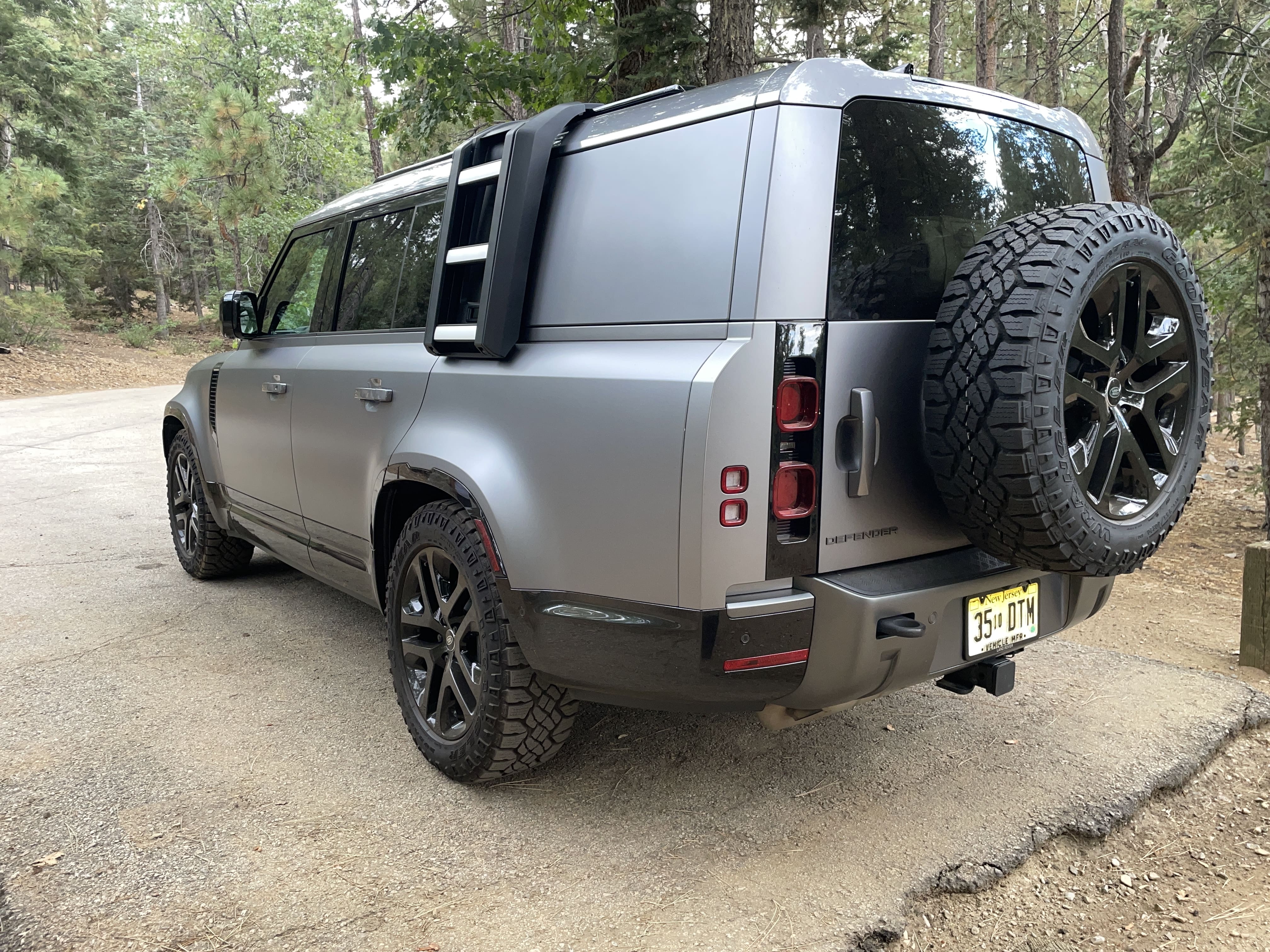
Rear and side visibility sucks. This is made worse by the spare tire that eats up nearly half the view out the back window because of the Outbound trim itself; there’s no way to get regular side windows. The only way would be to pick another trim altogether. And while the ladder and cargo box are options, not selecting them still leaves you with the panels over the windows. The exterior ladder is also mostly a useless gimmick. When fully extended, the first rung is so far off the ground you have to stand on something to reach it.
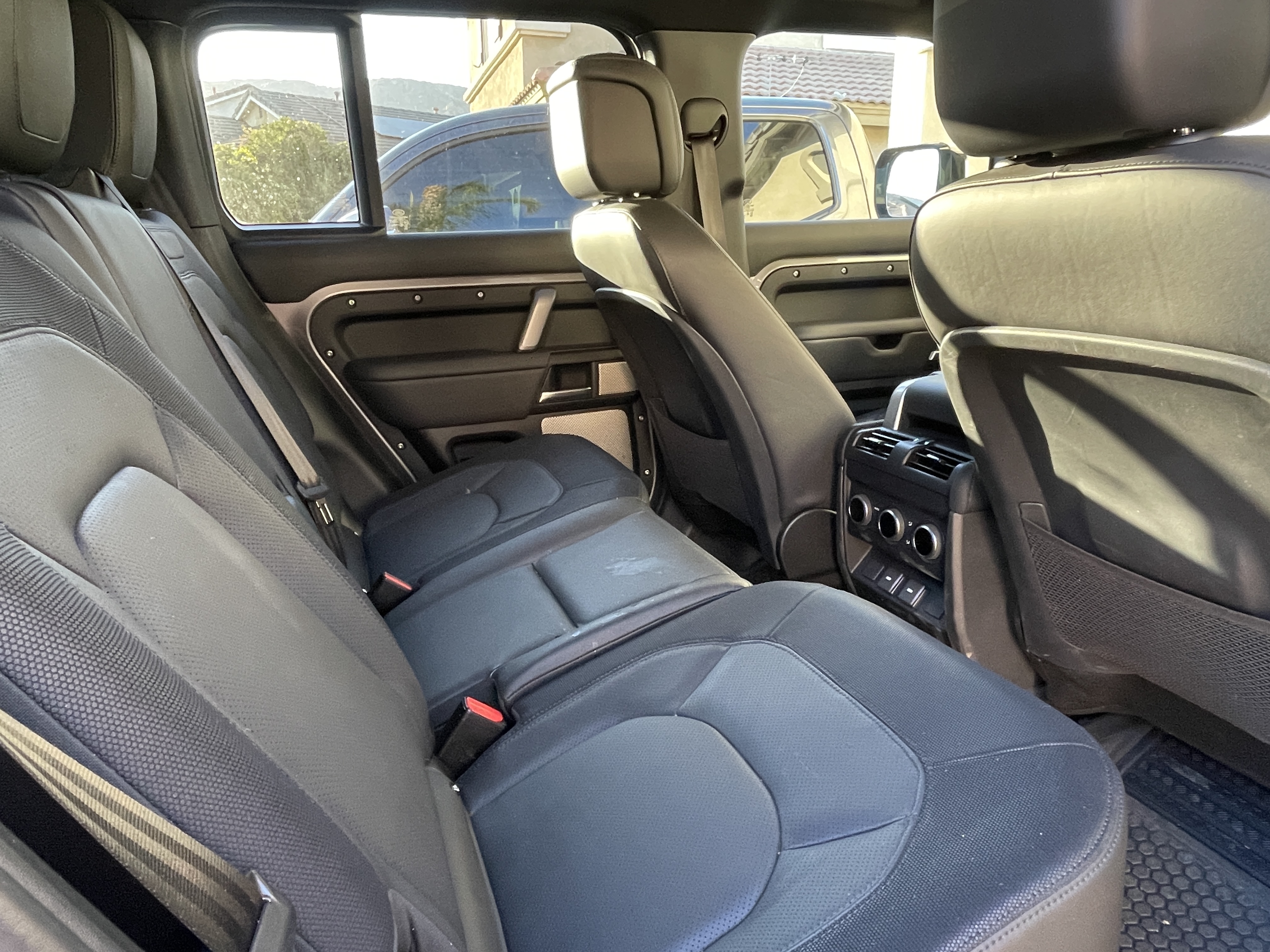
Not all interior surfaces are as tough as the Robustec. For instance, the backs of the seats and the walls of the cargo area seem to be made of standard plastic and are easily scratched or dirtied.
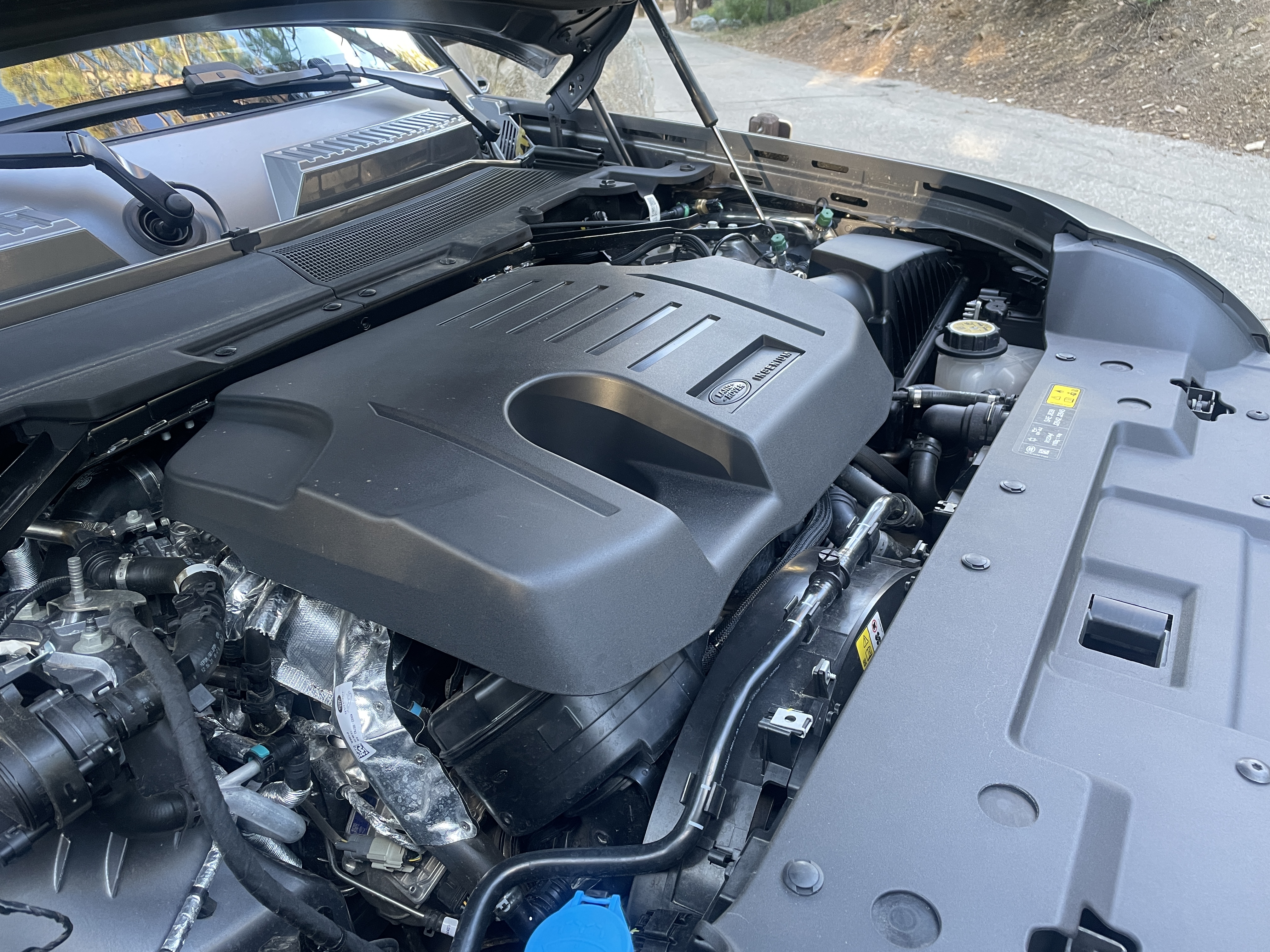
The Ingenium I6, while powerful, is thirsty. It is a mild hybrid, but the hybrid portion of the engine is more an electric supercharger than something that aids with efficiency. On longer treks, I averaged an ok 18 mpg, but that dropped to a V8-like 15-16 mpg around town. Lastly, despite its fantastic off-road features, you might want to think twice before taking the Defender 130 on really rough terrain. The length of this thing combined with its rear overhang will quickly kill any kind of off-road fun.
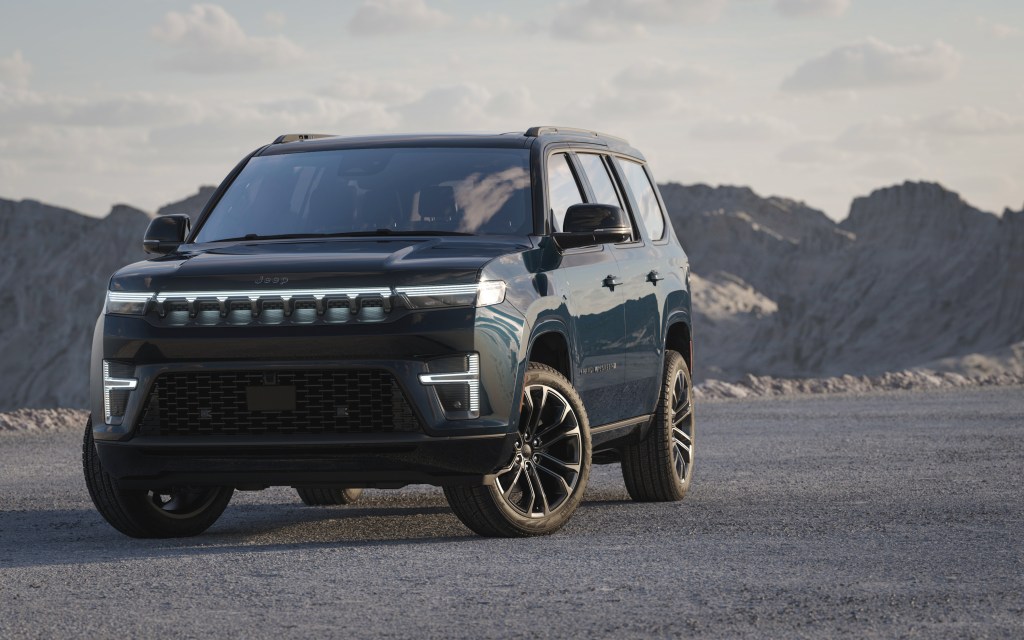
The Defender 130 is brilliant though. Some may have a problem with its styling or how far removed it is from the original Defender. I say who cares? This is a modern vehicle that’s more than capable and it proved itself in its ability to handle both family and outdoorsy duties. I genuinely don’t think we would have been able to make the trip work without the Defender 130 Outbound. Unless you just have to have a third row, its deletion on this trim opens up some serious cargo room. I could have done without the gimmicky cargo box and ladder, but the overall Outbound package is solid. The Defender might be a bit too rough around the edges for some but that can easily be remedied by either choosing another trim or something else entirely. Unless you go American and get something like a GMC Yukon XL, Chevy Suburban, or Jeep Grand Wagoneer L, you can’t find the Defender 130’s combination of size and off-road capability anywhere. When it’s in its element, the Defender 130 easily shines as one of the best off-road vehicles money can buy.
 Daily Revs
Leave a comment