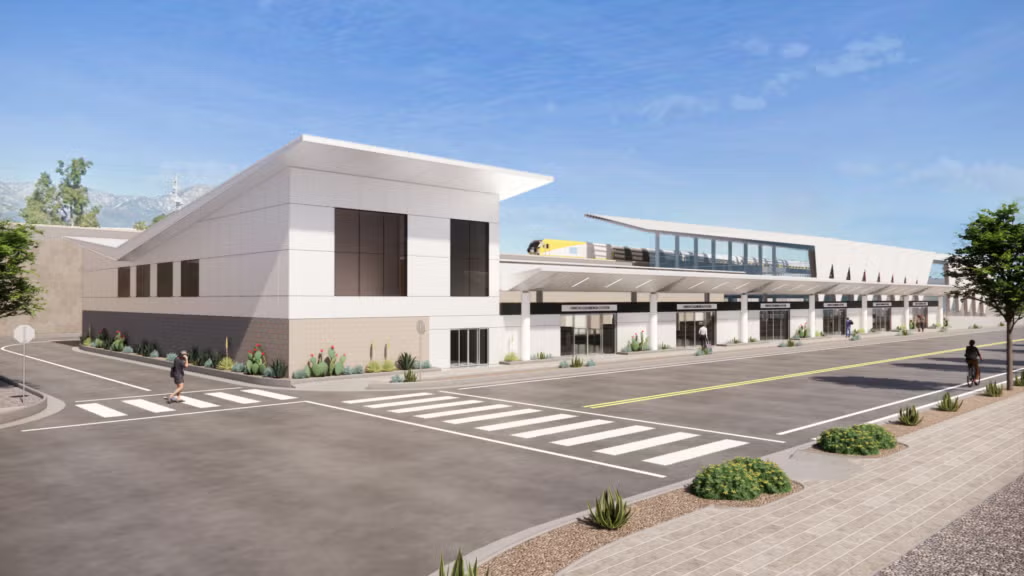
An underground tunnel moving passengers with autonomous vehicles from an airport to a high-speed rail station makes no sense no matter what city it’s in.
Autonomous vehicles are a transportation solution no one asked for. Billions that could have gone to proper transit solutions like buses, bike lanes and light rail have instead gone to develop vehicles whose only claim to fame is that they have no driver. Stupidly, one Southern California city is embracing this by promising to use driverless cars to ferry passengers in a tunnel from the airport to a high speed rail station.
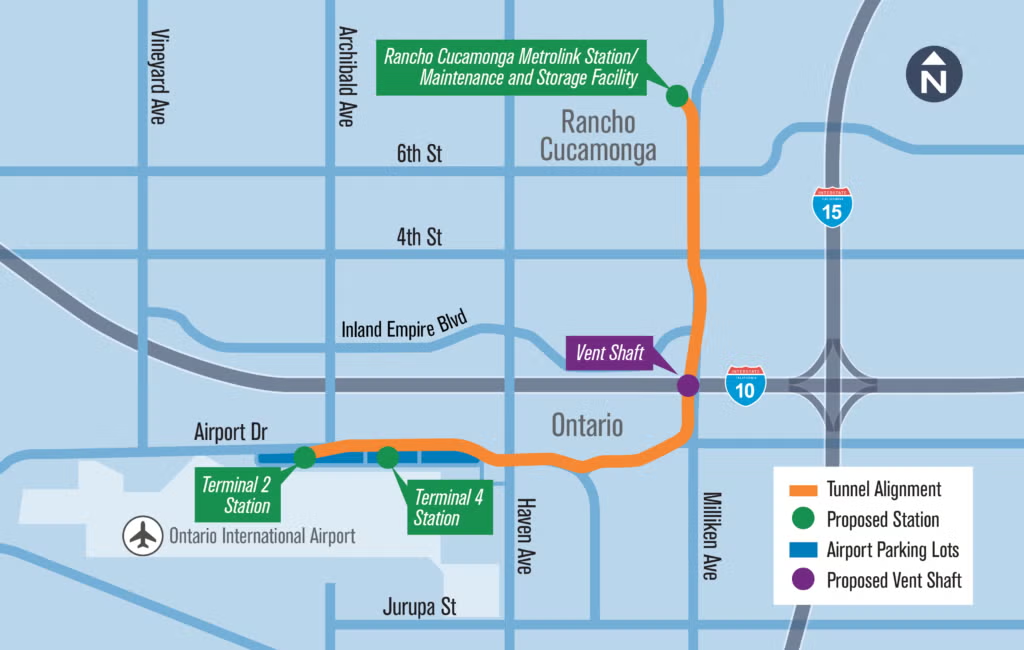
The idea is called the Ont Connector; Ont is short for Ontario, California, which also happens to be my hometown. The whole thing started life a couple of years ago as a project brought forth to city and county officials by Elon Musk’s Boring Company. The company said it could dig a four-mile long tunnel from the Ontario International Airport to the nearby Metrolink station – future home of the Brightline West high speed rail station – in Rancho Cucamonga. Boring Co. claimed it could do the work for just $85 million and have the tunnel up and running in just over a year or two. The original plan called for something similar to the tunnel system in use at the Las Vegas Convention center: passengers would board modified Tesla Model Xs that would ferry them to their next station. Eventually the plan called for autonomous cars that would travel 100 mph in the tunnels. This was in 2021.
Fast forward a year and the Boring Co. backs out of the project over an environmental impact study that county officials wanted done. With the Boring Co. out of the picture, city and county officials still wanted to move forward with the project.
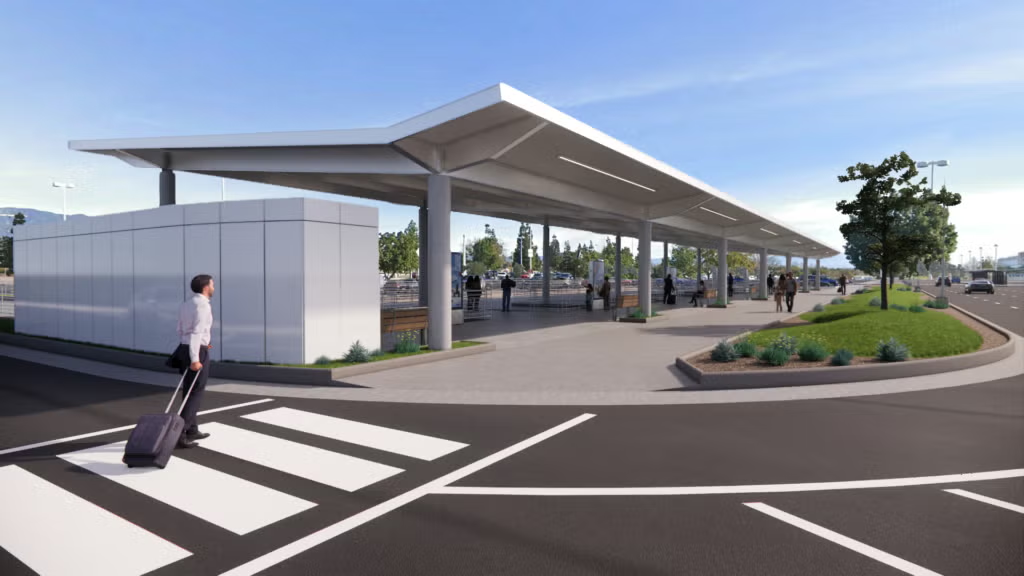
Now just over three years later, officials have renderings, environmental impact reports and have been holding public hearings about the project. The plan is still the same and that’s the problem: the tunnel would use autonomous vehicles of an unknown make to ferry passengers from the Ontario International Airport terminals to the Brightline West/Metrolink station four miles north. How a solution that made sense like light rail transformed into a tunnel with autonomous vehicles carrying passengers to and from the airport is interesting.
A decade ago, the Ontario Airport Rail Access Study concluded that some form of light rail transit was needed in the region, specifically near or connecting to the Ontario International Airport. The study even said as much in two of the few conclusions and recommendations in the report:
Rail vs. Bus: The passenger convenience and system capacity of a rail system will best serve passenger needs and attract the most riders in the long term future.
A rail connection should be planned for the airport’s future, and a bus shuttle connecting ONT with the Metrolink Rancho Cucamonga station should be developed in the interim…
At the same time, Los Angeles Metro and county officials were discussing the feasibility of extending the Gold Line – now known as the L Line, the 31-mile light rail line runs from Azusa to East L.A. – into the western part of San Bernardino County in the city of Montclair. The project was soon caught up in the drama of local officials at odds with each other over the region’s transportation needs. In 2017, the San Bernardino Associated Governments , made up of city officials from all over the county, opposed a bill that would have allowed the line to extend into the county.
The reason? The board said the bill jumped “the gun by promoting a particular rail option to the airport before the agency has had a chance to study other options.” Except there were no other options at the time. The board just didn’t want L.A. County dictating transportation needs to them. Some saw it as a dumb move. If the plan had moved forward, it would have eventually brought the rail line all the way to Ontario Airport. This was always an important part of the plan because of Ontario Airport’s declining passenger volumes at the time due to undermining control by Los Angeles World Airports. But that’s a whole other can of worms.
The extension plan is still currently in place and is expected to be completed by 2030 though it will still only end in Montclair. At the time however, the cost of over $ 1 billion and a construction time of years made impatient officials start to look for other alternatives. Then in mid 2020, Elon Musk and his Boring Co. swooped in saying that the company could build something better than an expensive light rail project in less time and for less money. From the Inland Valley Daily Bulletin:
Musk’s Hawthorne-based companies sent an unsolicited proposal to SBCTA sometime in April or early May, ” the agency said. In mid-May, the SBCTA Transit Committee warmly embraced the project. The committee also voted unanimously to place a $3 million study of ONT rail access alternatives on hold, so the staff could flesh out Musk’s proposal and move it forward.
Keep in mind, this is a company that, even now, hasn’t completed any major transit systems anywhere on the planet. And yet officials were willing to place a study worth millions to explore viable transit options on hold to take Elon Musk and his unproven company at their word. And it worked. Officials were smitten with the Boring Co.’s plan. Executive director of the San Bernardino County Transportation Authority at the time Ray Wolfe said that he was “very confident this is something we should do.” Ontario City Councilman Alan Wapner, who was also president of the Ontario International Airport Authority, said he “absolutely” supported the Boring Co.’s plan.
Now without the Boring Co., it seems officials are pretty clueless on how useless this tunnel system with autonomous vehicles would be for passengers. In one part of the environmental impact report that goes into detail about the vehicles to be used in the tunnels, officials are anticipating the need of an autonomous vehicle fleet “between 7 and 60 vehicles.” According to the report, the vehicles will need to handle a passenger capacity of 100 people an hour in each direction. For a system that’s supposed to be helpful in easing congestion on local surface streets, 100 passengers an hour is laughably low.
To put how low that is into perspective, we’ll use a comparable rail line from L.A. as an example. L.A. Metro’s D Line is a subway system of eight stations. And at just over five miles long, it’s about a mile longer than the tunnel system proposed for Ontario. Yet the D line has averaged over 133,000 passengers every weekday. Granted this is just one small part of a larger transit system in a city of over 3 million residents, but still, it proves rail would be able to handle way more passengers. Even some local bus lines see higher passenger loads than that.
Reading further into the project details, you really start to get the impression that this entire project is nothing more than a quick fix transit solution. Officials are literally just moving vehicle traffic from surface streets underground. Take a section from the project report that briefly mentions how the autonomous vehicles in the tunnel will replace four car trips on surface streets:
Trips to and from the Airport by Passengers Who Were Previously Dropped Off
In this case, a passenger transit trip to and from the airport can replace four one-way auto trips (two trips for each passenger drop-off/pickup)…
The cost of the project has also ballooned, so much so that it makes more sense to just go ahead and build an underground rail system. The tunnel is now projected to cost over $500 million, which is over $400 million more than the original cost. Officials have also found a new company to handle the construction of the tunnel. Called HTNB, the company genuinely believes that this tunnel is the future of transportation. In a press release from 2021, HTNB project manager Ian Choudri said the project will “set a gold standard for the country to refer to and deploy similar system to improve the quality of life for residents.”
This is something no one asked for though. And at this point, especially given the ballooning cost, light rail literally makes more sense. Officials only seem to be caught up in autonomous vehicles because they generate buzz. One can only hope that someone comes to their sense before this thing breaks ground – it’s now being projected that the system will be up and running by Fall 2031 – to get everyone to agree to finally give the region – and the country – a great example of a light rail system.


 Daily Revs
Leave a comment