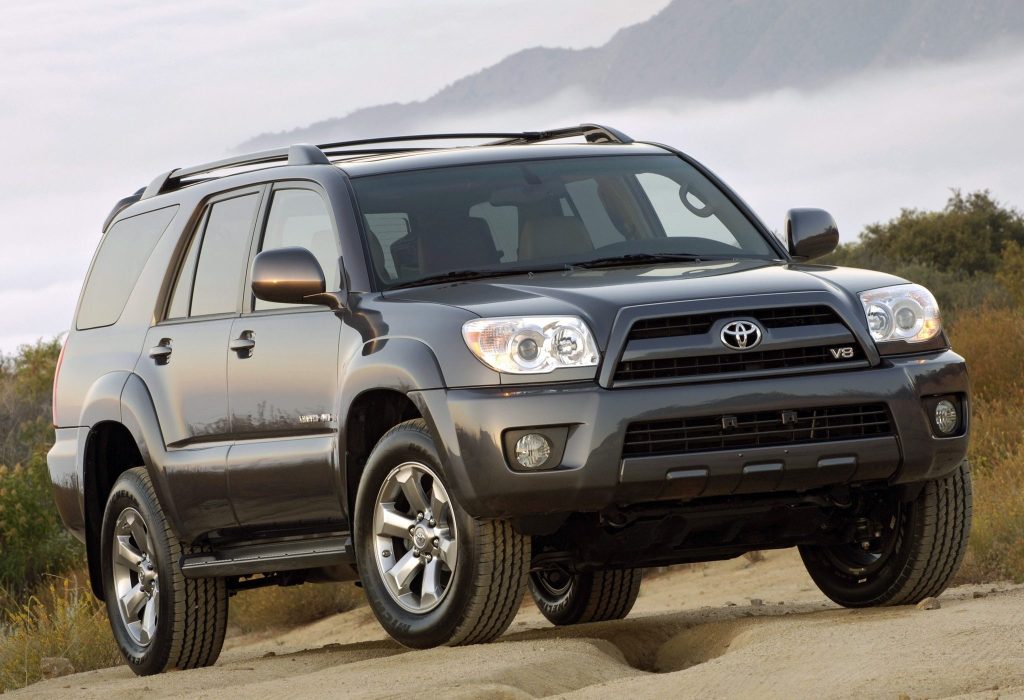
The Nissan Pathfinder and Toyota 4Runner both once offered V8 engine options for buyers, something you’d never see today.
Unless you go premium for something like a BMW X5 M60i or an Audi SQ7, there aren’t too many midsize SUVs that offer a V8 anymore, especially ones with off-road chops. Today, models like the Ford Bronco and Honda Pilot are powered by turbocharged 4 and 6 cylinder engines. Back in the 2000s things were a bit different. Back then, you could find models like the Nissan Pathfinder and Toyota 4Runner with V8 engines.
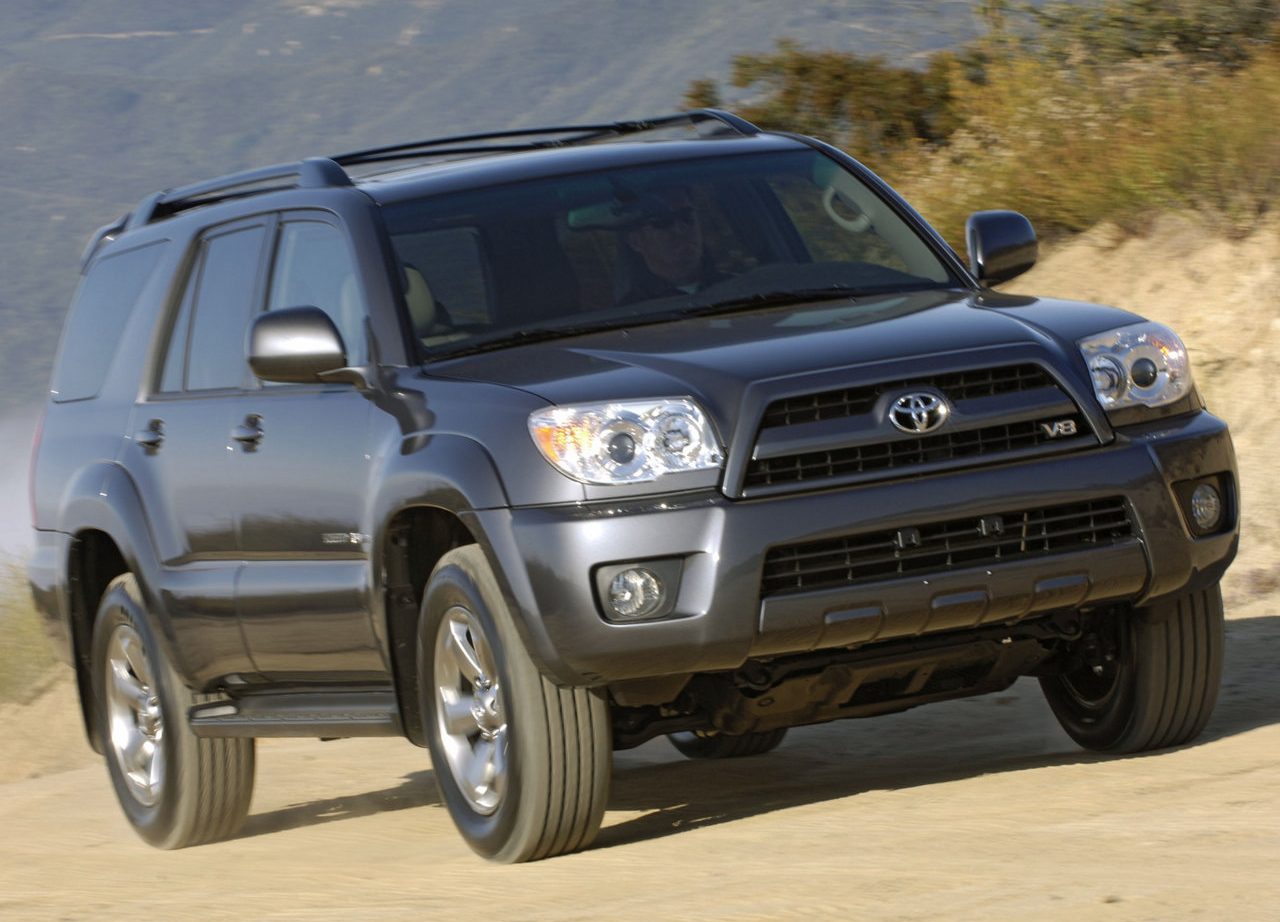
Both Toyota and Nissan dropped V8s in their midsize SUV offerings around the same time. Over at Toyota, the 4th generation 4Runner was introduced with a V8 when it debuted for the 2003 model year. It was the first time Toyota offered eight cylinders in the 4Runner; the SUV had always had I4 or V6 power before then. At 4.7-liters, the V8 was the same one used in the Tundra, Sequoia and Land Cruiser. It made 238 horsepower and 320 lb-ft of torque and was available on every trim level. Opting for the V8 in the 4Runner even got you a better four-wheel drive system. When paired with the V8, it was a full-time four wheel drive system; the V6 made due with a part-time setup.
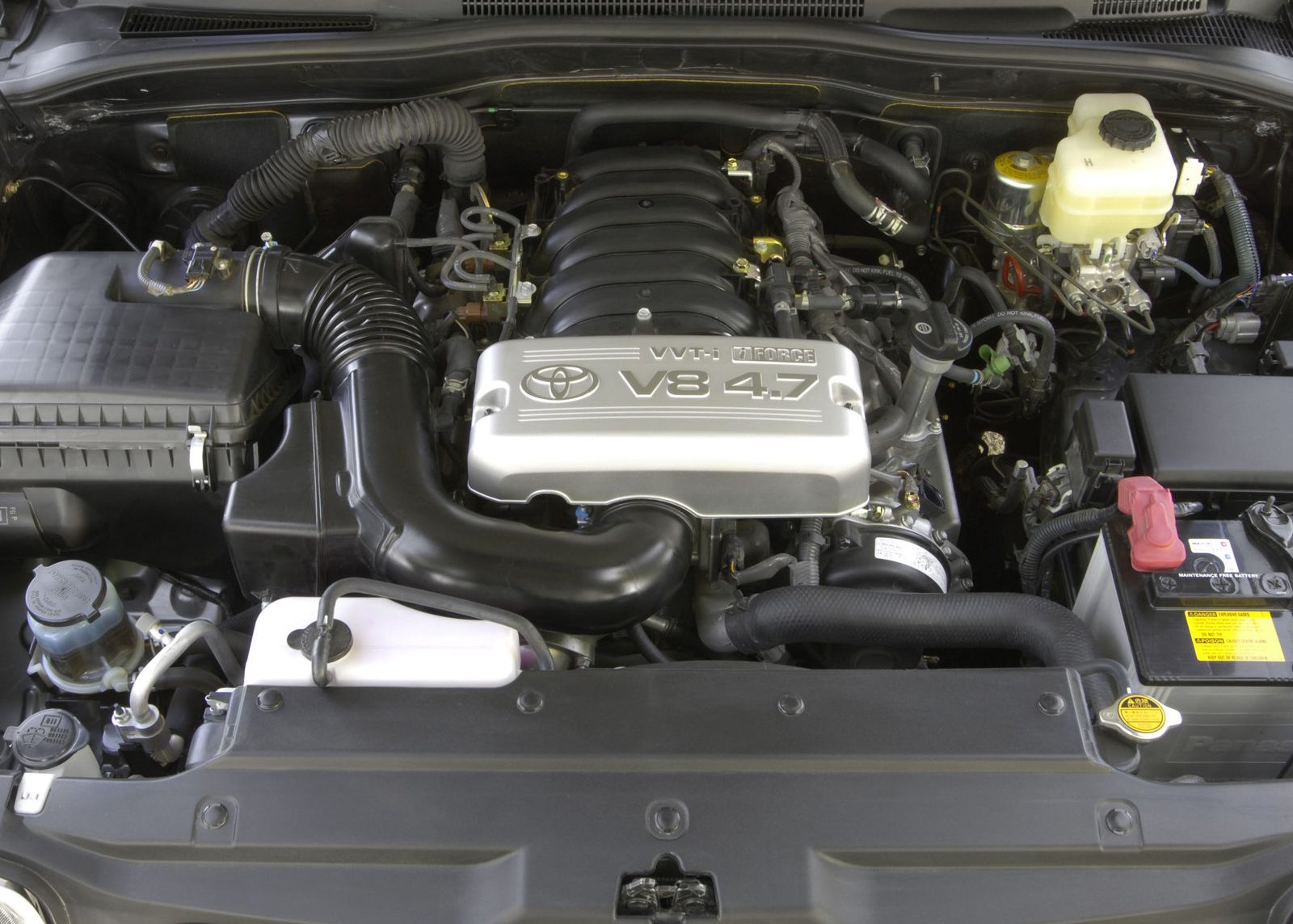
While many applauded Toyota for offering the V8 in the 4Runner, it was a weird offering for a few reasons. For one, the V8 was actually down 7 horsepower compared to the standard 4.0-liter V6 (245 horsepower). The tradeoff was torque with the V8 making 36 more lb-ft over the V6. But then this didn’t matter as both the V6 and V8 had identical 5,000 pound towing capacities. The V8 also added weight, something which went against Toyota’s goal of giving this generation of 4Runner (according to Car & Driver) better on-road stability and comfort without compromising its off-road capabilities. And at 350 pounds of weight, it was a noticeable difference. The result was an SUV that drove heavier than its predecessors with a V8 engine it could have done without as it really had no benefit over the V6. In its 2003 debut test of the 4Runner, Motor Trend remarked that the V8 seemed to be nothing more than a marketing decision by Toyota because many buyers “just have to have a V8.”
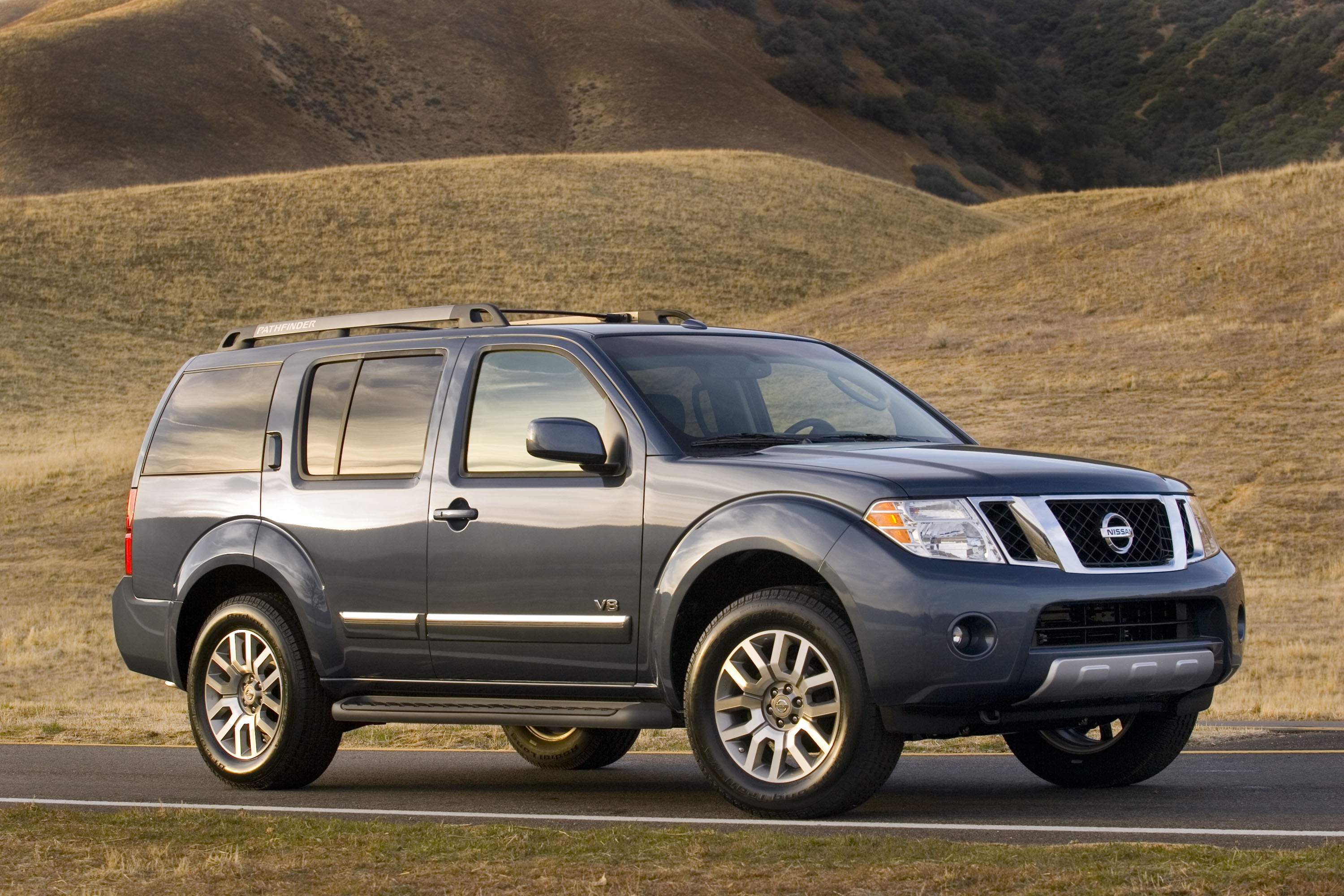
Nissan was a couple years late to the party but went about its mid size V8 SUV a bit differently. The third generation Pathfinder debuted for the 2005 model year and it was just as rugged and tough as its predecessors thanks to a platform that was shared with the Xterra and Frontier. Initially the Pathfinder’s sole engine option was a 4.0-liter 266 horsepower V6; if you wanted a V8 Pathfinder you had to go for the full-size Pathfinder Armada. Things changed in 2008 when Nissan dropped its 5.6-liter V8 under the Pathfinder’s hood. With 310 horsepower, it leapfrogged the 4Runner in the power department and made the Pathfinder almost as powerful as the Hemi powered Dodge Durango at the time.
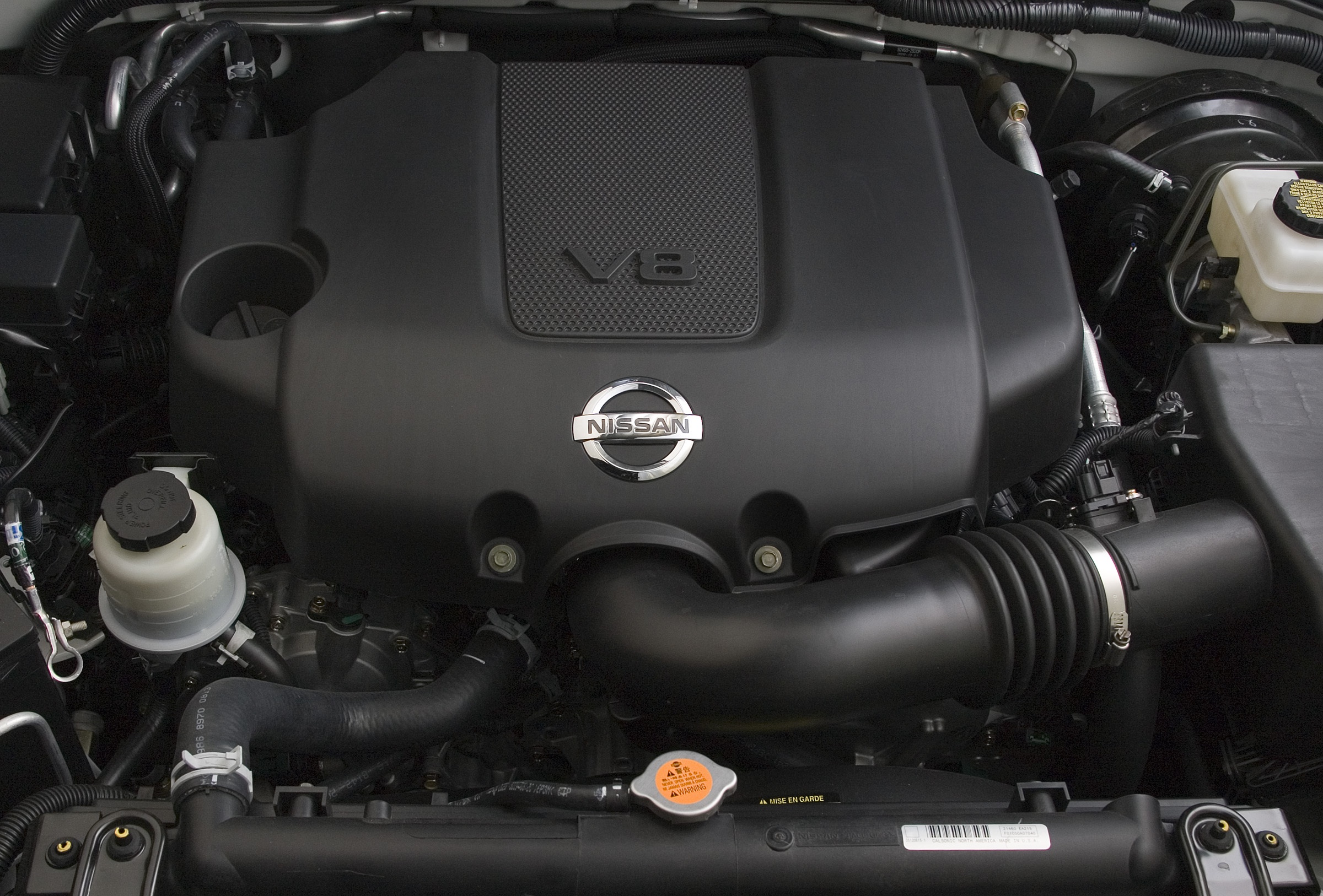
With 388 lb-ft of torque on tap, the Pathfinder V8 also topped the 4Runner V8 in towing capacity with the ability to pull up to 7,000 pounds. Buyers could also option the V8 engine in the Pathfinder with either rear or four-wheel drive. And it was cheap. Pricing for the Pathfinder V8 SE 2WD started at just $31,565; tack on another $2,200 for four-wheel drive. It drove decently, with journalists at the time remarking that its on road feel was impressive for something that was a body on frame SUV. The downsides, at least with the V8 were its weight and gas mileage. A body on frame V8 SUV with a 5,000 pound+ curb weight meant that the EPA ratings for the Pathfinder V8 were just 12 mpg city, 18 mpg highway. MotorTrend saw a not much better 14.5 mpg average in its 2008 test of the Pathfinder V8.
Sadly neither the 4Runner nor Pathfinder V8 were long for this world. The 4th generation 4Runner lost its V8 when the 5th generation debuted for 2010 where it would soldier on for nearly 15 years with an ancient 4.0-liter V6. Speculation online in places like owner forums has swirled for years as to why the V8 didn’t carry on into the next 4Runner generation. Some say that the V8, as I pointed out, wasn’t that good or efficient compared to the V6. Others say that Toyota didn’t want the 4Runner stealing sales from the GX. We’ll likely never know the real reason. The Pathfinder took two steps back when its 4th generation debuted for 2013. Not only did it move to a car-based unibody platform shared with models like the Maxima and Murano, it lost its V8 for a V6 and very briefly, a weird supercharged four-cylinder hybrid. Today, with the Pathfinder still a unibody platformed SUV and the 4Runner using I4 and hybrid power, we’ll likely never see anything like a V8 powered mid size SUV from either automaker again.
 Daily Revs
Leave a comment