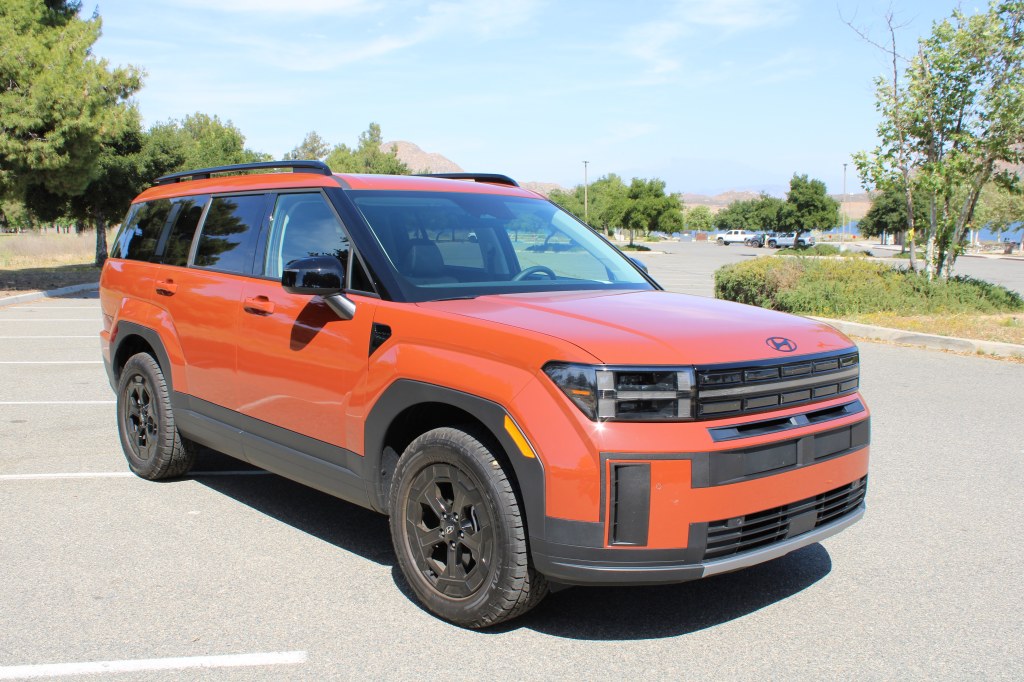
Don’t let those chiseled good looks fool you, the Santa Fe is a comfortable 3-row SUV with family friendly features.
The mid-size three-row SUV segment is a crowded one. Not only is it a vehicle segment that’s hugely popular, most models are heavy hitters. From The Toyota Grand Highlander to the Kia Telluride and Honda Pilot, every new or updated model in this segment has to come in swinging or get left in the dust. Hyundai seems to have perfected the playbook with its latest Santa Fe. Not only does it have a bunch of family friendly features that should win over anyone shopping in this segment, it delivers it all in distinctive, almost concept car-like styling.
If you can believe it, 2025 marks a quarter century since Hyundai introduced the Santa Fe in 2000. The latest gen is the model’s 5th, debuting in late 2023 for the 2024 model year. It was a shocking redesign, going from a you-could-probably-walk-past-it-in-a-mall-parking-lot crossover to “You sure that’s not a Land Rover?” stylish SUV. It’s also style that won’t break the bank either. Pricing for the Santa Fe starts at just $34,300 (before destination charges) for the base SE.
My tester was the Santa Fe XRT, Hyundai’s attempt at trying to capture some of the off-road/outdoorsy market. Sitting between the SEL bellow it and the Limited above, the XRT starts at $40,950 and gets you standard HTRAC all-wheel drive, an additional 1.3-inches of ground clearance over the standard Santa Fe, 18-inch dark alloy wheels wrapped with 30-inch all terrain tires and lots of black trim.
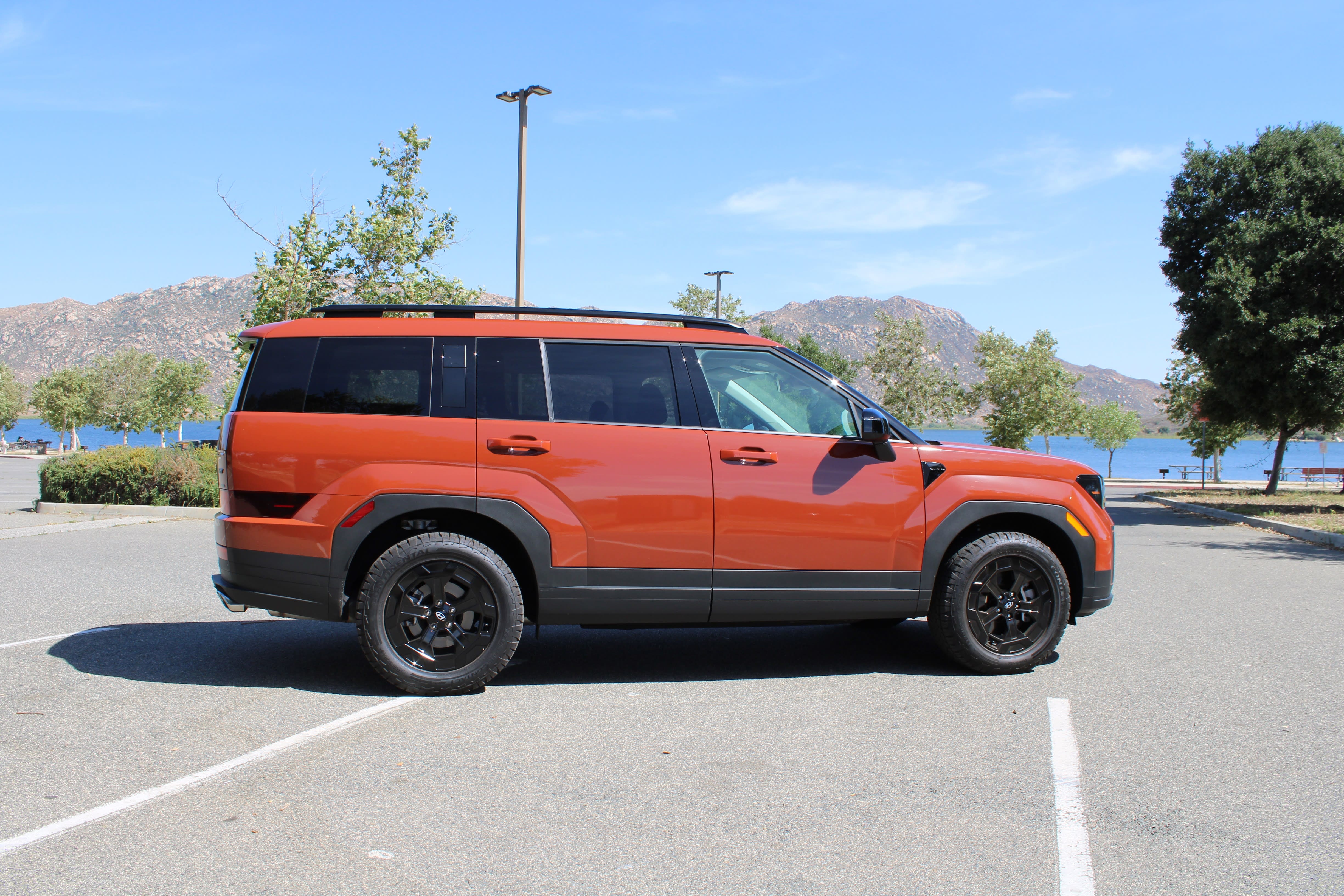
Hyundai designers did a solid job with the Santa Fe. In a world of bulbous, copy and paste crossovers, the Santa Fe definitely stands out. There’s not a spot on the Santa Fe’s new body that isn’t either a looker, controversial, or some form of both. Whether you like it or not, you can’t deny that Hyundai designers have been taking some pretty significant styling risks with their vehicles. That seems to be paying off and the Santa Fe is proof of that. Up front is a big facia dominated by lots of black trim and air inlets. Alongside is a slab sided design with bulging fender arches and even some charter line creases on the front and rear fenders.
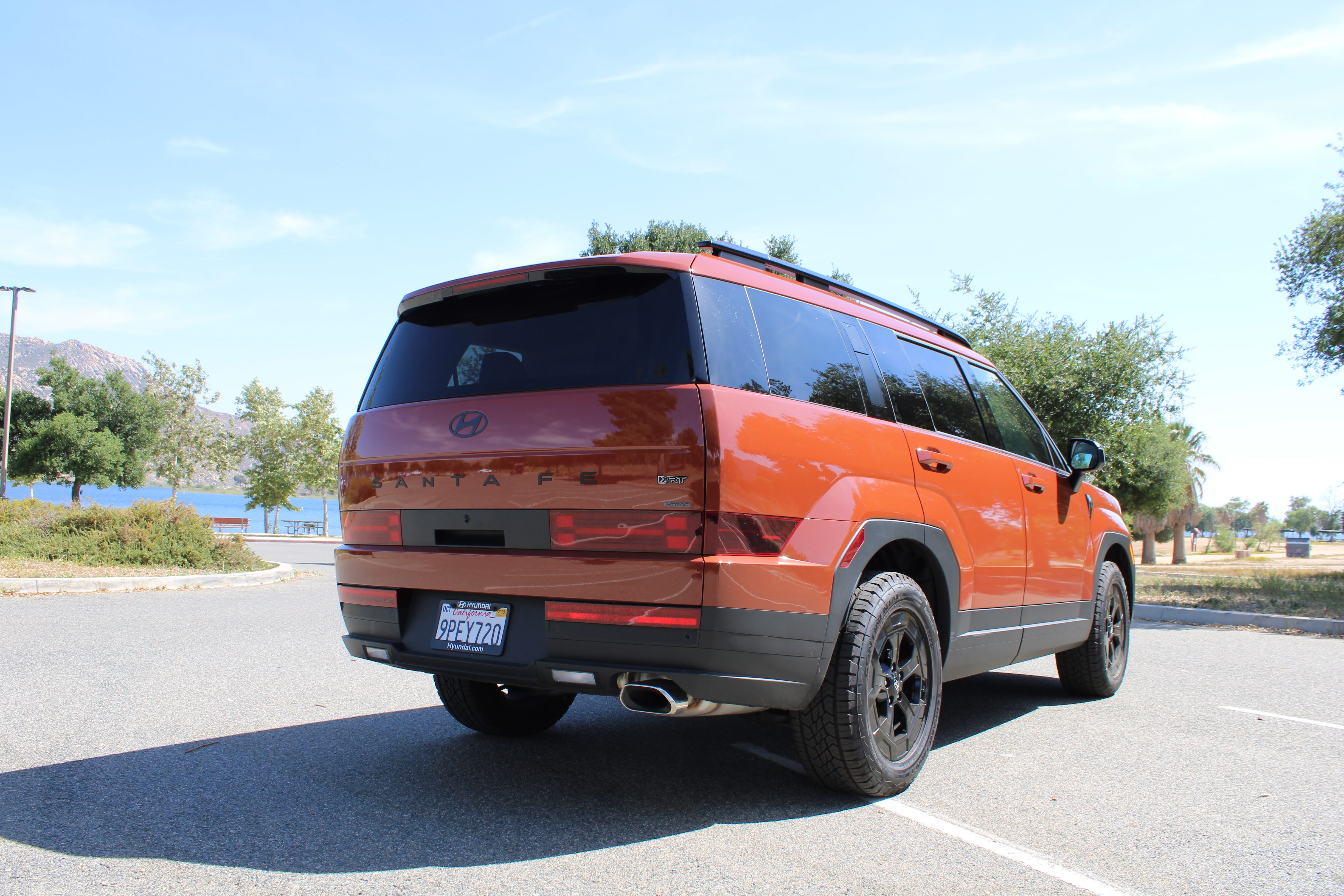
The rear of the Santa Fe is probably the most controversial part of its design. Big taillights are set low into the rear bumper, with big “Santa Fe” lettering above and reflectors and backup lights below that. You either love it or hate it, but there’s a reason the rear of the Santa Fe looks this way. With this new generation, Hyundai redesigned the rear tailgate to have a larger opening for outdoor activities like tailgating or stargazing. The result is a tailgate opening that has 57 more inches of space over the previous generation. This all required what I like to call snowball engineering: The result of making the tailgate opening bigger required a bigger tailgate overall, which resulted in a heavier tailgate which in turn required larger gas struts to support the heavier door. And that is why the Santa Fe’s taillights are where they are.
Dimensionally, the Santa Fe has grown slightly. It rides on a wheelbase 1.9-inches longer with an overall width that’s 1.8-inches longer than the previous generation. The Santa Fe didn’t get wider though as its 74.8-inch width is exactly the same as the previous Santa Fe. And despite its blocky design, engineers were able to make the Santa Fe 11 percent more aerodynamic over the previous generation, an impressive feat.
One aspect of the Santa Fe’s design that stands out is something that once you notice it you won’t be able to unsee it. I’m not sure if this was intentional or not, but there are more than a few Hs in various places on the Santa Fe.
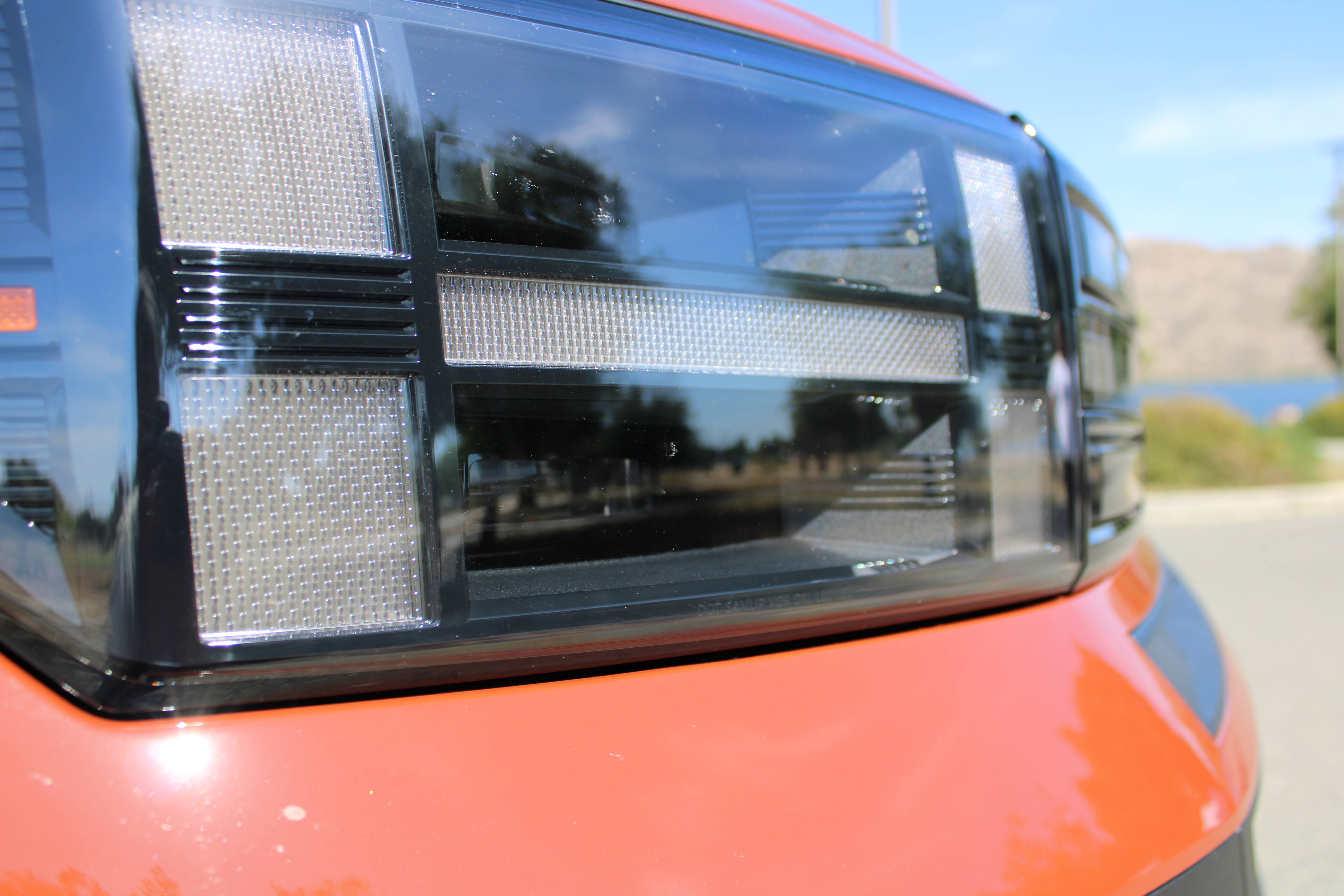
In addition to the Hyundai “H” badges front and rear, each headlight has an H integrated into it that both serves as the LED DRL and the amber turn signals.
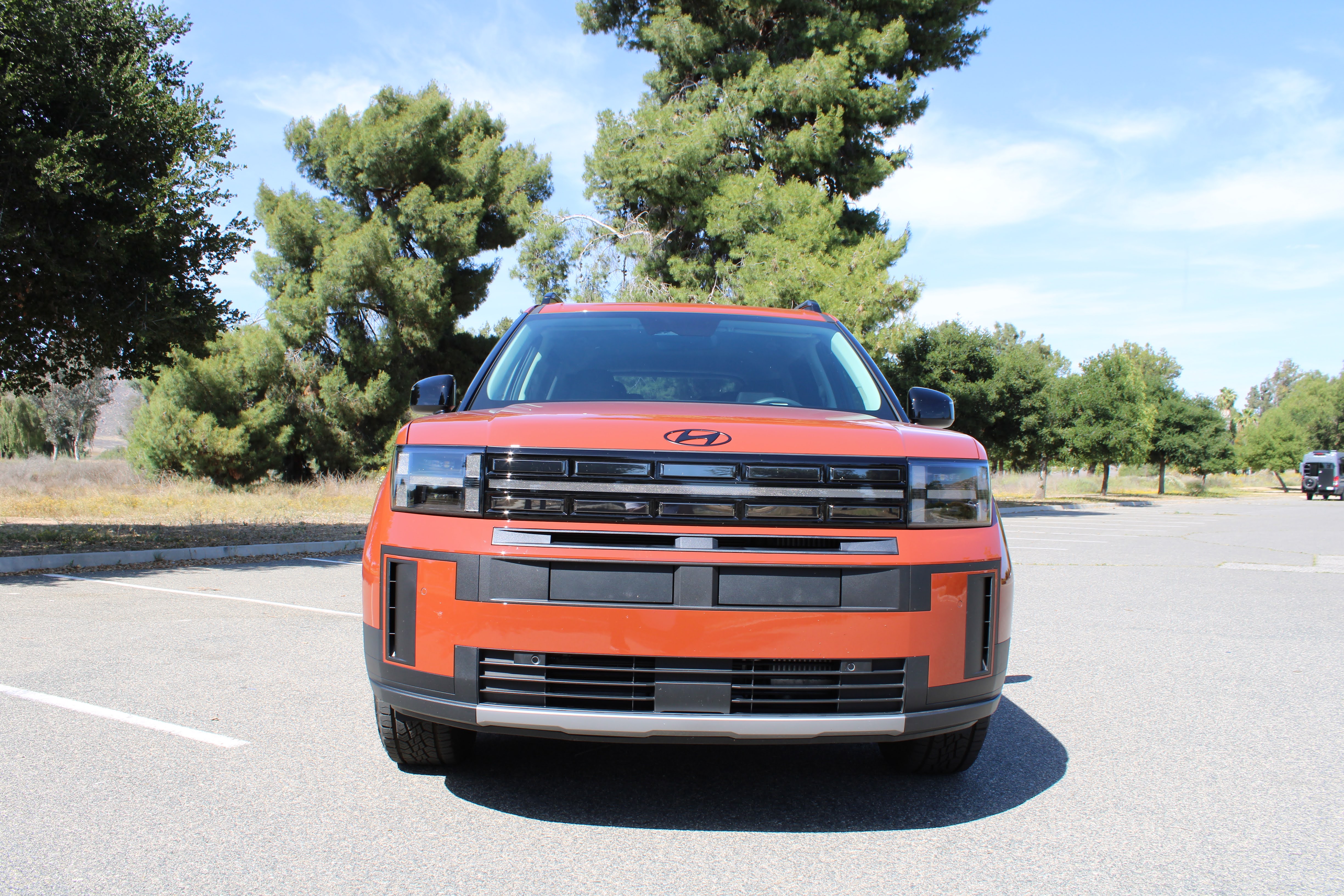
The lower portion of the front facia has one elongated H design.

Each rear tail light has lighting elements that are shaped like an H; another elongated H design is molded into the plastic of the inside of the rear tailgate and there’s more H elements in the trim design between the front air vents. Even the backs of the front seats have H designs in them. It’s a unique but strange design theme some might find cool or annoying.
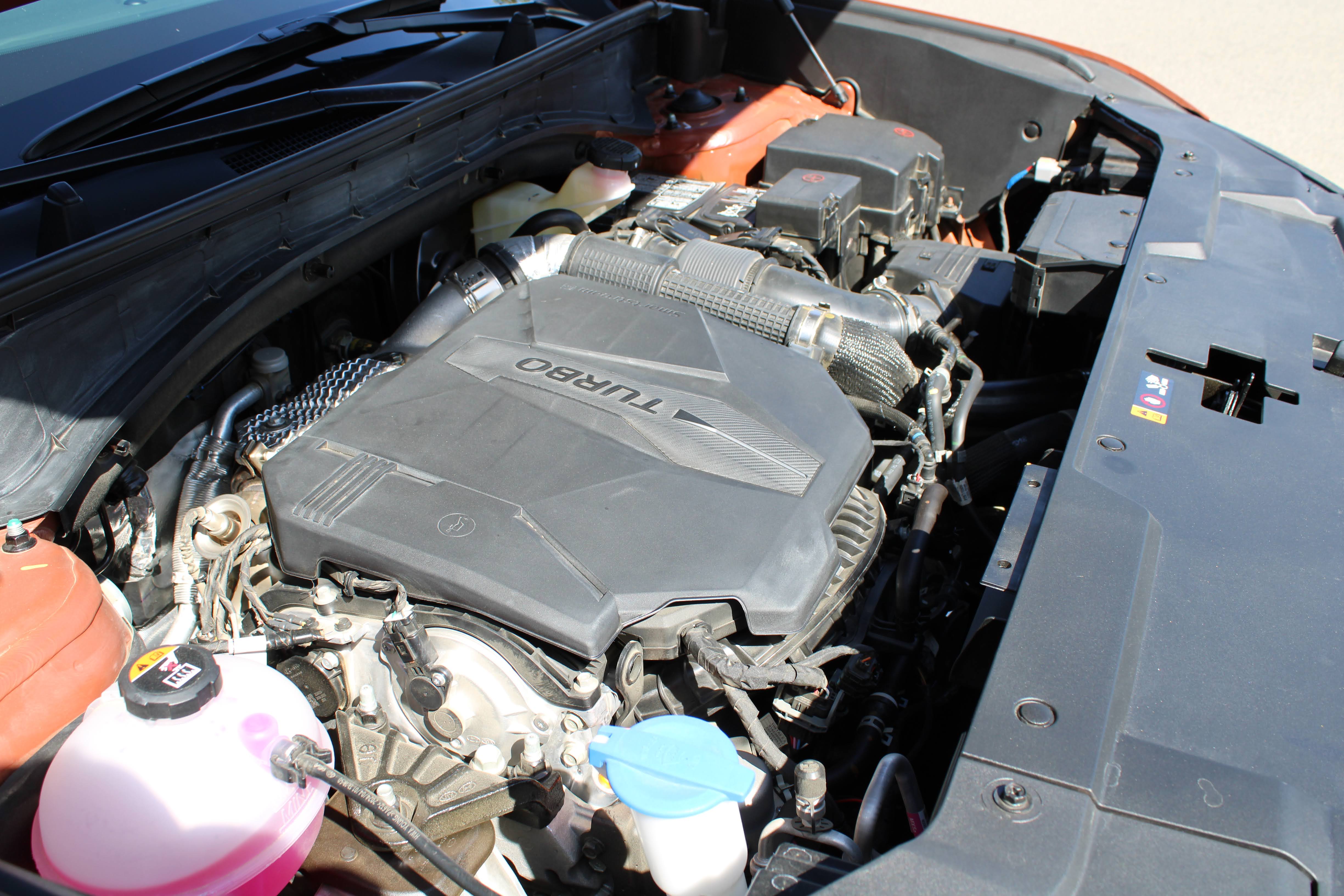
Engine choices for the Santa Fe are paired down with this new generation. While the previous Santa Fe was available with either a standard naturally aspirated 2.5-liter I4, a turbocharged version of that same engine, a 1.6-liter turbocharged hybrid or plug-in hybrid, the new Santa Fe has just two engine choices, both of which are carryovers. Buyers can either choose the 1.6-liter turbocharged hybrid or the 2.5-liter turbocharged I4 that powers every trim of the gas powered Santa Fe. Developing 277 horsepower and a stout 311 lb-ft of torque, the engine gets paired with an 8-speed dual clutch transmission with power routed through either the front wheels or through Hyundai’s HTRAC all-wheel drive system which is standard on the XRT.
Living with the Santa Fe will make you fall in love with it. Seriously. Despite the Santa Fe’s chiseled looks, this thing is way more comfortable than it needs to be. My family and I took a trek to Las Vegas in it and were comfortable the whole time. Despite the XRT trim being geared more towards off-roading, the Santa Fe rides comfortable and quiet, an impressive feat given its 30-inch all terrain tires. Don’t think about taking this thing off-road though. All that XRT stuff is mostly for show. There’s no skid plates though there is hill descent control and a snow mode for the all-wheel drive system. But even with an 4WD Lock button on the center console, there’s no locking diff. And even though the ride height of the XRT is raised vs the standard Santa Fe, it’s still not enough to clear obstacles. At best, the Santa Fe XRT can handle gravel and rough roads better than most, but don’t venture farther than that.
One major downside to the Santa Fe is the powertrain setup. Don’t get me wrong, it’s a great engine. Hyundai knows how to make an engine with smooth power delivery. Its 311 lb-ft of torque can chirp the tires a bit and also gives the Santa Fe XRT a 4,500 lb towing capacity. The problem with the powertrain though is threefold. The first problem is the DCT. If you’ve never driven a car with a dual-clutch transmission, know that it’s largely an automatic transmission though it behaves like a manual; starting off, the vehicle will feel and behave like a manual before you engage the clutch. Now imagine a transmission like that being paired with an engine that has turbo lag and an auto start/stop system. It all combines to make for some annoyingly laggy throttle response. Even deactivating the start/stop system doesn’t help. Hyundai needs to ditch the DCT in the Santa Fe and replace it with a conventional automatic transmission asap.
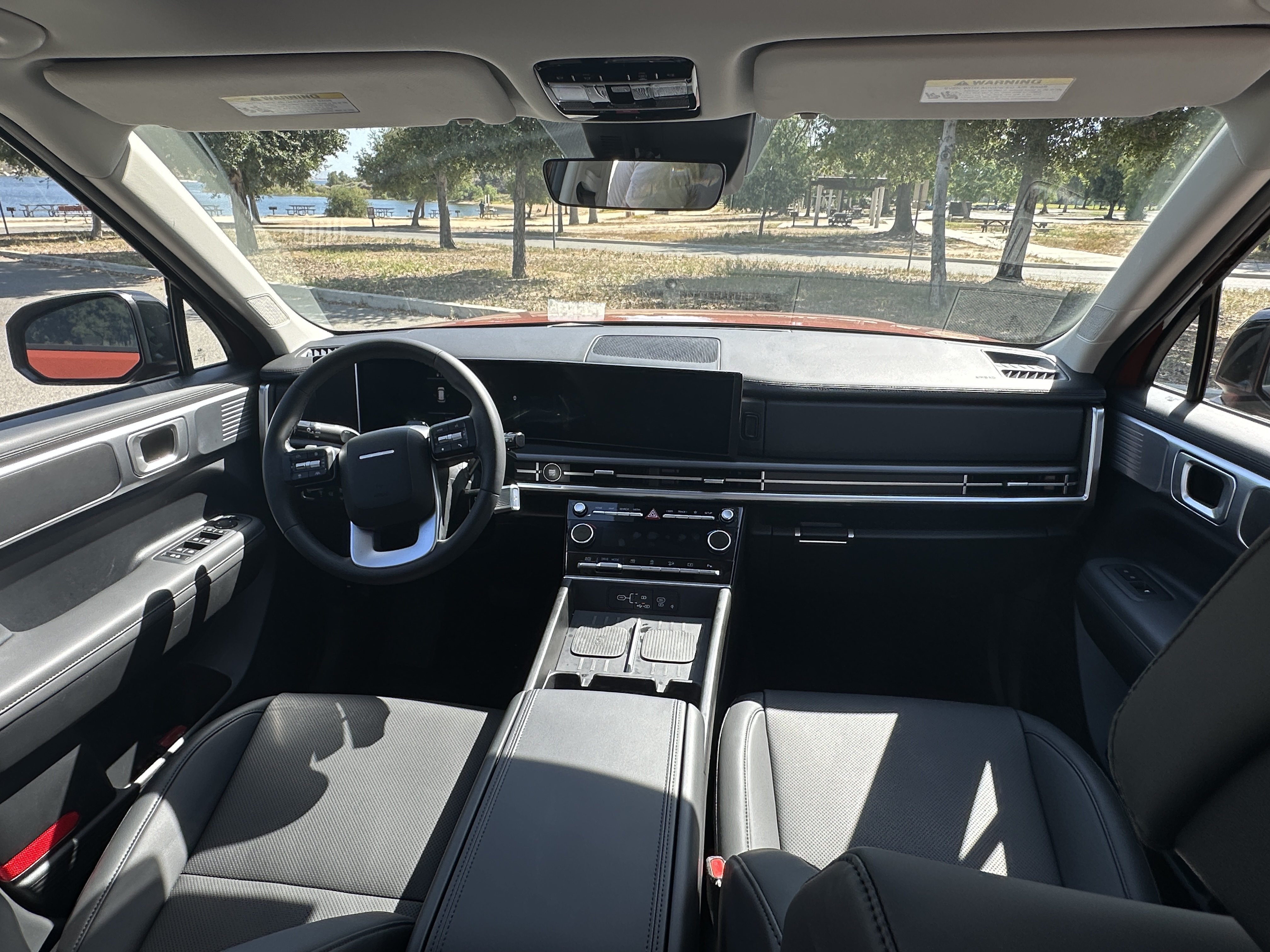
The Santa Fe does excel at passenger comfort and storage capability. With so many places to sit cups or phones or stuff in general, you can tell Hyundai had families in mind when designing the Santa Fe’s interior. The front console is floating which opens up a nice sized area underneath to store a small bag, camera or a purse. Up top, there’s dual wireless phone chargers that can charge at the same time. Behind those sit two big and deep cup holders that are large enough to hold most water tumblers. These cupholders are in addition to bottle holders in each front door, two more cup holders and bottle holders in each rear door, a rear armrest with two more cup holders and four more cup holders in the third row. If you need to charge you’re covered as there’s high powered USB-C ports up front, in the sides of each front seat, two 110V chargers and an 110V home type outlet in the rear cargo area. Speaking of cargo, the Santa Fe has those duties down pat too. Sort of.
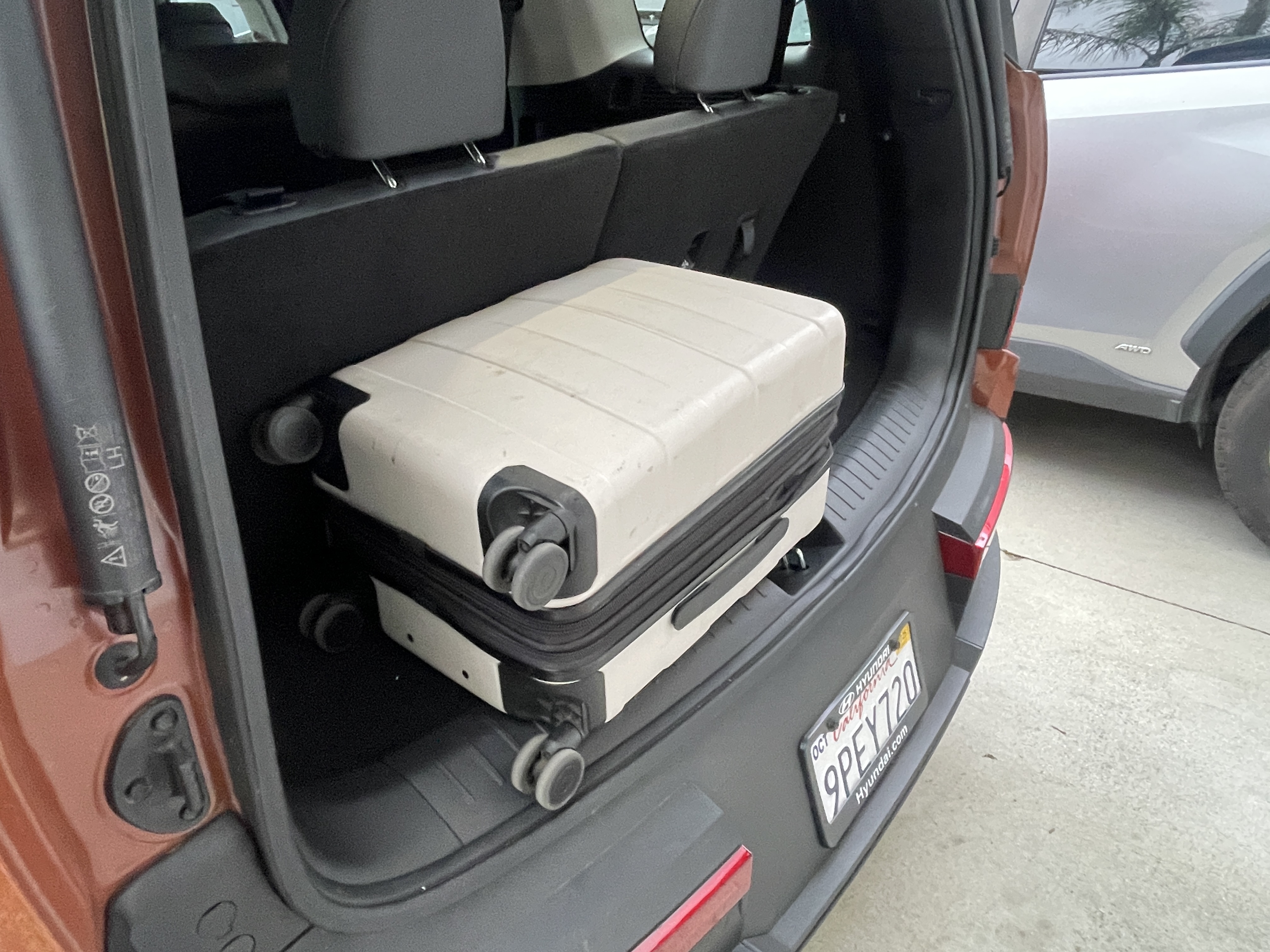
With both the 2nd and 3rd rows folded there’s 79.6 cubic feet of cargo space, more than enough room for something like a bike or a tv. Just think twice about carrying people and cargo. There’s just 14.6 cubic feet of cargo space behind the Santa Fe’s 3rd row. Not enough room for any sort of luggage. To put into perspective how small that is, that’s 4.6 cubic feet less than Hyundai’s smallest crossover, the Venue, has behind its second row of seats. So you can carry seven people, you just can’t carry seven people and their things.
Even with a transmission that’s ill equipped and coupe-like cargo volume behind the third row, the Santa Fe is still a fantastic looking offering that most families would be proud to own. In a segment where boring sells, Hyundai has managed to show that you can take styling risk that pay off if you actually try and make something people want to own.
 Daily Revs
Leave a comment