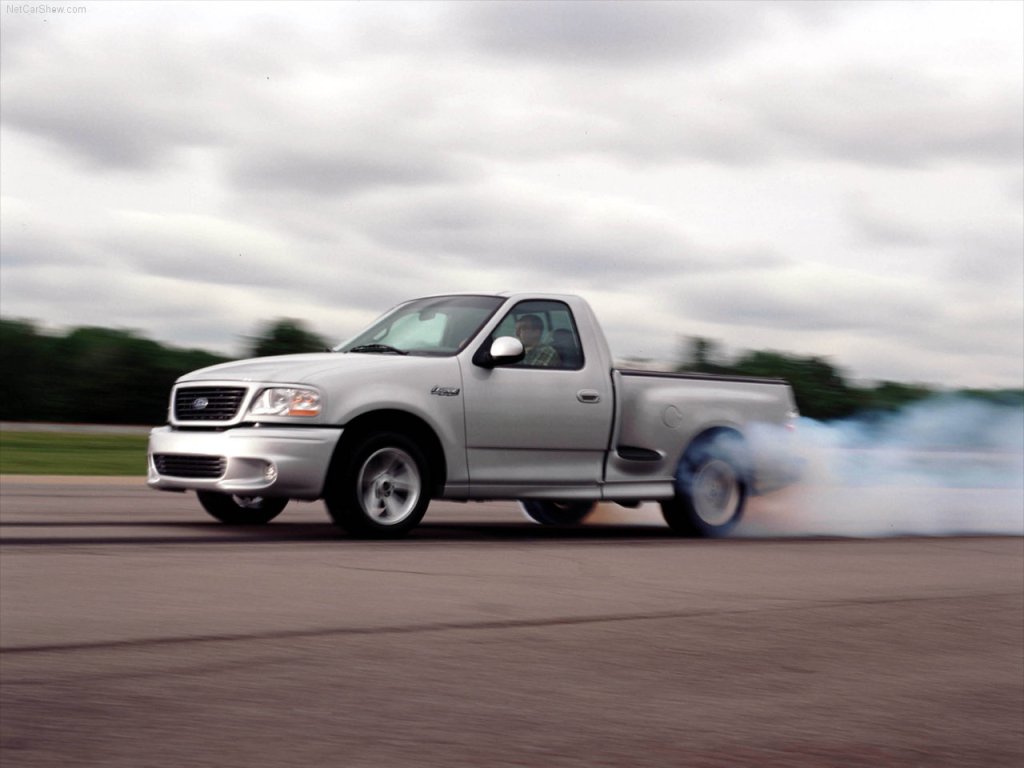
There used to be a time where you could either buy a V8 powered regular cab truck on the cheap and make it sporty yourself, or buy a sporty performance truck straight from the factory. Those days are gone.
Say you’re in the market for something fast and fun to drive that isn’t a car or hot hatch. You might be in the market for or find yourself looking at sporty trucks. But good luck finding one. Unless you go used, the segment largely doesn’t exist anymore. There are some exceptions to this, mainly the Ram TRX/RHO and Ford’s F-150 and Ranger Raptor models, but those are more off-road performance trucks than dedicated on road performers. This wasn’t always the case.
Automakers began embracing sport trucks in the early 1990s. Models like the Chevy 454 SS, GMC Syclone and Ford F-150 SVT Lightning showed that trucks could haul ass as well as a stuff. All these trucks usually followed the same formula: big engine up front and a regular cab or extended cab/short bed configuration. As time went on, the performance and availability of these sporty trucks grew.
The early 2000s saw an increase in performance with some sport trucks. Chevy’s life sized Hot Wheel with a covered bed and folding metal roof the SSR, debuted in 2003 with a 5.3-liter V8 under the hood that eventually grew to 6.0-liters, the engine it should have had to begin with.

At the same time, Chevy also slapped an SS badge on its Silverado. Only available in an extended cab configuration with a 6.5 foot bed, the performance was there. GM dropped in a high output version of its 6.0-liter Small Block V8. Putting out 345 horsepower, that power was put down through an all-wheel drive system (which was later dropped in favor of rear-wheel drive). Calls came for Chevy to build a regular cab version of the Silverado SS but the brand never did, only releasing a concept version of a regular cab Silverado SS in 2002.
Over at Ford a second generation of the F-150 Lighting was released in 1999. Coming in a proper regular cab/short bed configuration, Ford dropped in a supercharged version of its 5.4-liter Triton V8. Putting out 360 horsepower (powered increased to 380 horses in 2001) it was enough to push the Lightning to 60 mph in just over 5 seconds.
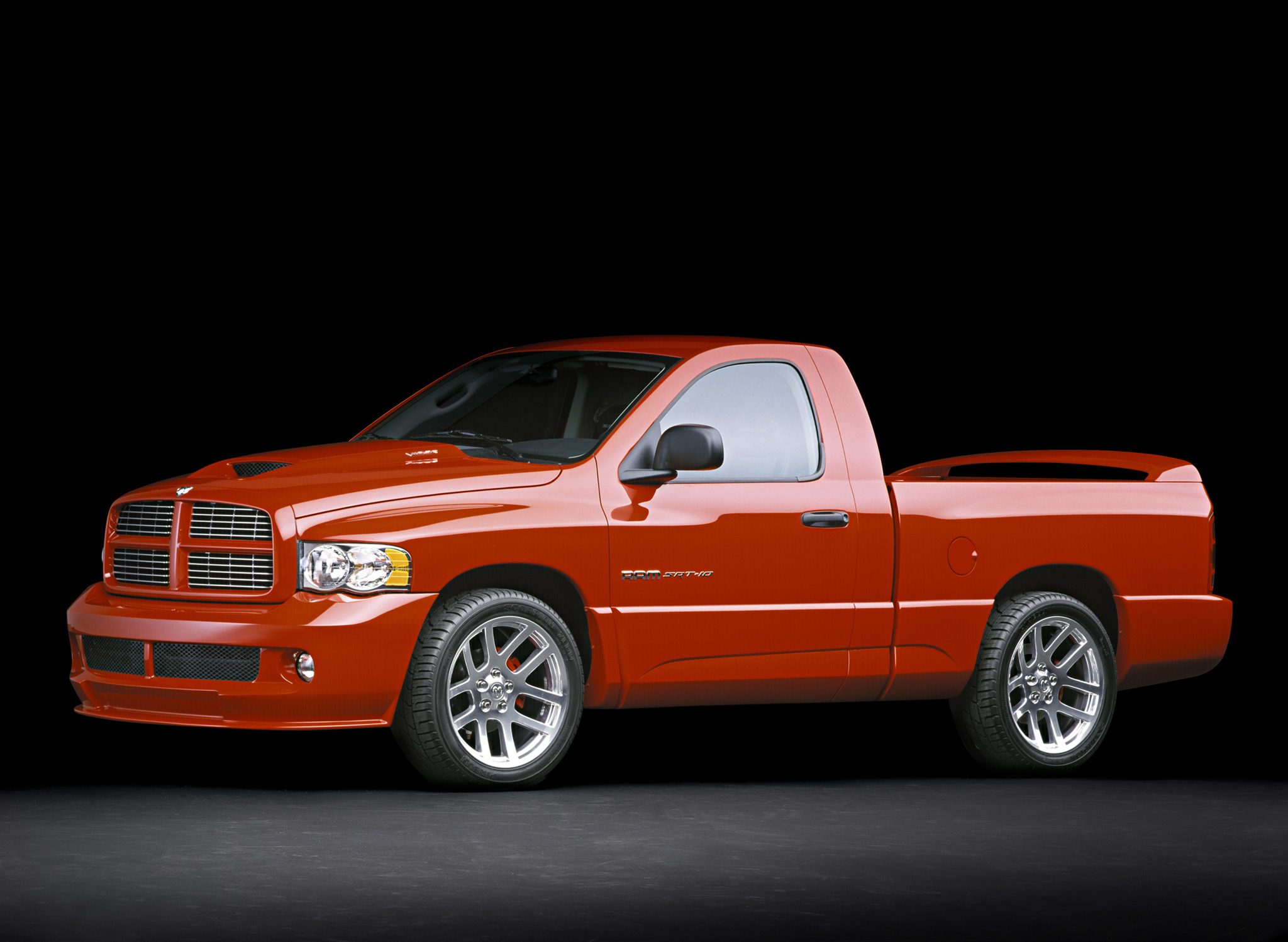
At Dodge, SRT engineers went wild with the Ram SRT-10. It was the stuff tuner shop dreams are made of. The Viper’s massive 8.3-liter V10 was dropped under the hood of the regular cab Ram 1500. The result was a monster of a performance truck, with 500 horsepower, a six-speed manual transmission with Hurst shifter, huge bed mounted wing and a claimed 154 mph top speed. Dodge showed the regular Ram pickup some performance love too. During the one year period of 2004-2005, Dodge introduced four performance/special edition versions of the Ram 1500.

Early 2004 saw the introduction of the Ram 1500 Rumble Bee; later that year a Quad Cab version was introduced called Hemi Sport. In late 2004, a Ram 1500 Hemi GTX special edition was introduced as a nod to the old Mopar muscle cars of the 1960s and 1970s. The $8,300 package was available in classic Mopar colors like Hemi Orange and Plum Crazy. Just over 800 were ever made. Finally in 2005, a Ram 1500 Daytona was introduced, complete with hood scoop, big rear wing, Borla exhaust and big ‘Daytona’ decals on the side of the bed.
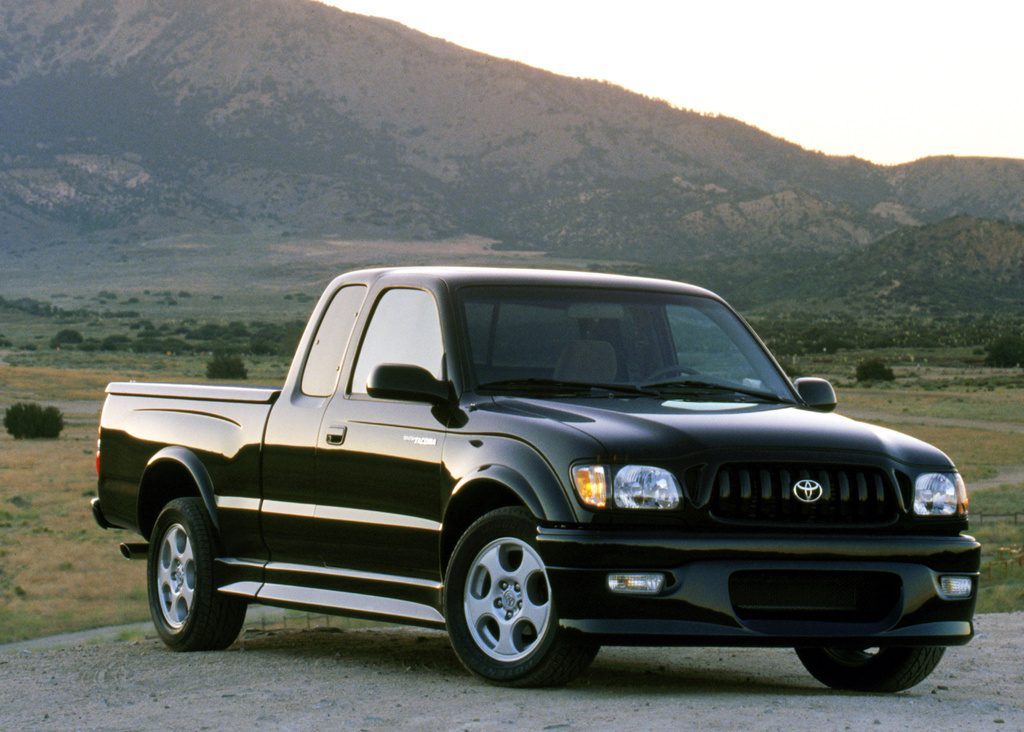
At Toyota, the brand’s performance truck aspirations started off slow. In 2001, the brand introduced the Tacoma S-Runner. Available in an extended cab/short bed configuration, it received a ground effects kit, performance tuned Tokico shocks, higher rate springs and front and rear anti-sway bars. Power came from a 3.4-liter 190 horsepower V6. Just four short years later, Toyota introduced a proper performance truck in the Tacoma X-Runner. For just under $24,000 you got an extended cab configuration, a 4.0-liter 245 horsepower V6, Bilstein shocks, a lowered and stiffened suspension and a six-speed manual.The truck was apparently capable of embarrassing the Nissan 350Z on the track at the time. When the second generation of the Tundra was introduced in 2006, Toyota actually offered TRD performance parts for the truck at one time. Option a regular cab Tundra with the 5.7-liter V8 and you could add a TRD supercharger and catback exhaust system that upped output to 504 horsepower as Motor Trend found out in late 2007.
Things started to change in the late 2000s. More and more buyers started going for crossovers and sales of these performance trucks started to fall. To get more buyers, automakers deviated a bit from the usual regular cab/extended cab configuration and started offering crew cab versions of these sporty trucks. Dodge introduced a Quad Cab version of the Ram SRT-10 in 2005 with four doors and an automatic transmission.
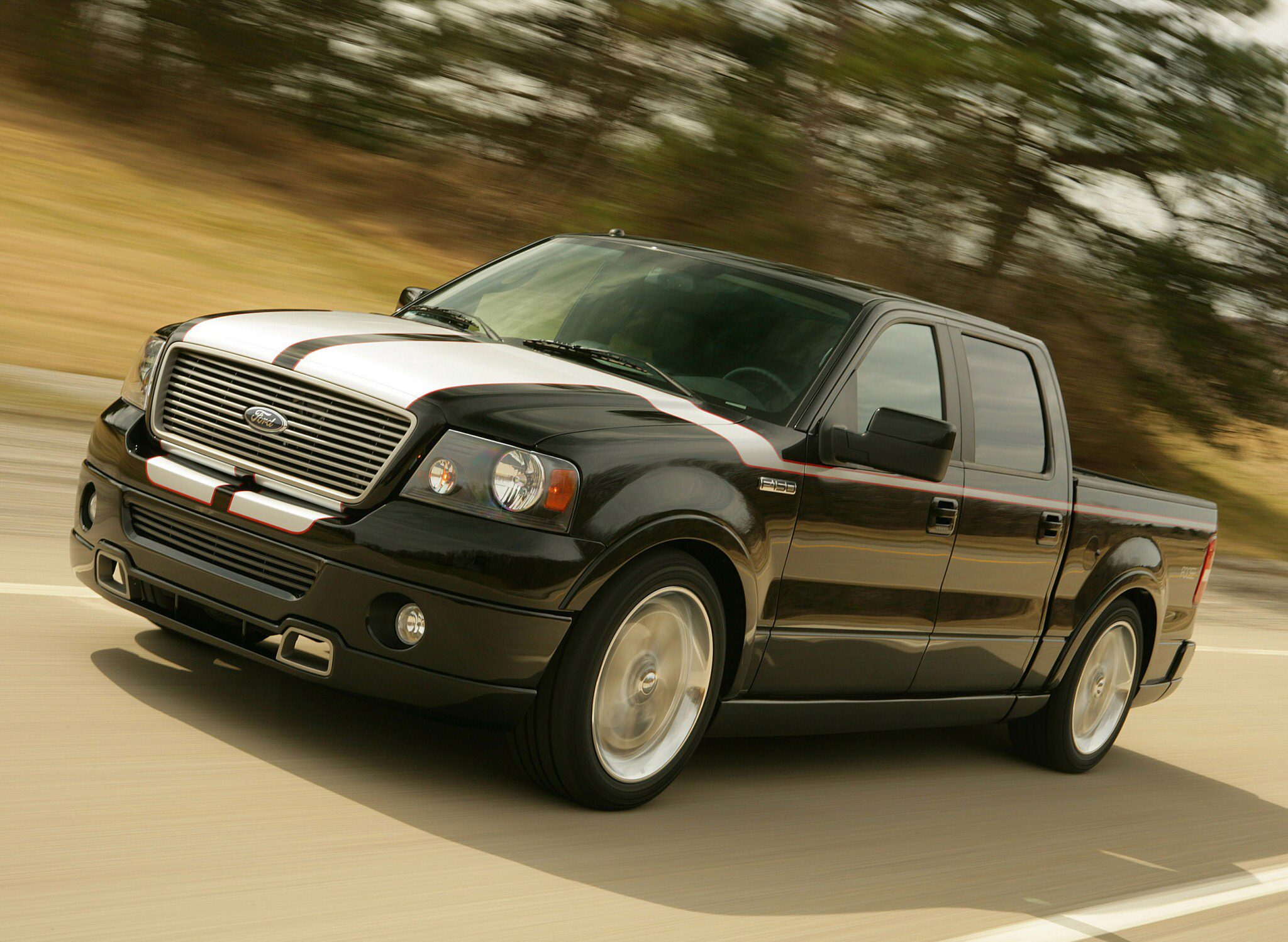
Ford introduced two sporty variants of the F-150 in Super Crew configurations beginning with the F-150 Harley-Davidson Edition in 2001 and the F-150 Foose Edition in 2008. The F-150 Harley was powered by a slightly detuned version of the same supercharged Triton V8 used in the SVT Lightning while the Foose Edition received a bigger Roush supercharger with its Triton V8 putting out 450 horsepower.
At GM, engineers dropped the 5.3-liter Small Block V8 into the midsize Chevy Colorado and GMC Canyon in 2009. The V8 could be had in both extended and crew cab configurations on both trucks. Along with the 300 horsepower V8, both trucks also came with bigger wheels and sport tuned suspension that also lowered the trucks by an inch. Around the same time, GM introduced the Vortec Max package for the Chevy Silverado and GMC Sierra. Only available on extended cab trucks with rear wheel drive, choosing the package equipped the trucks with the same high output Vortec V8 found in the Silverado SS. The package also came with a high performance suspension setup, a limited slip differential and 20-inch wheels.
So what exactly happened to all these trucks? Buyer tastes changed and each of their respective automakers slowly gave up on the segment. The Chevy SSR was discontinued in 2006 because of slow sales. These low sales didn’t exactly happen at the end of its life either. A year into production, GM had to pause production at the SSR’s plant because dealers were sitting on over 300 days worth of inventory. The Silverado SS was also dropped around the same time, right after a limited edition run of Intimidator SS versions were made to commemorate NASCAR driver Dale Earnhardt.
At Ford, the F-150 SVT Lightning was dropped in 2004 when a new generation of F-150 was introduced. Speaking to Motor Authority at the time, Ford Performance Vehicle Dynamics Technical Specialist Eric Zinkosky admitted that the new generation of the truck had simply gotten too big to make a proper performance truck.
“In about 2006, we started looking at a performance truck off the new chassis,” Zinkosky told Motor Authority. “The truck had grown to be very big. When we looked at what it took to make that a better performing [SVT Lightning], it was a lot of power, it was a lot of tire, it was a lot of brake. In our mind, that became a huge challenge.”
Ford toyed with the idea of another performance truck by introducing a concept version of the second generation Ford Explorer Sport Trac called Adrenalin. The Sport Trac Adrenalin was intended to be a follow up to the SVT Lightning. Power came from a supercharged 4.6-liter V8 and it seemed close to production. But under Ford’s Way Forward restructuring plan, the project was canceled, and an all show and no go Adrenalin trim was added to the Sport Trac lineup instead. The special edition F-150s were slowly dropped as well. Just 500 units of the Fooze Edition of the F-150 were ever made before it was discontinued. The Harley-Davidson editions of the F-150 continued on until the early 2010s. 2011 saw a new 6.2-liter V8 option before the trucks were dropped altogether in 2012 as Ford put more of an emphasis on its premium Limited and Platinum trims.
At Dodge, production of the Ram SRT-10 was stopped in 2006 after just over 10,000 were produced. Each of the special performance versions of the regular Ram 1500 ended production around the same time. At Toyota, the Tacoma X-Runner lasted until 2013, at least in the continental US; the truck lasted another 2 years in Hawai’i before it was dropped. Back at GM, it continued to offer the Small Block V8 in the Colorado/Canyon until 2012 when both models were dropped entirely.
Today, you’d be hard pressed to find any actual sport trucks from any automaker, let alone a regular cab configuration that’s available with a big engine. Ram continued to make a regular cab, short bed configuration of the 1500, even offering it with a sporty R/T trim. But for whatever reason, the brand stopped offering the configuration in 2022. Today, the only way to get a regular cab truck with Ram is to go heavy duty. And while that’s available with the big 6.4-liter V8, there’s nothing particularly sporty about a 6,000 pound regular cab truck with an eight foot bed, the only bed length offered.
Chevy is another automaker that stopped making regular cab configuration for its trucks. That changed in 2021 when buyers begged the brand to bring back the regular cab, short bed configuration of the Silverado. Don’t get too excited though as it’s strictly a work truck configuration, complete with rubberized vinyl floors and steel wheels. There’s no big V8 available either as the WT trim of the Silverado is only available with GM’s 310 horsepower turbocharged TurboMax I4. Don’t look to the Colorado either as it’s exclusively only available in a crew cab configuration no matter what trim you choose. GMC wouldn’t be able to help you either. The Sierra and Canyon are configured identically to the Silverado and Colorado.
Toyota stopped offering regular cab confirmations on the last generation of the Tundra and Tacoma. Today, neither truck can be had in a regular cab confirmation with buyers only able to choose from extended or crew cab configurations. And you better like hybrids, six-cylinders or turbocharged I4s as those are the only engines available. Toyota teased us with a Tacoma X-Runner concept at SEMA in 2023 based on the new Tacoma, but I was told at the time that there weren’t any plans to bring it to production.

Ford is the last holdout. You can still get a regular cab F-150 and it even comes standard with the 5.0-liter Coyote V8. The cherry on top of this performance sundae is the availability of Ford Performance Parts for the truck. You can go simple and choose a catback exhaust kit or go full on tire shredder and buy the $10,200 supercharger kit for the 5.0 that kicks output up to a staggering 700 horsepower. Almost shockingly that supercharger gets covered by a warranty. Ford is also giving a slight nod to performance trucks. The automaker recently introduced Lobo versions of both the Maverick and F-150. While both are cool and I appreciate that they exist, they’ll never be as great or unique as a regular cab truck with a big V8 under the hood. Hell at this point, I’d even take a regular cab performance version of the F-150 Lighting EV.

 Daily Revs
Leave a comment