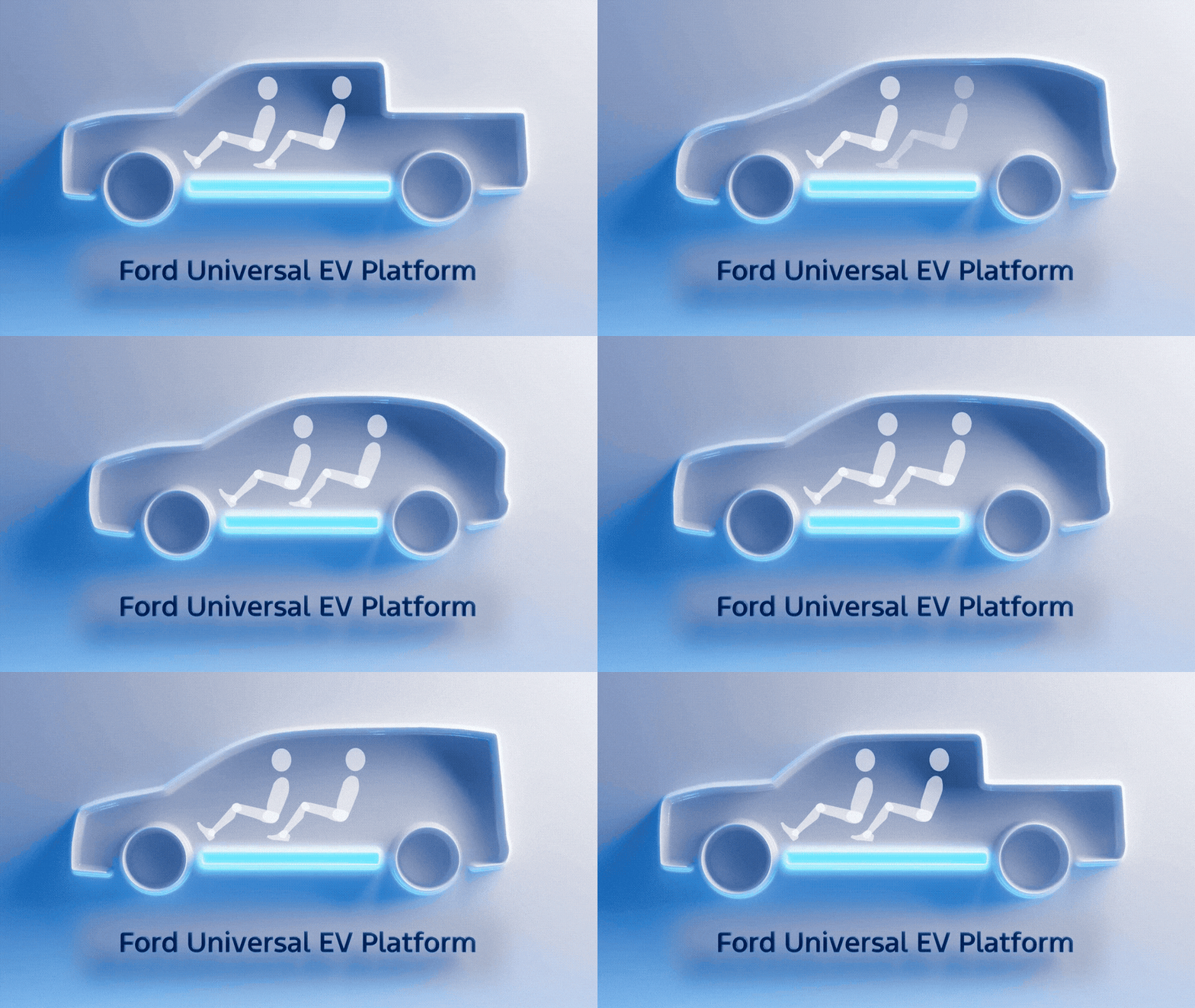
Ford is investing in affordable EVs which is cool. But none of what’s coming is something that the market needs more of. And Ford’s history on delivering on promises like this is spotty.
Ford shook up the industry recently by announcing its new EV plans and they’re big. Not only is the automaker working on a new EV platform it calls the Universal EV Platform, it’s also planning a new midsize EV pickup that’ll be built on the platform and start at $30,000 as well as a $5 billion investment in the US economy to make it. It’s all a pretty big deal. Except there’s one glaring problem: the US doesn’t need another EV that’s not a car. The market needs an EV that’s both affordable and a car. Some might not think this is a problem but you have to look at the market and Ford’s position to see my point. Let me explain.
Ford announced a shocking change in its business plans in mid 2018 when the automaker announced that aside from the Mustang, anything that wasn’t a SUV, crossover or truck was getting dropped from its US line up. This meant the Fusion, Focus, and Fiesta were being axed. The plan was to have the Mustang and a faux crossover called the Focus Active (that was ultimately canceled in 2018 because of Trump’s tariffs) be the only two car offerings the automaker would offer in the US . Ford’s reasoning for the business pivot was something that’s been discussed for a long time: declining consumer interest in passenger cars. The company literally said as much when it made its announcement: “Given declining consumer demand and product profitability, the company will not invest in next generations of traditional Ford sedans for North America.” Ford wanted to focus on more profitable SUVs, crossovers and trucks which, if we’re being honest, is less of a demand thing and more of a profit thing. Ford is a business at the end of the day, and if they can kill the Fiesta and replace it with something that’s basically the same thing, just with a higher ride height, slightly shitter gas mileage and some body side cladding that says “I’m not a hatchback” and make more money doing it, they’re going to do it.
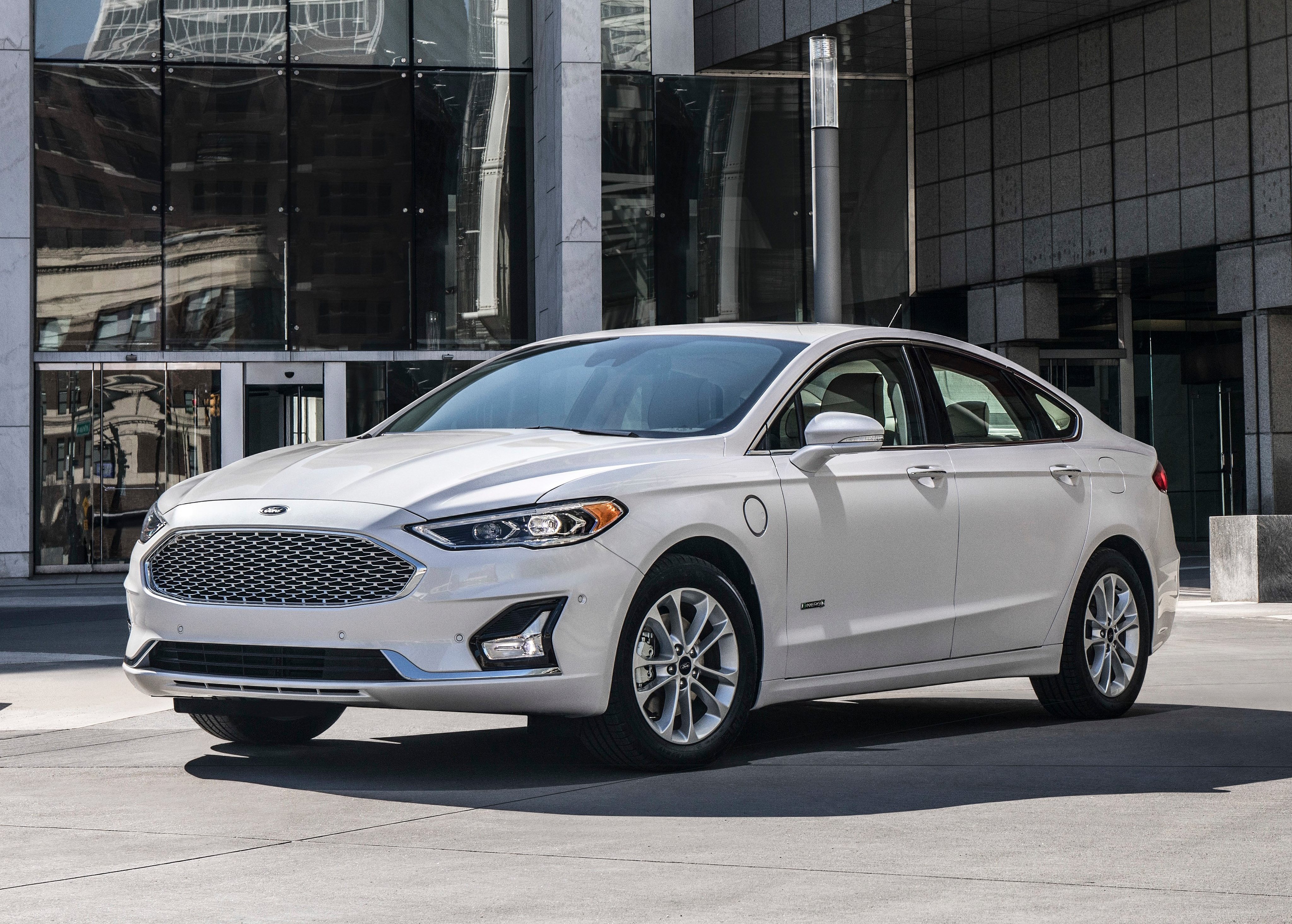
But Ford was too quick to throw in the towel on cars. Reports of the death of the sedan and small car have largely been exaggerated. Ford was still selling over 100,000 Fusions a year up until 2020. Sure it was down from the 200,000 and 300,000 a year it sold from 2010-2017, but as I mentioned Ford is a business and that kind of drop told them consumer demand was waning. It’s the same situation for the Fiesta and Focus. Focus sales were over 200,000 a year from 2012-2015; sales dropped to over 168,000 in 2016 and then another slight drop in 2017 to just over 158,000 before it was axed. The Fiesta was less impressive with sales never touching 100,000 per year. But it still sold over 50,000 per year up until its 2019 cancellation. But again, Ford saw these models’ sales dips as a growing lack of consumer interest in passenger cars. The market was quick to prove Ford (and Chevy who essentially did the same thing by getting rid of models like the Cruze and Spark) wrong.
Over a year after Ford decided to stop making cars, a report from Edmunds detailed how the automaker’s abandonment of the small and midsize car category was hurting its sales. Instead of Focus and Fusion buyers moving to crossovers and SUVs like Ford assumed, these buyers were just straight up abandoning the brand altogether and buying a car from somewhere else. From Edmunds:
“Now that more than a year has passed since Ford and GM announced the strategic decision to end production of several popular small car models, the automotive experts at Edmunds have released a new report detailing how car shoppers are reacting. The analysis revealed that instead of jumping on the SUV bandwagon, 42% of Cruze and Focus owners are choosing to stay in the passenger car segment. So far this year, 23% of Cruze owners and 31% of Focus owners who traded in their car for another car bought from a competitor.”
These buyers were going to brands like Toyota, Honda and Hyundai. This was six years ago. Today, Ford is even more crossover, truck and SUV heavy than it’s ever been. The Mustang is still the sole car offering, but the rest of the lineup consists of six SUVs/crossovers and five truck models. As the future of the auto industry turns to electrification, Ford is doubling down on more SUV and truck offerings. Instead of bringing back the Focus, Fiesta, Fusion or even introduce a new car as an EV, the automaker thinks the market needs an affordable EV truck. According to Ford, the brand plans to introduce a midsize EV pickup by 2027. This pickup will be as fast as a Mustang Ecoboost with more interior room than a Toyota RAV4 and have both a frunk and a standard pickup bed, at least that’s what Ford is telling us. What’s more impressive is that this EV is supposed to start at $30,000. This new platform is also supposed to spawn other affordable EV models. But from even looking at Ford’s media, which you can see at the top of this article, every vehicle that’s being shown in that light preview is everything but an actual car.
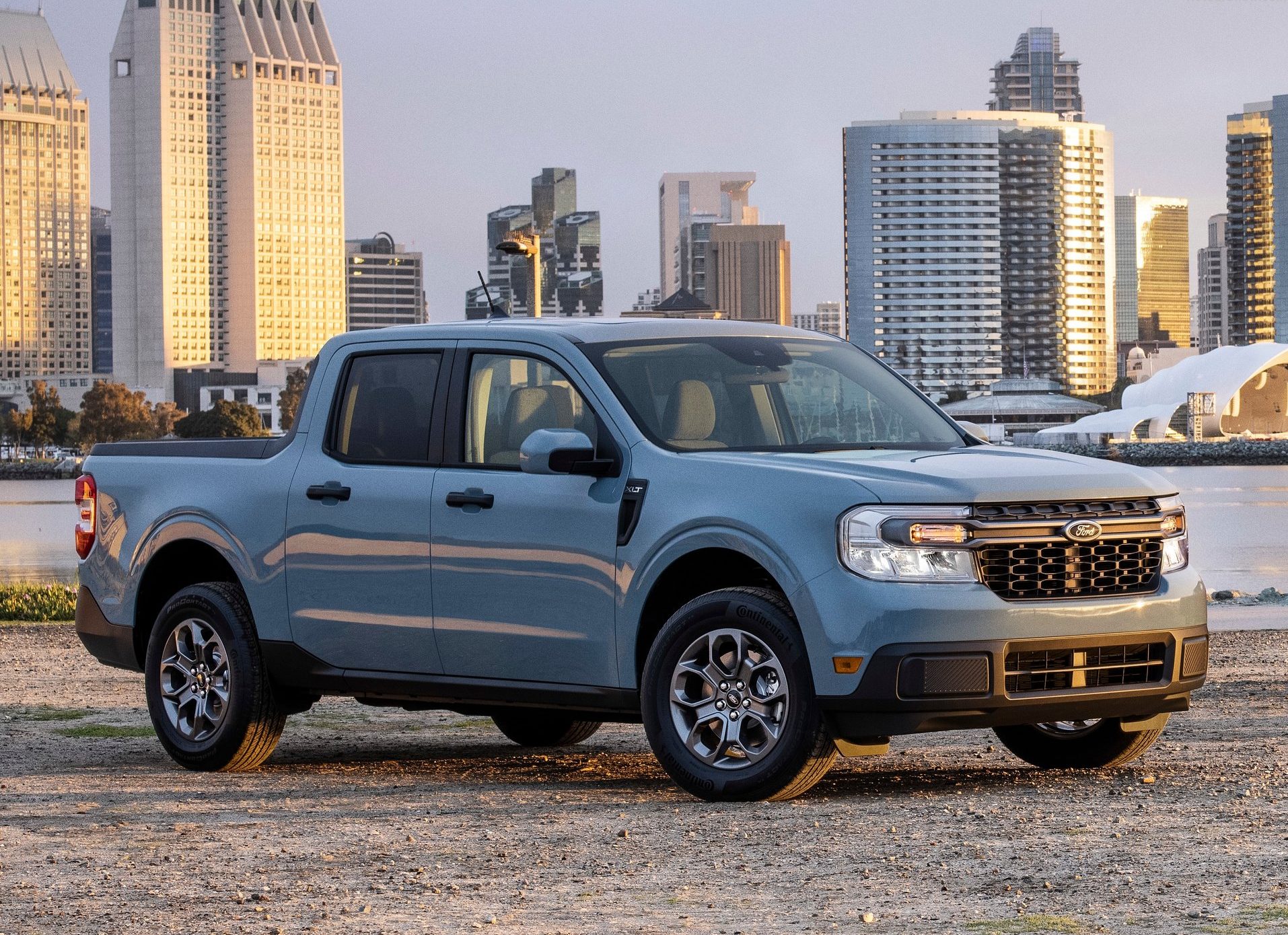
The other problem with all of this is that we’ve seen this same song and dance before and Ford’s promise of a $30,000 EV might not hold up by the time the truck debuts. When Ford introduced the Maverick for 2022, it touted a $19,995 starting price. With a hybrid engine as standard no less. This was supposed to be the cheap pickup that brought back small car buyers to the brand. Then, two years later, Ford dropped the hybrid engine, replaced it with an Ecoboost option and made the hybrid a $1,500 option. Pricing for the small truck rose as well, rising 25% in just 3 years. What was once a truck that had a $19,995 base price now starts at nearly $28,000. The same thing more or less happened with the F-150 Lightning. Throw in the mess that’s greedy dealerships into the equation and it’s doubtful that we’ll actually see this thing wear a $30,000 sticker price.
And it’s not like small affordable cars aren’t selling. Kia sells thousands of K4 and K5 sedans, the latter of which has seen a 42% sales increase this year vs 2024. Don’t even get me started on Honda. The Japanese automaker has sold nearly 130,000 Civics this year; another 44,000 are the Civic Hybrid. It’s the same situation at Toyota, where both the Corolla and Camry have sales numbers that are over 100,000 (just over 120,000 for the Corolla and just over 155,000 for the Camry). So there is a market, Ford just chooses not to play in it.
Look, I get it. As I keep saying, Ford is a business and that business is making and selling vehicles for a profit. But giving the market a body style it doesn’t need more of under the guise of affordability isn’t it. Of the 60+ EV models currently offered in the US, 56 of them are an SUV, truck or crossover. Of those, just one has a starting price under $30,000: the Nissan Leaf. So there is a market for a $30,000 EV small car or sedan. Ford just has to want to be able to take the leap and make the vehicle that the market desperately needs and not something that will further saturate an already oversaturated market.

 Daily Revs
Leave a comment