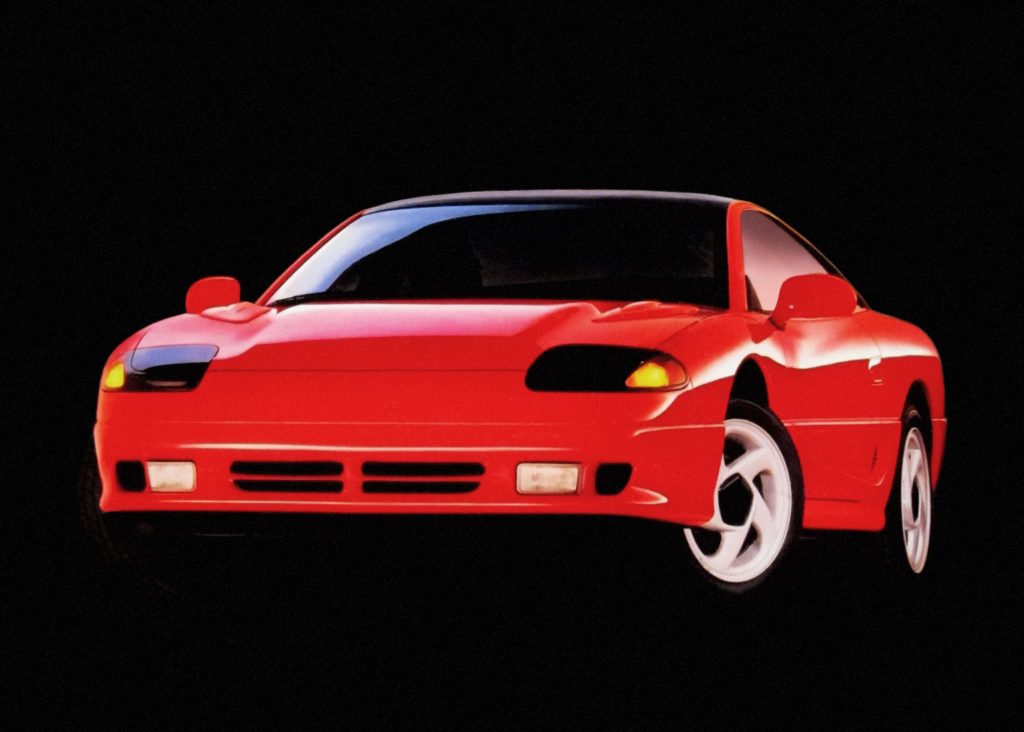
Rebadged rebadged rebadges? This Austrian company did it in the 1990s. And there’s almost no trace of it online.
Rebadging is the lazy, time honored practice of an automaker getting as much profit as they can out of a single vehicle by selling it under different brands. It was bad years ago, particularly in the 1980s and 1990s. This was the era of cookie cutter cars, that, aside from slightly different grills and lights, were virtually identical. Often these rebadges led to some weird automotive crossovers, like the Honda Crossroad which was a Land Rover Discovery Series 1 with Honda badges. Sometimes, these rebadges lead to even more obscure crossovers, especially in foreign markets. One of the most bizarre was from an automaker – if you can even call it that – that I guarantee you’ve never heard of: Sauber.
No not that Sauber. I want to make sure that you don’t confuse this Sauber with the F1 Swiss race team founded by Peter Sauber. This is an entirely different Sauber. Now I thought I knew about most obscure cars, rebadges, etc, but finding anything out about this Austrian Sauber was a doozy. There’s hardly any information out there about it. What I could find is weird as hell.
I managed to stumble across this strange rabbit hole randomly. A random Google search brought up a post from X which used images that originally came from a Facebook post in late 2020. With some assistance from AI – cross referencing and digging through info faster than I ever could – I was able to piece together a bit of information. So sometime in the 1990s, Sauber was operating in Austria. From what I could tell, the company never manufactured any vehicles on its own. Instead, it not only rebadged cars. But in doing this, it did something not really seen before. Usually when an automaker rebadges a car, it’s either a single car from one automaker or multiple models from a single automaker. Sauber rebadged cars from 3 different automakers: Ford, Chrysler and GM.
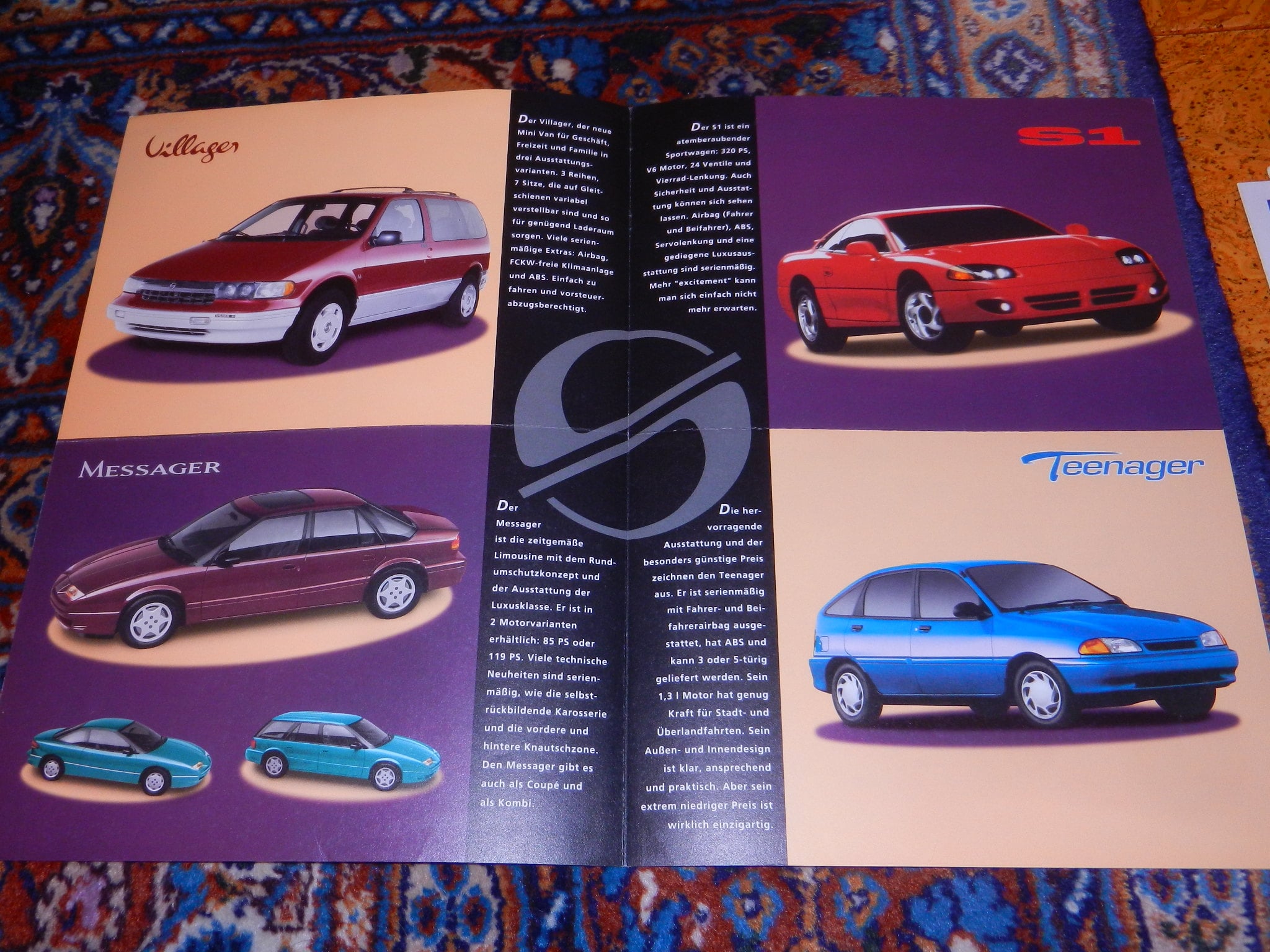
From what I could find, Sauber only had a four model lineup that basically touched on every major segment at the time.
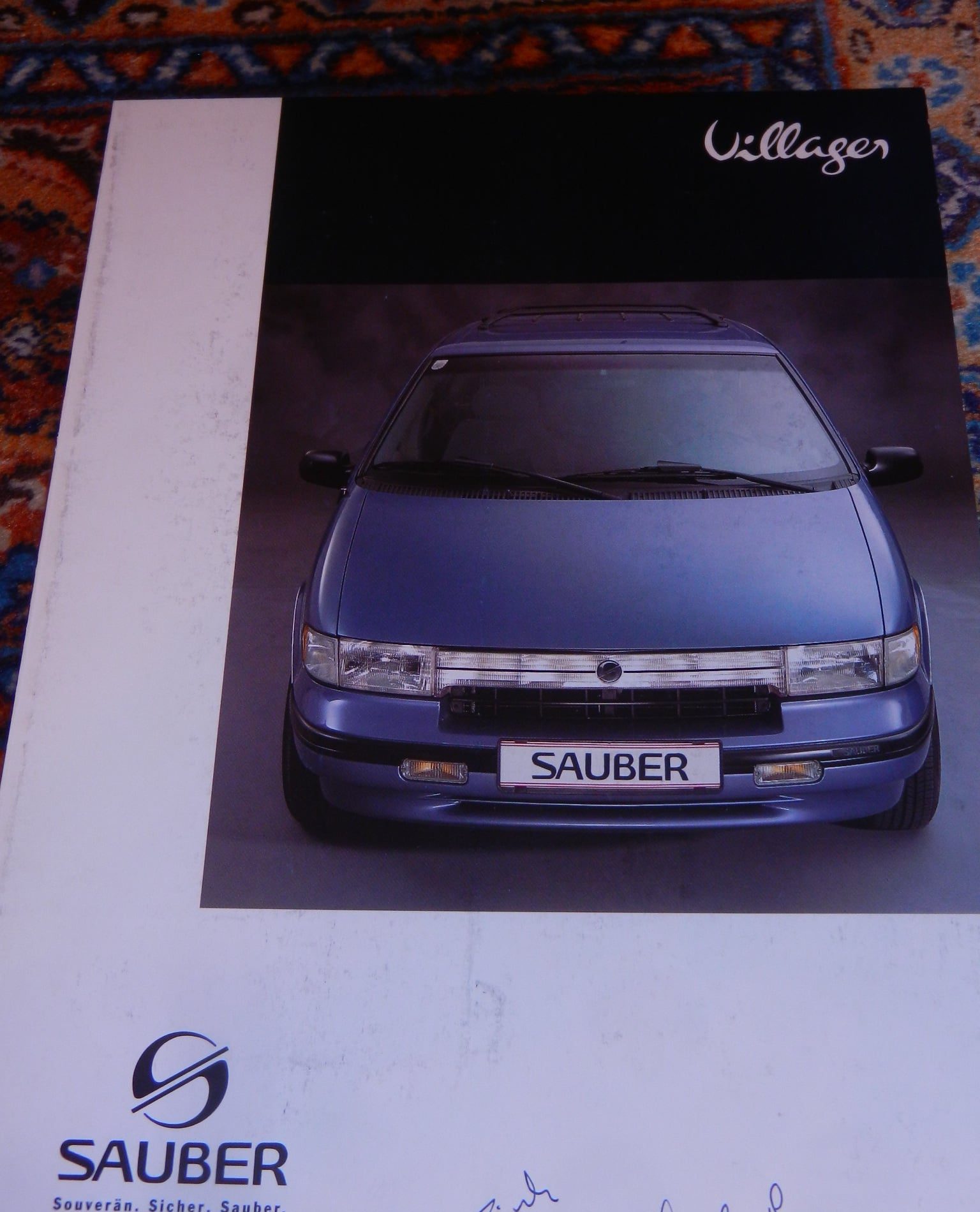
First up is the Sauber Villager, a rebadge of the Mercury Villager, itself a rebadge of the Nissan Quest. Aside from the Sauber badges it was basically the Mercury Villager, right down to Mercury’s signature light bar that ran the width of the facia.
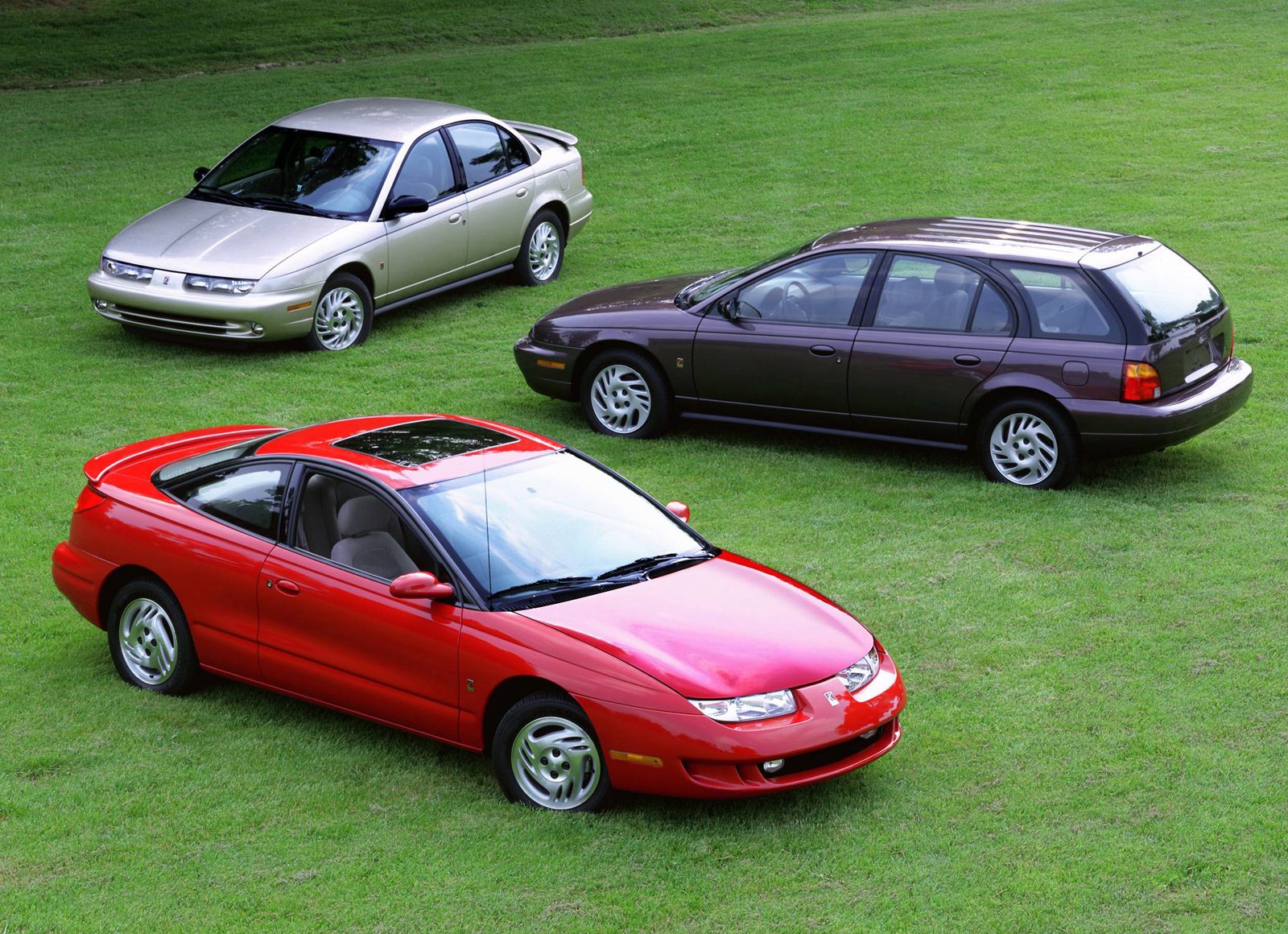
Next was Sauber’s sedan offering. Sauber went to GM and rebadged the Saturn S-Series as the Messenger. Sauber even offered the Messenger in the same coupe and wagon body styles that the S-Series came in. In the marketing materials I could find and translate for the Messenger, Sauber described it as a simple and reliable car for “professionals.” Boring.
“…the versatile delivery and utility vehicle for professionals. Spacious cargo area, robust engine, and practical interior design. Standard features include ABS, driver airbag, and climate control. Reliable, efficient, and ready for everyday business use.”
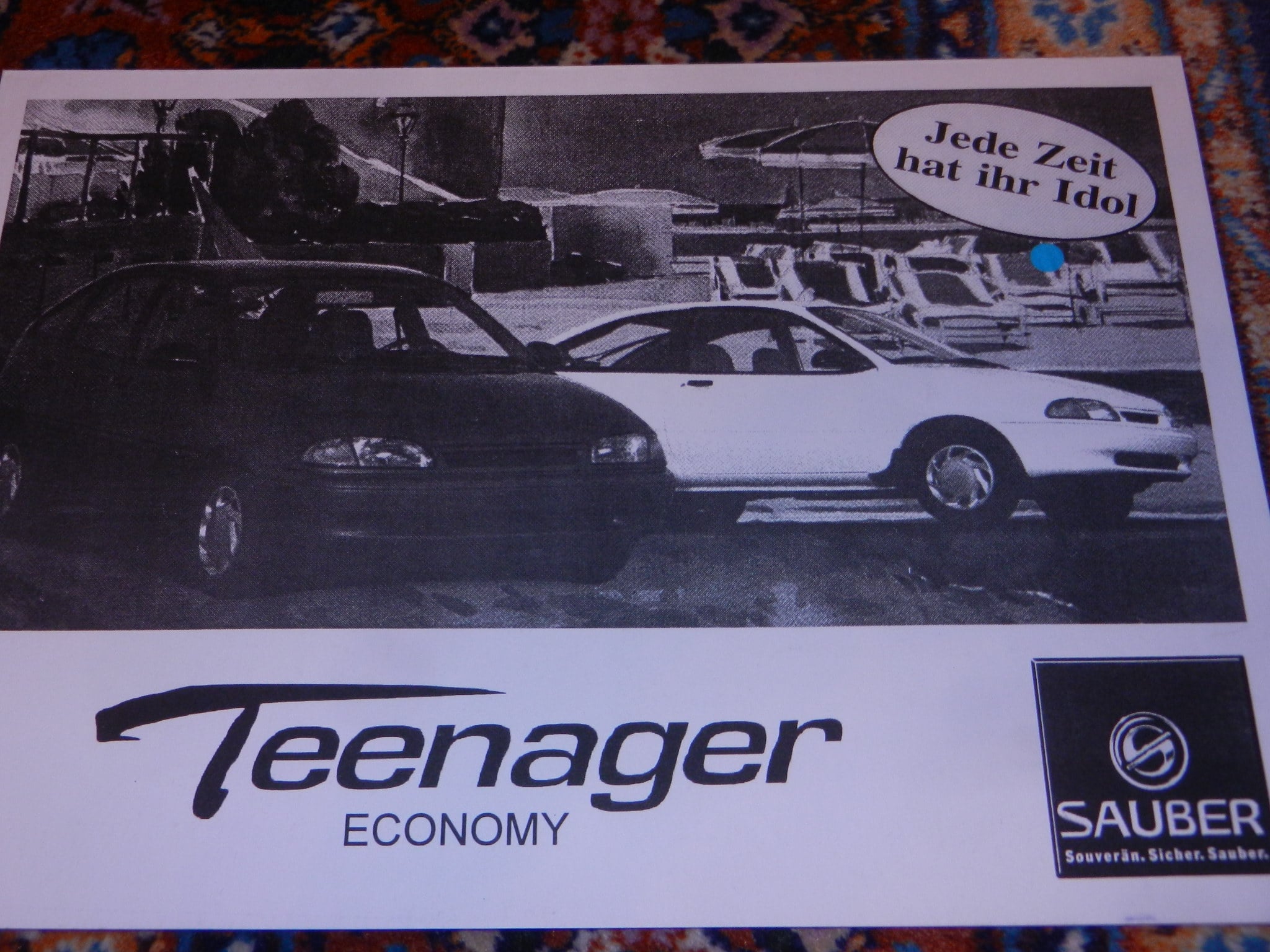
Next up was the strangely named Sauber Teenager, a badge job of the Ford Aspire subcompact, itself a rebadge of the KDM Kia Avella. What made this more interesting is that the Teenager/Aspire/Avella was powered by small Mazda engines. Sauber described the Teenager as “…the compact car for young drivers and the young at heart.” Sauber went on, doubling down on trying to sell this thing to young people by using words like ‘stylish”, “affordable” and a “sporty design” even though it was none of these.
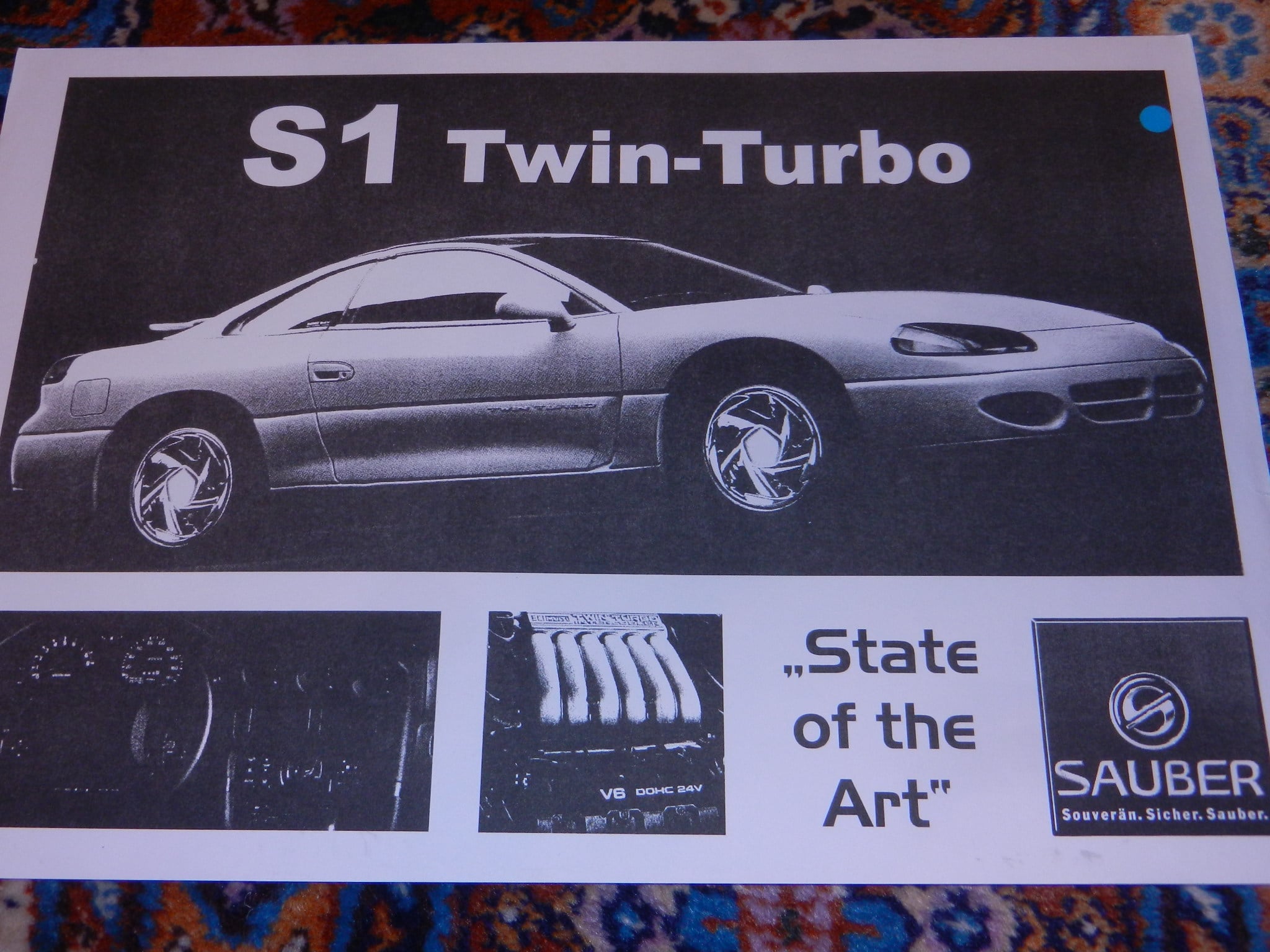
The last and the most interesting of the Sauber lineup was the S1 sports car, which was a rebadge of the Dodge Stealth, which was also a rebadge of the Mitsubishi 3000GT. From the marketing materials I was able to translate, it seems that the S1 was available in one, high performance trim which we knew as the Stealth R/T Turbo. This meant it came standard with a twin-turbo 320 horsepower V6 and a slick four-wheel steering system.
And that’s it. Other than the few marketing materials I was able to find, there’s basically no trace of Sauber online. I checked Austrian vehicle registration records, owner forums, obscure car blogs and nothing. This tells me that either Sauber was small time, short lived or both. Anything else that comes up associated with the name Sauber almost exclusively has to deal with the Swiss F1 team. And the fact that Sauber seems to have existed during the pre-digital era of the internet, there’s no digital footprint. That means no specs, no website, no anything. It would be great to find more info on Sauber because I have oh so many questions, specifically why these cars? But given just how little info there is, Sauber is likely to remain a small footnote in automotive history.
 Daily Revs
Leave a comment