
Ford is giving the rest of the world a sporty plug-in hybrid pickup with 514 lb-ft of torque and 24 miles of electric driving range.
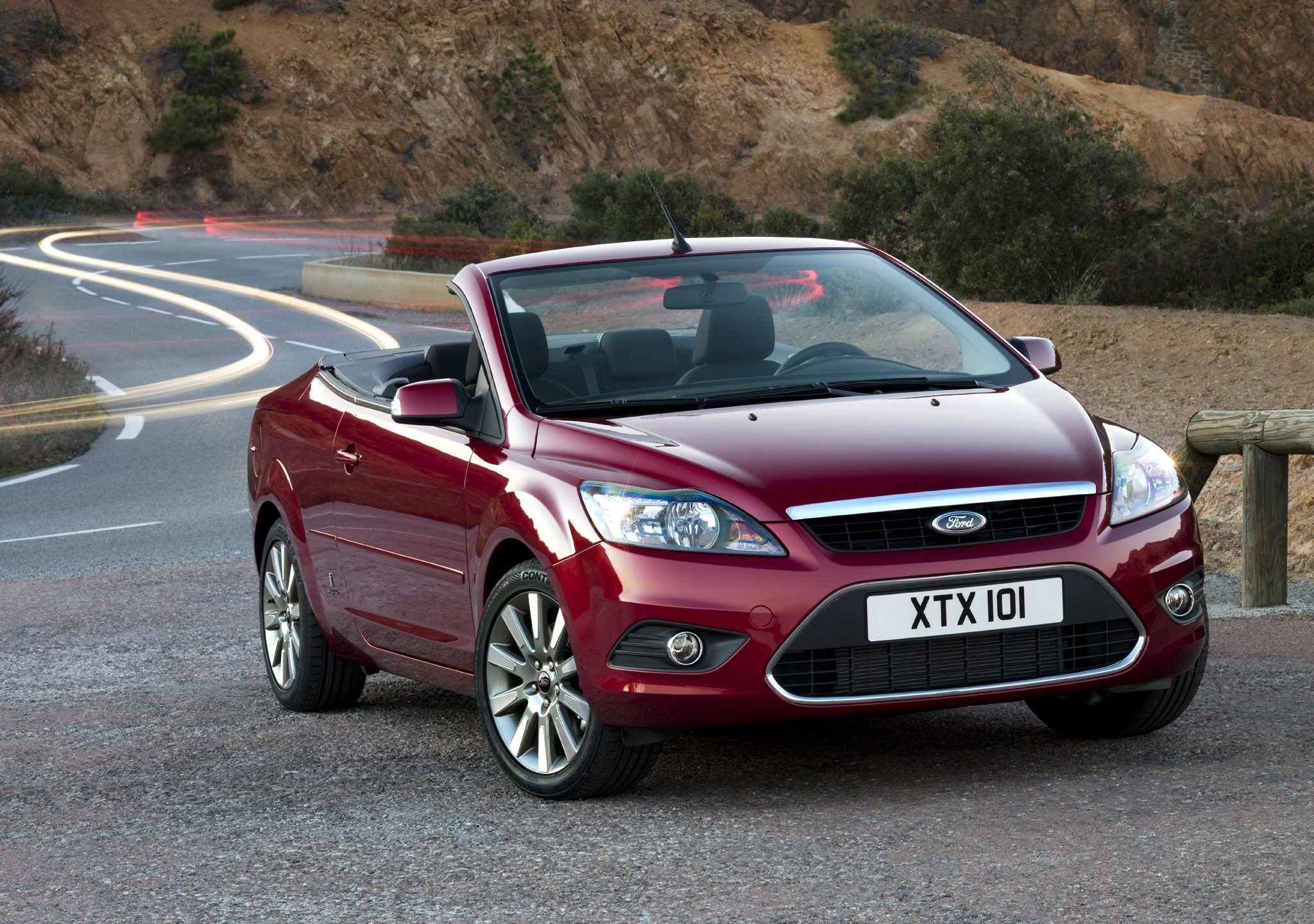
Ford has always been weird in how it treats the US market vs the rest of the world. To be blunt, we usually get short changed. And it’s been happening for a long time and there’s more than a few examples of it. While Europeans were zipping around in Ford Escort RS1600s and RS2000s in the early 1970s, Ford was giving Americans Malaise Era cars like the horrible Mustang II. Those Euro RS cars morphed into 1980s rally beasts like the mid-engined RS200 while Americans bought boatloads of Taurses and LTD Crown Victorias. Even cars that initially started out as world cars (the same vehicle for every market) slowly deviated from that over time. Look at the 2nd gen Focus for North America. While we got a heavy refresh of what was basically the same car that debuted in the late 1990s in coupe and sedan body styles, European markets got a sophisticated Focus that was available in everything from hot ST and RS hot hatches to a cabriolet that was available with a folding metal hardtop. While you’d think a practice like this wouldn’t still be going on well into the 21st century, Ford is still at it and it’s done so with a vehicle that would be a big seller if it came to the US: a plug-in hybrid sport truck version of the Ranger.

To look at where this deviated road starts, you have to go back to the 2019 debut of the Ranger for the US. Ford was finally getting back into the midsize pickup game by giving the US the Ranger it should have had for years. It also happened to be a Ranger that had been on sale in the rest of the world since 2015. It was sloppy seconds that buyers here needed. Fast forward to 2024 and Ford refreshes the Ranger. But Ford served us sloppy seconds again. It was a “newly refreshed” Ranger. But it was only new to our market; this updated version of the truck had been on sale in the rest of the world since 2021, just two years after Ford brought the nameplate back to our shores. While this refresh saw welcome updates like bigger interior displays, USB ports and the availability of a turbocharged V6, we missed out on a major update to the Ranger. In mid-2023, rumors started swirling that a Ranger PHEV was coming to Australia and the US. Sadly, just three months later, those rumors were squashed by Ford. What’s ironic is that Ford made the announcement at the same time it revealed light specs on the Ranger PHEV: a 2.3-liter engine paired to an electric motor and battery pack of unknown power and capacity with 28 miles of electric range (on Europe’s very generous WLTP cycle). And none of it was coming to the US. The reason? We have other options.
Speaking to Car & Driver, a Ford spokesperson said the Ranger PHEV wouldn’t be coming to the US because “the company believes it offers alternatives with the Maverick hybrid as well as the F-150 hybrid and F-150 Lightning EV.” There’s like 15,000 variants of the F-Series, but one PHEV joining a hybrid and an EV would be too much? A strange move by Ford product planners. A Ranger PHEV is something that US buyers would love. Think about it: until the Ram 1500 Ramcharger gets to market, there are currently no PHEV pickup trucks for sale in the US. Ford could have done another first like it did with the first generation Escape Hybrid. Now, Ford is squeezing lime on a wound already covered with salt.

For 2026, the Ranger PHEV gets a new sport truck trim called MS-RT and it looks good. Outside, Ford says the styling is inspired by Ranger racing trucks. The front facia features a blacked out grill with an integrated lower splitter and side skirts. Around back there’s a roof mounted spoiler just above the rear window, a ducktail spoiler off the bed door and another lower diffuser. A lowered suspension and 21-inch wheels wrapped around low-profile tires round out the exterior changes. None of this is just for show though. Ford says there’s actual tuned performance here. The front suspension has revised dampers while the rear has been retuned along with a 1.7-inch overall drop; the rear spoilers increase high speed stability and were tuned using aerodynamic computer simulations. The track width has increased as well, resulting in the flared wheel arches.
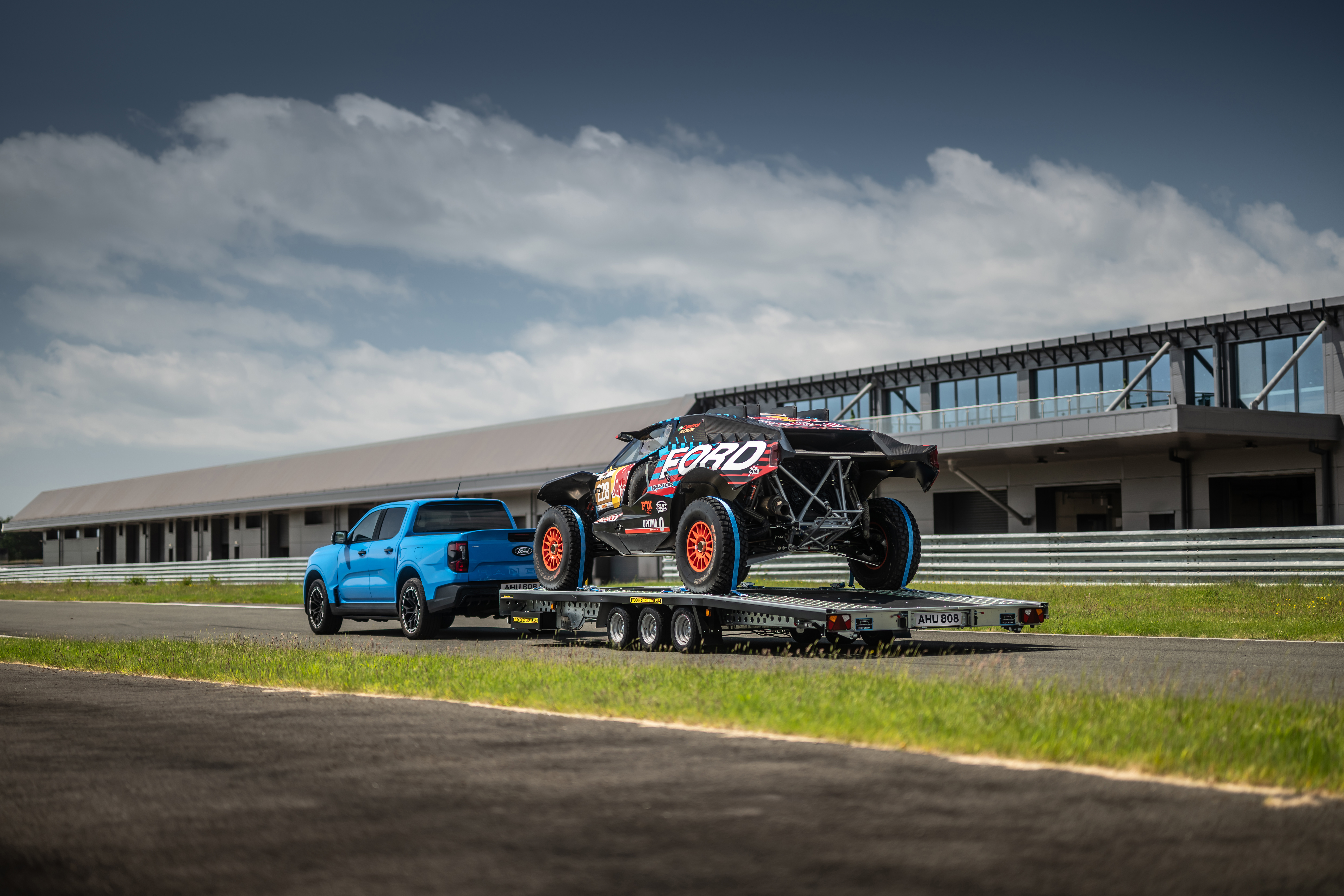
Power is pretty impressive too. A 2.3-liter Ecoboost engine has been paired with a 75-kWh electric motor and an 11.8-kWh battery delivering 25-miles of all electric driving range. Total power output is 277 horsepower and a full-size truck-like 514 lb-ft of torque. That’s enough to give it a 7,700-pound towing capacity. That power gets routed through a 10-speed automatic and a full-time four-wheel drive system.

Inside the admittedly sporty interior, there’s eco-leather sport seats that take a page out of Hyundai’s N and BMW M’s styling playbook by having illuminated MS-RT badges (wildly, these illuminated badges are also on the floormats) and blue stitching throughout. The dash sports a 12-inch tablet orientated screen and a heated sports steering wheel with a blue-colored 12 o’clock position. It even comes in cool colors like the pictured Fast Blue, Turini Purple and Yellow Green.

Ford also introduced something that has no chance of coming here, an MS-RT version of its E-Tourneo Custom van. The E-Toureno Custom MS-RT gets slightly more power than the Ranger at 281 horsepower. Buyers can also choose between a 225-horsepower PHEV or a 167-horsepower diesel. The Toureno MS-RT gets the same treatment as the Ranger, with 19-inch wheels, a lowered suspension, wider track, great colors (the same as the Ranger MS-RT in addition to Ultramarine Blue and Sunset Orange) and sportier styling inside and out.

But back to the Ranger MS-RT. Could we ever see this thing on our roads? Maybe, and it’s a big maybe that leans towards no. First, is the fact that MS-RT (which stands for M-Sport Road Technology) isn’t some new performance brand for Ford. It grew out of a partnership between British motorsport brand M-Sport and Ford; the motorsport brand had been building the automaker’s WRC cars. Second, Ford made the fact that the Ranger PHEV has no place in the US lineup clear. Ford could also see something like a Ranger PHEV as a sales threat to the Maverick and F-150 Hybrids as well as the F-150 EV. The only way something like this could ever see American streets would be as a Ranger Lobo to complement the recently introduced Maverick and F-150 Lobos. Ford just needs to make a Ranger PHEV work for the US market, with or without the MS-RT treatment. Buyers would line up cash in hand just off the EV driving range and engine torque alone. A PHEV pickup is a brilliant vehicle solution that would work for many. But until Ford realizes this, we’ll have to continue to watch the Ranger PHEV and its cool looking MS-RT trim from afar while we lick the wounds of the gaping hole that’s open without this thing in Ford’s US lineup.
 Daily Revs
Leave a comment