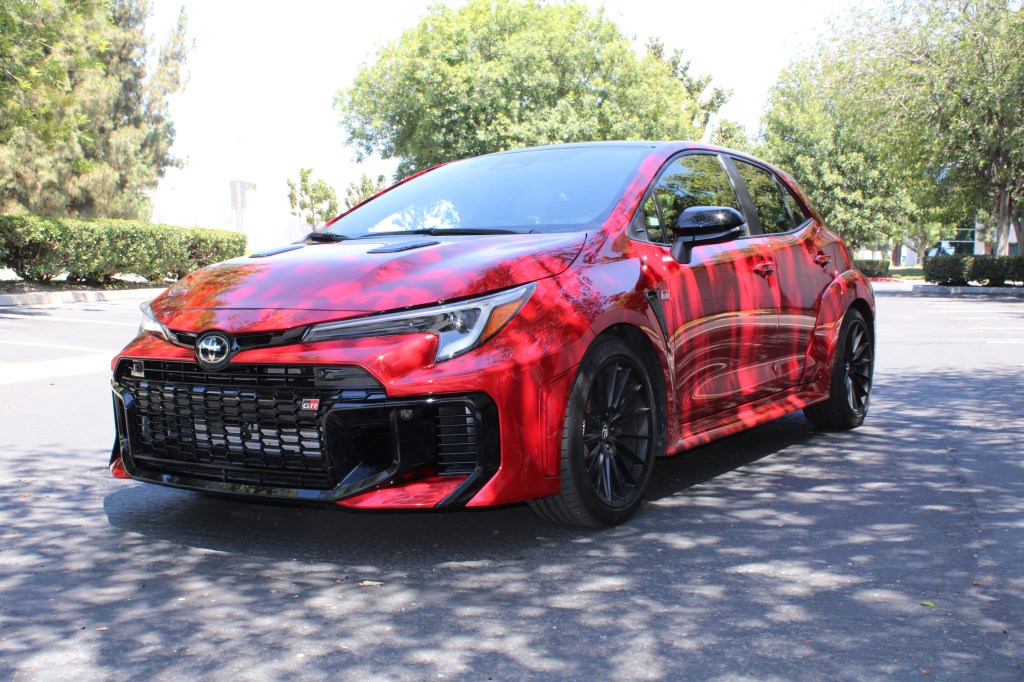
Toyota’s quintessential hot hatch is almost perfect if you don’t examine it too closely.
Toyota wowed everyone when it debuted the GR Corolla in late 2022. Here was something that North American enthusiasts had wanted since we found out Toyota sold a GR Yaris across the pond: a 300 horsepower, turbocharged all-wheel drive hot hatch. It’s something the market needs more of. In another nod to enthusiasts, the GR Corolla debuted with just one transmission option: a six-speed manual. Now just a few years after its debut, Toyota has gone and updated the GR Corolla with an option that might make some enthusiasts cringe. You can now get your GR Corolla with an eight-speed automatic transmission. And while this may be automotive blasphemy to some, I’m here to tell you that everything is just fine.
Just for a bit of clarification before we get into the review. I’m of the controversial opinion that a performance or an enthusiasts’ model doesn’t necessarily need to have a manual. Sure a manual has that mechanical engagement factor, but automotive engineering is so good now that many automatic and DCT transmissions are superior to rowing your own gears. And to be frank, the argument that a performance car must have a manual transmission has gotten kind of weird now to the point that some people will actually shame others for not having a manual while others make having and wanting a manual a whole personality trait. But this is all a discussion for another time. Back to the GR Corolla.
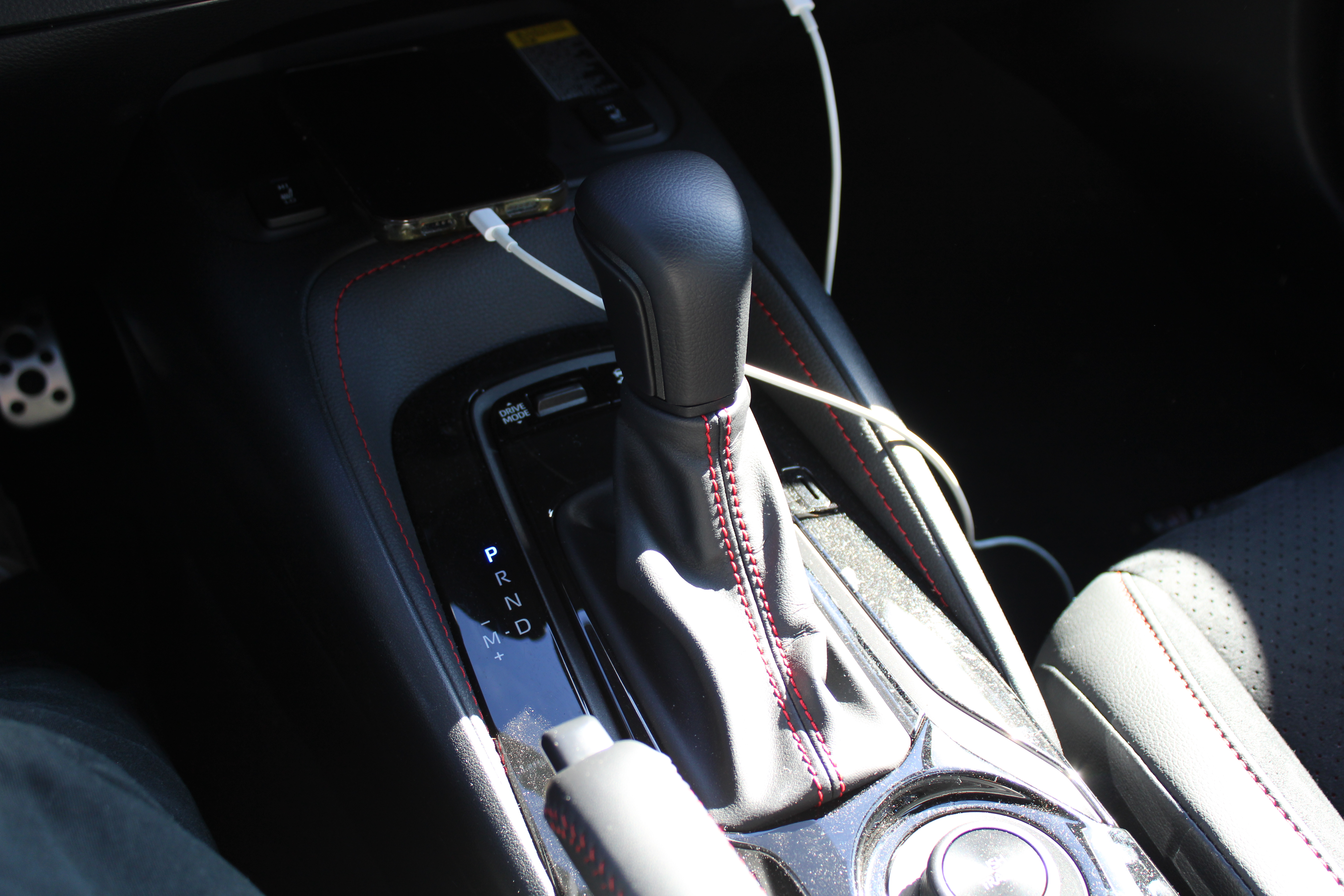
For 2025 the automatic transmission is an all-new option for the GR Corolla. An eight-speed unit, Toyota calls it the GAZOO Racing Direct Automatic Transmission (DAT). It’s certainly a fancy name for what’s basically your standard run-of-the-mill torque converter transmission. Unlike some of its competitors, Toyota didn’t go for a DCT with the GR Corolla. Instead, Toyota went for tuning and tech. Toyota says the transmission has software that’s been programmed to sense and anticipate driver inputs. Engineers also gave the transmission closer gear ratios for power optimization and torque delivery. There’s also new drive modes that aren’t found on the manual GR Corolla: Normal, Eco, Sport (which Toyota says has been specifically tuned for the automatic) and Custom.
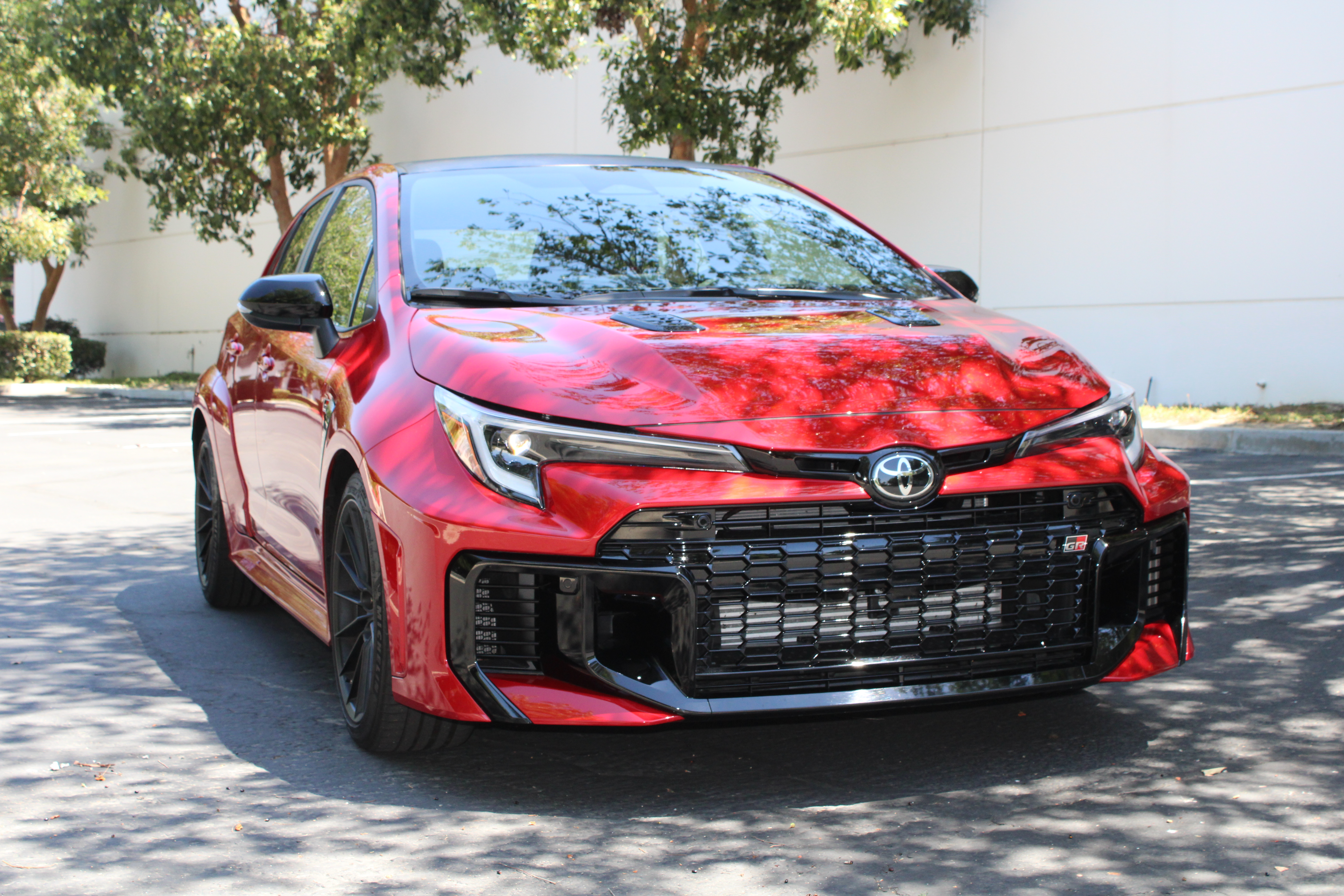
Toyota also slightly updated the GR Corolla for 2025, which is pretty impressive considering we’re just two model years into the car’s product cycle. Up front, the facia has been slightly refreshed for improved airflow and engine cooling. There’s also new brake cooling ducts, updated Torsen Limited-Slip Rear Differentials that are now standard on every trim, enhanced suspension tuning for better cornering and a complicated launch control system that I’ll get to in a bit. There’s also a big update for the engine. Toyota has given the GR Corolla’s 1.6-liter turbocharged I3 more torque. Previously, the engine made 300 horsepower and 275 lb-ft of torque; if you went with the limited edition GR Corolla Morizo you got an extra 20 lb-ft of torque. Now Toyota has given that extra torque to all trims of the GR Corolla.
The downside to all of these updates? You gotta dig deeper in your wallet if you want one. When the GR Corolla debuted in 2023, pricing (including destination charges) started at $37,195 for a base GR Corolla Core. Today a base GR Corolla Core with the manual is $40,000; tack on another $2,000 if you want a GR Corolla Core with the automatic. The tester I had was the GR Corolla Premium Plus which gets a forged carbon fiber roof and Brin Naub synthetic leather trimmed sport seats with heating. With another $1,494 in options ( premium paint, cargo mounted chassis brace, and mats for the floor and cargo area) my GR Corolla Premium Plus rang in at a surprising $50,144.
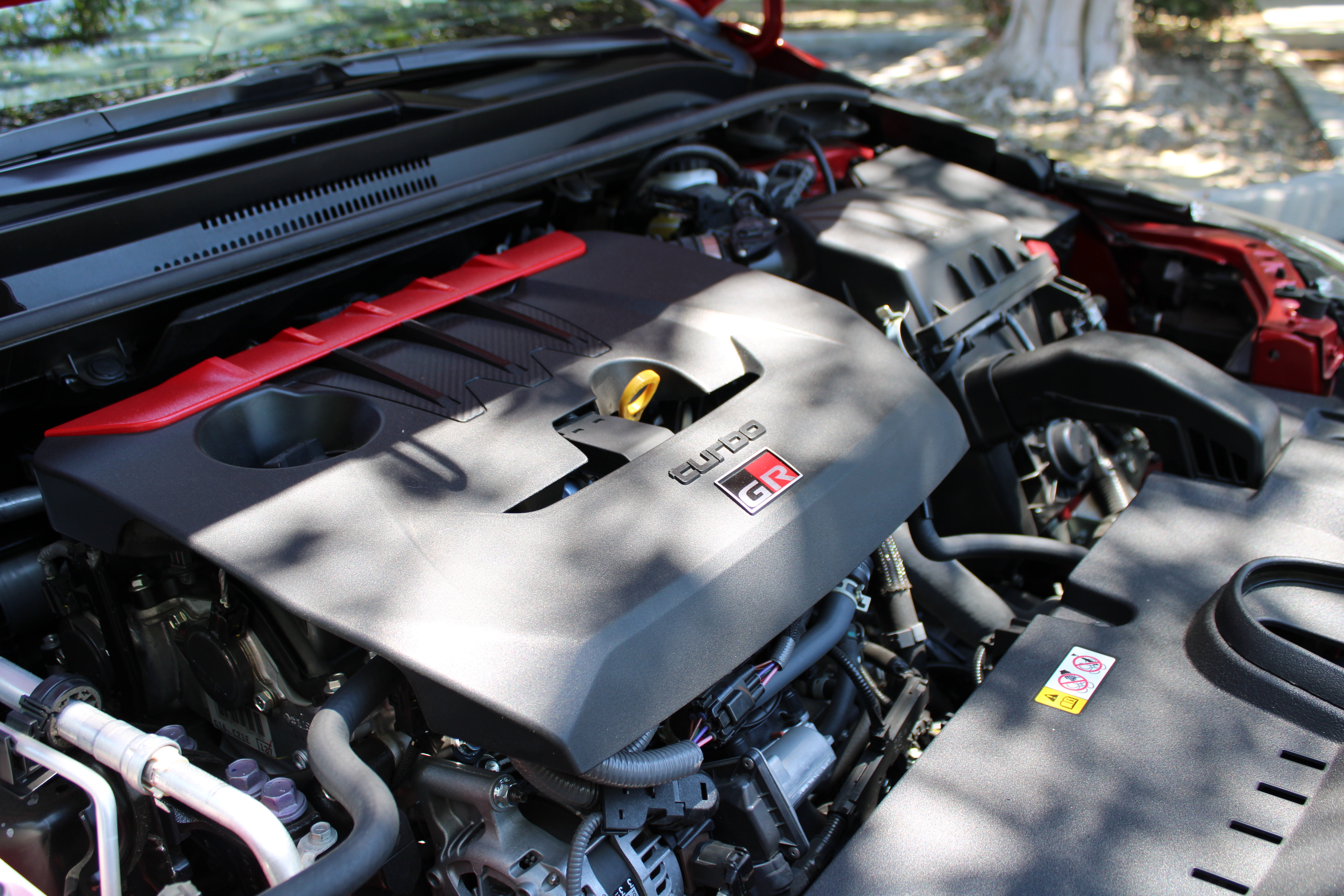
That price gets you one of the best driving hot hatches on the market. The GR Corolla’s GR-Four all-wheel drive system inspires confidence. Throw the GR into any curve, and it’s as if someone laid down a track under the car. Those Michelin Pilot Sport 4 tires stick with the turbocharged I3 helping to pull the GR out of the corner with ease. This handling is further aided by the adjustable all-wheel drive system. Sort of. Drivers can adjust the power split with the GR-Four system with a dial in the center console. The system defaults to a Normal setting with a 60:40 split; select the Gravel setting and the power evenly splits at 50:50. Choosing Track continuously varies the split between 60:40 and 30:70 though I have to admit you don’t really feel a difference with it. The engine’s increased torque makes a bit of a difference, but the small three-pot only really livens up in its midrange, which starts at about 4,000 RPM. Between the surprisingly throaty exhaust note and the woosh of the turbo’s blow-off valve, you’ll enjoy every minute of it.
An added plus of the automatic transmission is the addition of launch control, something you can’t get on the manual GR Corolla. Annoyingly, it’s not as simple as going into a menu or pressing a single control like in some competitors. It’s an eight step process. Stay with me as I walk you through it:
First, you have to make sure the GR Corolla is stopped.
Next, you have to depress the brake pedal.
As you depress the pedal, you then move the shift lever into either D or M (for manual control).
Next you put the car into either Sport or Custom mode (though the owners manual says that when doing this, Sport mode should be selected for “powertrain control.”)
After that’s done, you deactivate the stability control by pressing the stability control off switch, which has the little car with the squiggly lines on it.
Once you’ve done that an indicator will come on in the gauge cluster that reads “EXPERT” along with lights indicating both the traction control and vehicle stability control have been deactivated.
Finally, you hold both the upshift and downshift paddles on the steering wheel at the same time for exactly 1 second before releasing them. Once you’ve done this final step, you’ll get an indicator that says “Launch Ready” on the dash, letting you know the launch control system is ready to go. It’s a lot. And the launch is certainly quick. But it’s not that punch-you-in-the-chest acceleration that you would expect from a launch control system. It just makes the GR Corolla slightly quicker off the line though there is some initial turbo lag. Oh and don’t think about using the system too much. Toyota says to not use it excessively and if you do use it back to back, wait over 10 minutes between uses. It’s all in the name of protecting the powertrain components, mainly the differentials.
Under normal driving, the GR Corolla is surprisingly civil. Some cars like this, like the old Hyundai Kona N, feel like an excited dog on a leash when you’re driving them normally. Not with the GR Corolla. It’s chill and docile. It even gets fairly decent gas mileage. Around town I saw just over 21 mpg while cruising on the freeway, I got nearly 28 mpg.
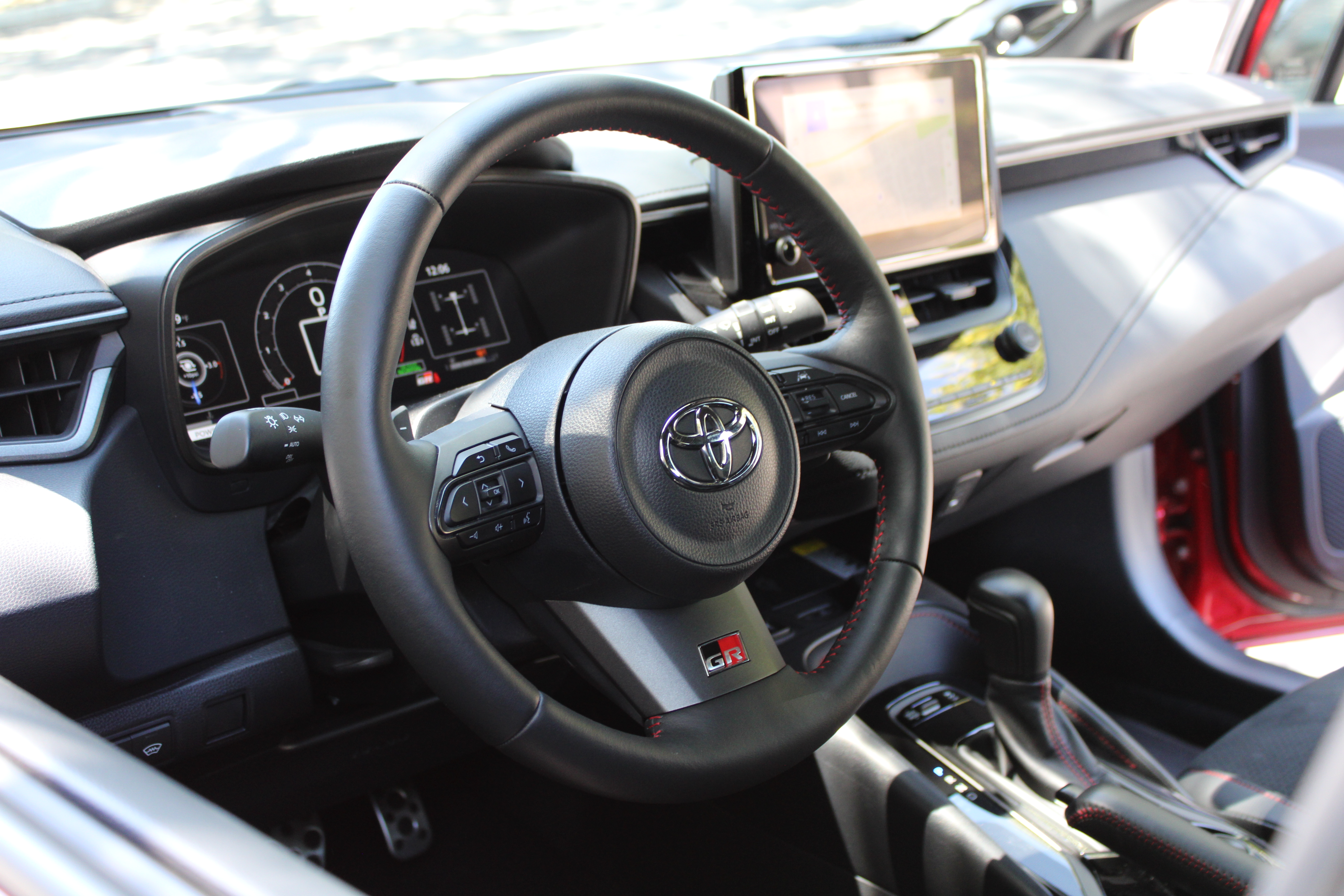
Of course not everything about the GR Corolla is great. The first downside is the interior. You’re very quickly reminded that underneath all that boy racer hot hatch stuff, the GR Corolla is definitely a Corolla just by taking a look inside. Ignore the 12.3-inch digital gauge cluster, the GR sport seats and the red stitching, and the interior is identical to any other basic Corolla. Now this isn’t something that’s unique to the GR Corolla. The entire segment is based on economy cars. That’s what makes them great. But when you’re dropping $50,000 on one, that kind of stuff tends to stick out. To make matters worse, there’s a lot of cheap feeling surfaces inside and there’s features missing, which could have something to do with weight savings, cost cutting or both. For instance there’s no armrest up front even though the backseat has one. This is made more strange by the fact that even the most basic trims of the regular Corolla – both the sedan and the hatch – are equipped with a front armrest. There’s also no power adjustments for the front seats even though, again, this is a $50,000 hot hatch.
The ride is the next downside. It’s harsh. That can be blamed on the fact that the GR Corolla is one of if not the only car in the segment that doesn’t have adjustable dampers. Backseat passengers experience just how bad the ride is first hand. I once had a passenger remark to me that riding in the back felt as if they were on the back of a motorcycle. Finally, the engine. It’s not a bad engine. If you had told someone 20 years ago that we’d have sub 2.0-liter three cylinder engines making 300 horsepower, they would have laughed in your face. It’s a fantastic engine. It’s just not refined at all. There’s a coarse buzziness to it that you can both see and hear: from a standstill or in certain parts of the rev range, the engine will vibrate enough to distort the image out of the rear and side mirrors.
None of this is to say that you shouldn’t go out and buy a GR Corolla. Please do. We need more cars like this. Toyota could have easily given us some performance version of the Corolla Cross or brought over another crossover period. But they didn’t. Toyota listened to enthusiasts. The availability of an automatic transmission makes it all better as it opens the buyer pool up. The pricing on this thing is a bit of a pill to swallow though. Honestly, the better buy is the base GR Corolla Core. For just over $42,000 you have that same excellent powertrain setup, just without unnecessary niceties like the carbon fiber roof, the synthetic leather and alcantara heated sport seats. So please, do yourself a favor and go out and buy this thing. I don’t want to read a headline in 2026 that Toyota is pulling the plug on this thing because no one bought it. Trust me, you won’t regret it.


Leave a comment