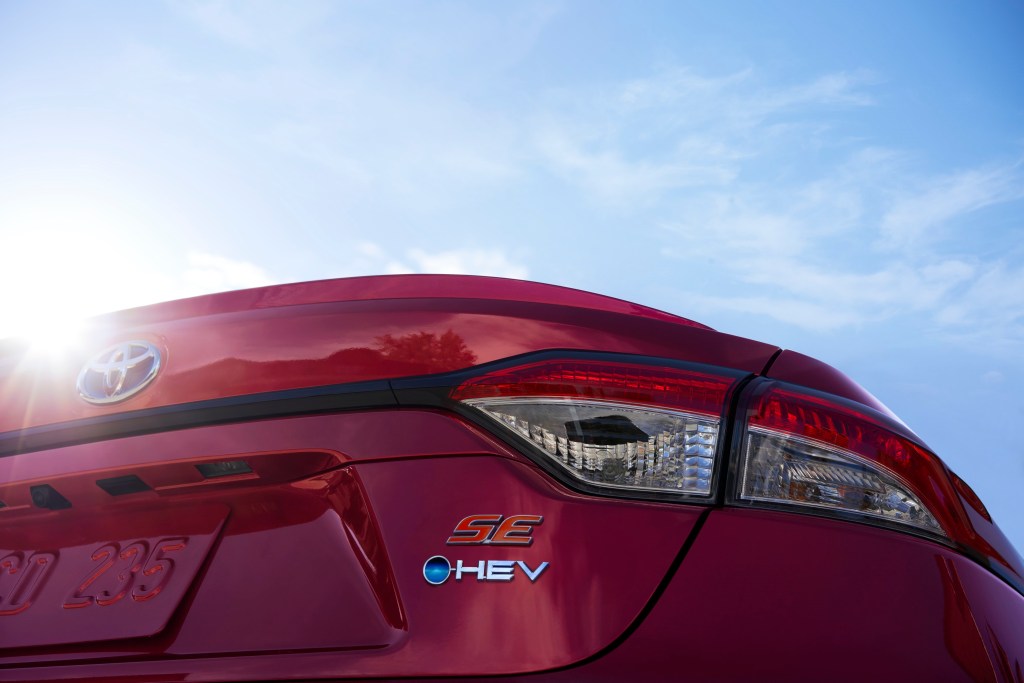
Remove the battery pack and electric motors from the Toyota Corolla Hybrid and you’re left with an engine that makes less than 100 horsepower.
Compact cars in the 1980s and early to mid 1990s were hilariously underpowered. And when I say hilarious I actually mean dangerously underpowered. Many cars on the market like the Geo Metro, Honda Civic and Dodge Shadow had so little power, things like freeway merging and passing were a hope and prayer affair. Thankfully that really isn’t the case anymore as most compact offerings on the market now – at least the few that are left – make well over 150 horsepower in basic guises. There are a few exceptions to this though. Surprisingly enough, the biggest automaker on the planet makes the least powerful engine on sale today and it’s in a place you’d least expect: a hybrid.
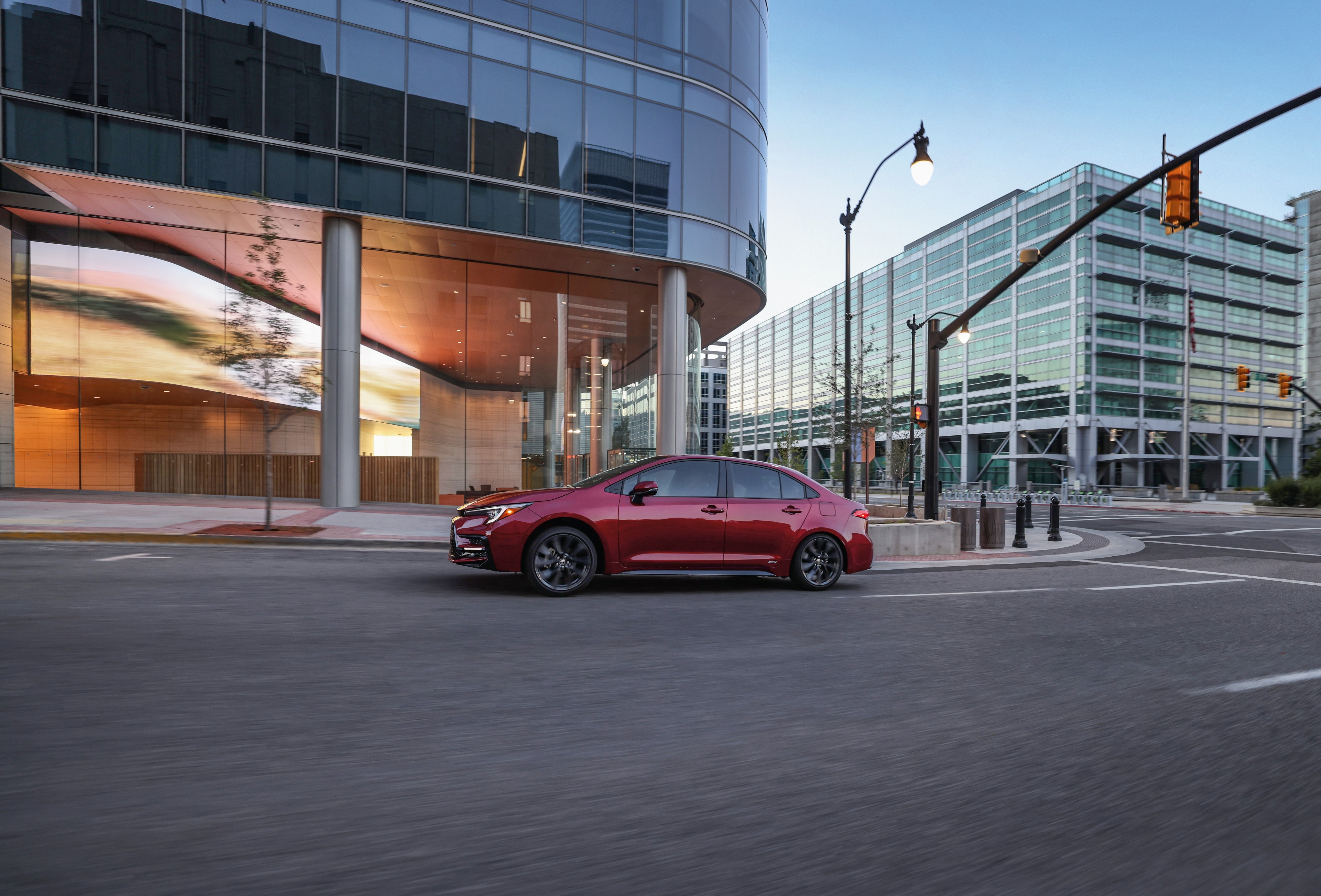
Toyota probably has the most hybrid heavy lineup on the market today. Save for performance models like the GR86 and Supra, every Toyota model has a hybrid offering. One of the cheapest and most fuel efficient hybrids Toyota offers is the Corolla Hybrid. For just over $24,000 you can have a reliable compact sedan that gets over 50 mpg combined. That’s pretty damn impressive. What’s even more impressive – and strange – is that the powerplant for the Corolla Hybrid barely makes any power.
On paper, the Toyota Corolla Hybrid makes 138 horsepower. To put into perspective how weak that is, I used to own a 2013 Chevy Sonic Hatchback with the same horsepower and it used to run out of steam going up a hill. But with the Corolla Hybrid, that’s 138 total combined system horsepower. What’s wild is that that power number is up; back when the Corolla Hybrid debuted for ‘20, its combined horsepower rating was just 121. That 138 horsepower is reflected in the Corolla Hybrid’s performance. Depending on what you read, independent testing pegs the Corolla Hybrid hitting 60 mph in a leisurely nine seconds flat.
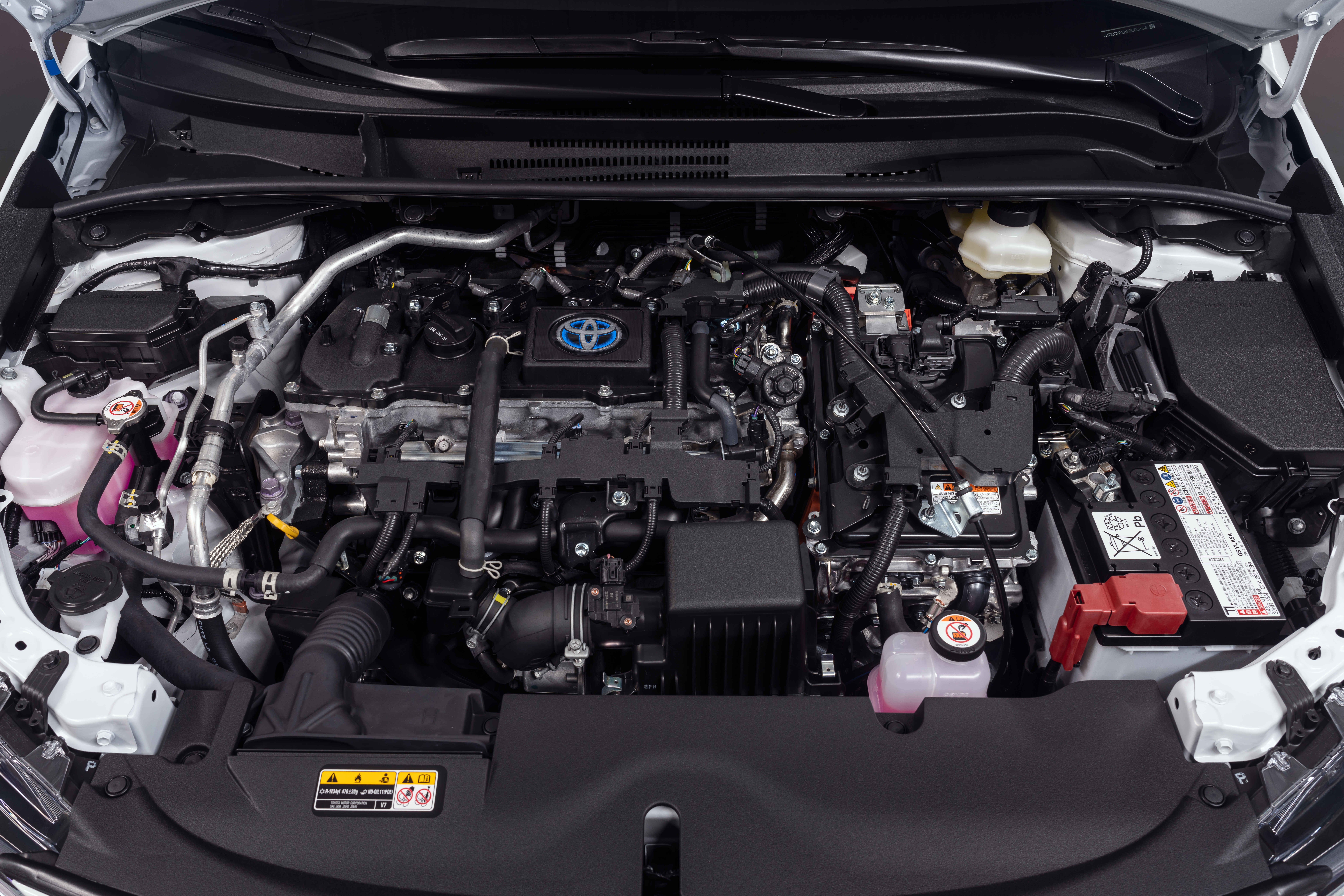
Helping the Corolla Hybrid to achieve this horsepower rating is a dual electric motor setup (70 kW front/30 kW in the rear) and a 1.7 kWh battery pack located behind the rear seats. Hiding behind that hybrid tech is a baby of an engine: a tiny 1.8-liter I4 making just 96 horsepower and 105 lb-ft of torque. That’s Japanese Kei car power (h/t to TheTurbochargedSquirrel on Oppositelock for pointing this out!). If this was a regular ICE vehicle, the Corolla would get the title of the least powerful car on sale in the US – a crown that used to belong to the Mitsubishi Mirage and its 1.2-liter 78 horsepower I3. What’s interesting is that the Corolla Hybrid isn’t alone in this.

Both Hyundai and Kia attach hybrid tech to low powered engines. Behind the Elantra Hybrid’s 32 kWh electric motor and 1.32 kWh battery pack lies a 1.6-liter I4 with just 104 horsepower and 109 lb-ft of torque. At Kia, an 11.1 kWh battery pack and an 8 kWh electric motor are paired with the same engine that makes one less horsepower in the Kia Niro Hybrid and PHEV. So just why do these automakers do this? They’ve proven they can get ICE comparable power in other hybrids like the turbocharged Hyundai Palisade and Toyota Crown hybrids. But in automotive engineering, there’s a reason for everything. One of the main reasons could be packaging. Trying to pack electric motors in with a battery pack and a gas engine on a compact car platform takes engineering wizardry. Another is fuel economy. These hybrids wouldn’t be as efficient as they are with bigger engines. A sub 2.0-liter engine making 100 horsepower or slightly less is a fuel miser on its own. Throw on the electric assist of axle motors and a battery and that efficiency jumps.
It would be interesting to have more of these small engines on the road on their own. If automakers actually wanted to get back in the business of making affordable compact and sub-compact cars, these underpowered engines could be under the hood of lots of cheap and efficient cars for the masses. But it’s doubtful we’ll ever see these engines without some kind of hybrid tech attached to them.

 Daily Revs
Leave a reply to America’s New Weakest Gas Engine – didyouknow Cancel reply